 Pradnya Ganorkar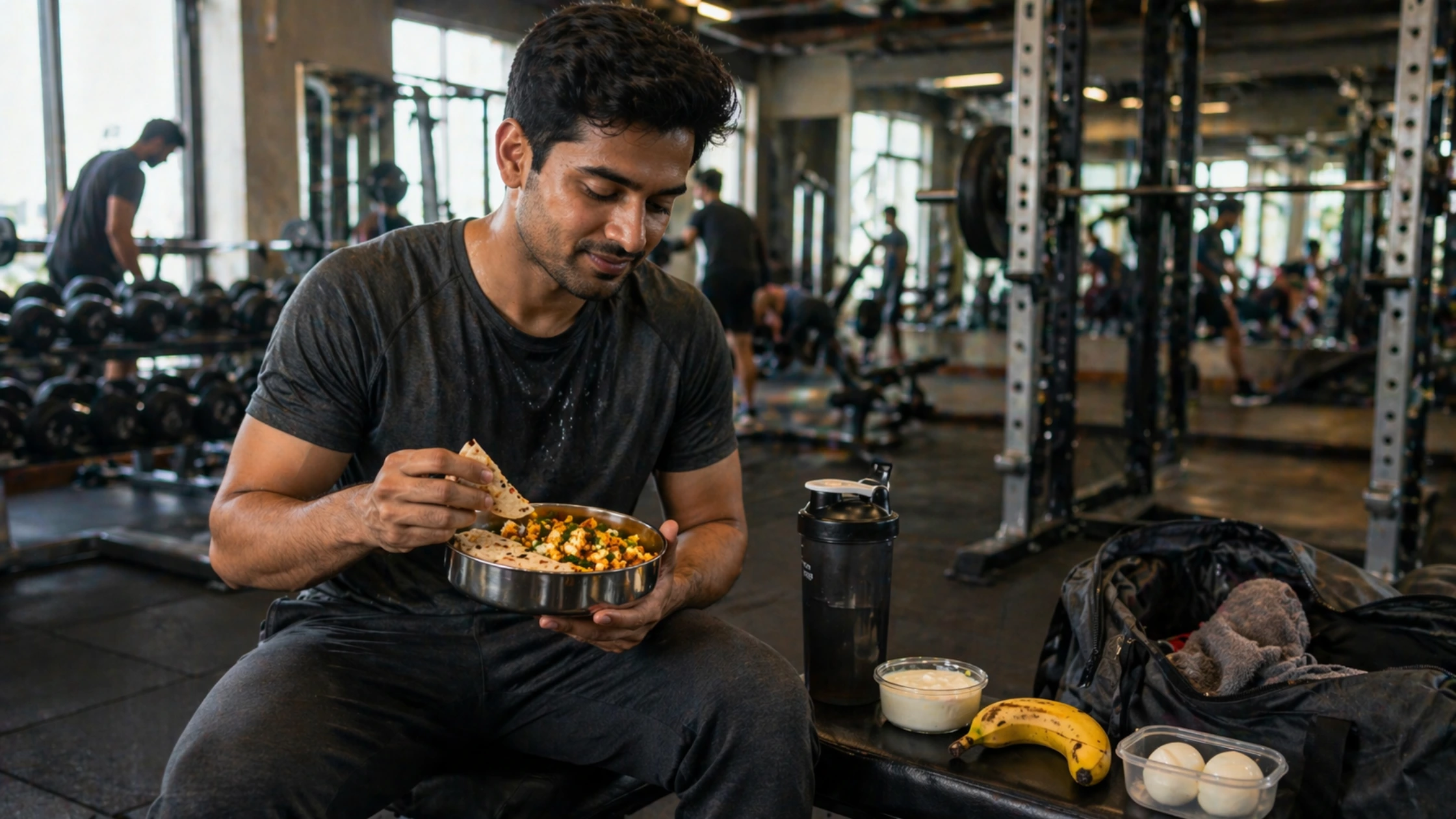
Post-workout nutrition for Indians should prioritise protein and fast-digesting carbohydrates within 30 to 60 minutes of training — the anabolic window during which muscle protein synthesis is elevated. The ideal post-workout meal provides 25 to 40 grams of protein and 50 to 80 grams of carbohydrates for most Indian adults training for strength or muscle gain. For fat loss training, the carbohydrate portion is reduced. Excellent Indian post-workout options include: egg whites with 2 rotis (28g protein, 45g carbs), paneer bhurji with bread (22g protein, 40g carbs), curd with banana and honey (15g protein, 45g carbs), and dal with rice (14g protein per serving, 55g carbs). Whey protein mixed with milk is the fastest-digesting protein option and widely available in India from brands like MuscleBlaze and Nakpro. Nutrimate tracks post-workout nutrition specifically, logging meals against your protein target and showing recovery nutrition quality in the Health Score.
Why Post-Workout Nutrition Matters More Than Most Indians Realise
Training breaks down muscle fibres. Recovery builds them back stronger. The rate of recovery and the quality of muscle rebuilt depends primarily on what you eat in the 30 to 60 minutes after training ends. This period — commonly called the anabolic window — is when your muscles are most receptive to protein synthesis and glycogen replenishment.
Indian gym-goers frequently make one of two mistakes after training. The first is eating nothing for one to two hours because they are not hungry — a common side effect of intense training. The second is eating carbohydrates only — a banana, a glass of juice, or a paratha — without significant protein. Both approaches miss the primary recovery requirement.
The science is clear: consuming at least 20 to 25 grams of protein within 60 minutes of training significantly improves muscle protein synthesis compared to waiting two or more hours. For Indian vegetarians, this means being intentional about protein sources, since most naturally grab a fruit or a snack post-workout.
The Best Indian Post-Workout Meals by Training Goal
For muscle gain and strength training: Egg white omelette with 2 whole wheat rotis provides approximately 28 grams of protein and 45 grams of carbohydrates — close to the ideal ratio. Paneer bhurji with 2 slices of whole grain bread provides 22 grams of protein and 40 grams of carbohydrates. Chicken breast with 1 katori rice provides 30 grams of protein and 45 grams of carbohydrates for non-vegetarians.
For fat loss training: Reduce the carbohydrate portion and prioritise protein. Two boiled eggs with 100 grams of cottage cheese and cucumber provides 24 grams of protein and only 8 grams of carbohydrates. Greek yogurt or hung curd with a handful of almonds provides 18 grams of protein and 12 grams of carbohydrates.
For endurance training — running, cycling, sports: Replenishing glycogen is the priority. Banana with peanut butter on 2 slices of bread provides a good carbohydrate-to-protein ratio. Poha made with added peanuts provides carbohydrates for glycogen and moderate protein.
The Fastest Indian Post-Workout Protein Options
Whey protein is the fastest-digesting complete protein available and is ideal within the 30-minute post-workout window. Mixed with 250ml of milk, a standard scoop provides 25 to 30 grams of protein. Indian brands including MuscleBlaze, Nakpro, and Bigmuscles have become cost-competitive with international brands and are widely available online.
For those who prefer food-based options: Curd is significantly faster-digesting than milk and provides 11 grams of protein per 200-gram serving. A large bowl of curd with a banana covers the protein and carbohydrate requirement adequately for moderate-intensity training. Sprouts — especially moong sprouts — are a uniquely Indian fast digesting protein option. 100 grams of moong sprouts provides 4 grams of protein and is easy to eat raw without any preparation.
What to Avoid Eating After the Gym
The three most common post-workout mistakes in Indian gym culture: Eating deep-fried foods immediately after training — including samosas, bhajiyas, or vada — which slow digestion and displace the protein that muscle recovery requires. The fat in fried food delays gastric emptying, meaning protein reaches the bloodstream hours later than optimal.
Consuming high-sugar foods like fruit juices, energy drinks, or mithai without protein. These spike blood sugar, promote fat storage rather than muscle building, and leave the protein synthesis window underserved.
Skipping the post-workout meal entirely due to lack of hunger or time. Gym hunger suppression is real — intense exercise reduces appetite temporarily. But this is precisely when eating is most important for recovery. Keep a quick post-workout snack ready at the gym bag — whey, curd, or boiled eggs — to consume even without appetite.
Tracking Post-Workout Nutrition — Why It Changes Everything
The difference between knowing you should eat protein after training and actually doing it consistently comes down to tracking. When you can see in the Nutrimate app that your post-workout meal provided only 8 grams of protein against a target of 25 grams, the gap is concrete and immediately actionable.
Nutrimate tracks each meal’s contribution to your daily protein target and shows protein achievement as part of the Health Score. Consistent post-workout protein tracking over 4 to 6 weeks produces visible changes in body composition and training recovery — because habits tracked are habits maintained.
Log your post-workout meals and see how protein impacts your Health Score. Free on Android and iOS — nutrimate.in