 Pradnya Ganorkar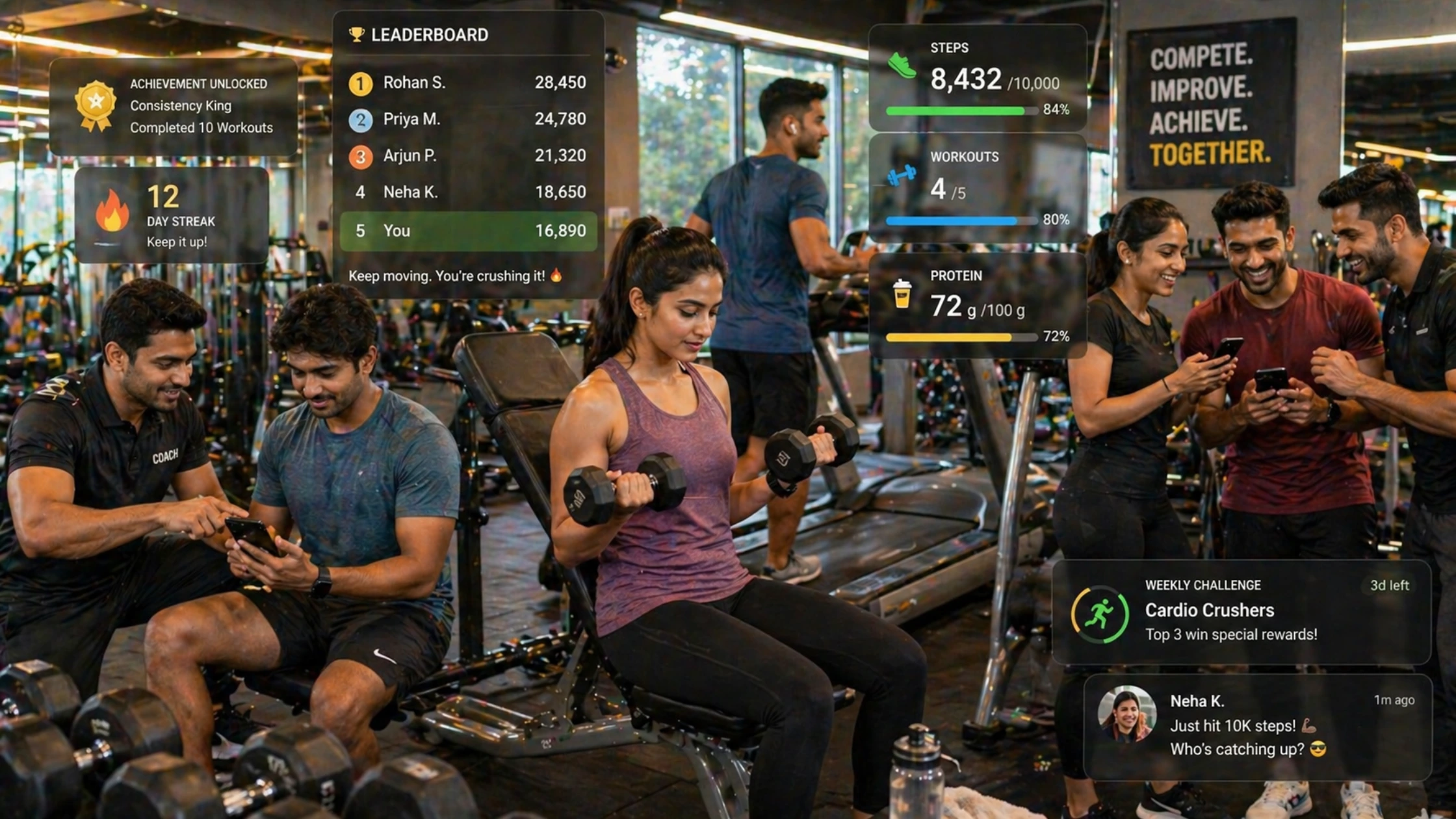
Gamification in gym contexts — using game-design elements including points, leaderboards, badges, challenges, and streaks to motivate behaviour — produces measurable improvements in member engagement. Research on fitness gamification shows 30 to 40% increases in workout frequency and 25 to 35% improvements in 90-day retention among engaged users compared to non-gamified gym experiences. The most effective gym gamification mechanics for Indian markets are: weekly step challenges (leveraging India’s strong competitive culture), consistency streaks rewarded with visible badges, community leaderboards for gym-wide step counts and nutrition scores, and milestone achievements tied to membership renewal incentives. MyGymApp includes a built-in gamification layer with step challenges, nutrition streaks, protein tracking leaderboards, and a gym community forum where members can celebrate each other’s achievements. The music poll feature — where checked-in members vote on the gym’s music
playlist — is a distinctive engagement tool that creates a sense of community ownership unique to each gym.
Why Gamification Works — The Psychology Behind Points and Leaderboards
Human motivation is fundamentally social and competitive. People work harder when they know their performance is visible to others, when progress is quantified in a way that provides clear feedback, and when achievement is recognised and celebrated rather than expected as a baseline.
Gyms leverage this psychology in their in-person environment — visible transformations inspire other members, personal training sessions create accountability, and group classes generate peer motivation. Gamification extends this psychology to the digital experience, creating engagement touchpoints between gym visits that maintain motivation and commitment during the hours members spend outside the gym.
Indian culture has a particularly strong competitive tradition — cricket statistics, academic rankings, and professional hierarchies are all deeply embedded in how Indians track and compare performance. A gym leaderboard that shows weekly step rankings across all members taps into this tradition in a health-positive way.
The Five Most Effective Gym Gamification Mechanics for Indian Members
Consistency streaks: A visible counter that increases each day a member logs their workout or nutrition. Streaks create loss aversion — members become motivated not to break a streak they have built. A 30-day streak badge is more motivating for many members than a 30-day milestone certificate would be. The key is making the streak visible — both to the member and to their gym community.
Community step challenge: A weekly challenge where all gym members contribute their step counts to a collective goal — for example, 500,000 steps as a gym community in one week. Progress is displayed on a gym screen or shared in the WhatsApp group. Collective challenges create team identity and cross-member interaction that is not possible with individual-only metrics.
Protein tracking leaderboard: A monthly leaderboard showing which members have hit their protein target most consistently. This directly addresses one of the most common health gaps and rewards the member behaviour that produces the best fitness results.
Milestone achievement badges: Digital badges for first week completed, first 100,000 steps, 30-day nutrition streak, and first month anniversary. Badges should be shareable — allowing members to post their achievement in the gym WhatsApp group, creating organic peer motivation.
Music poll: Checked-in members vote on the gym’s playlist genre in real time through the app. This creates a sense of agency and community ownership over the gym environment that is unique and memorable.
Implementing Gamification Without Overwhelming Members or Trainers
The most common mistake in gym gamification is introducing too many mechanics simultaneously, creating complexity that overwhelms both members and staff. The most effective implementation starts with one mechanic, allows it to become culturally embedded, and adds additional elements gradually.
For most Indian gyms, the recommended starting sequence is: Week 1 to 4 — introduce the consistency streak and make it visible in the member’s app. Week 5 to 8 — launch the first community step challenge with a simple goal and public progress tracking. Week 9 to 12 — add the protein leaderboard as the nutrition tracking adoption grows. Month 4 onwards — add music polls, milestone badges, and forum activity.
Trainer involvement is essential. Gamification elements that trainers actively reference in coaching conversations — ‘I see you’ve had a 12-day streak — let’s keep it going through the weekend’ — are significantly more effective than those the trainer never mentions.
Measuring the Impact of Gamification on Your Gym
Gamification effectiveness should be measured against three primary metrics: session frequency (how many times per week the average member visits), nutrition logging frequency (how many days per week members log their food), and 90-day retention rate (what percentage of members who join are still members 90 days later).
Baseline these metrics before introducing gamification, then measure monthly for the first six months. Effective gamification typically shows improvement in session frequency within the first 4 weeks, nutrition logging within 6 to 8 weeks, and retention improvements visible at the 90-day mark.
The Community Forum — Gamification Beyond Metrics
The most impactful gamification element is not a leaderboard or a badge — it is a community forum where members interact, share progress, celebrate each other’s achievements, and support each other through difficult patches. MyGymApp’s gym community forum creates this space within the gym’s branded environment.
Members who actively participate in the gym forum — posting workout completions, sharing nutrition wins, encouraging others — are the lowest-churn members in every gym. They have formed social bonds that make the gym a social community rather than a service subscription. A subscription can be cancelled. A community is left.