 Pradnya Ganorkar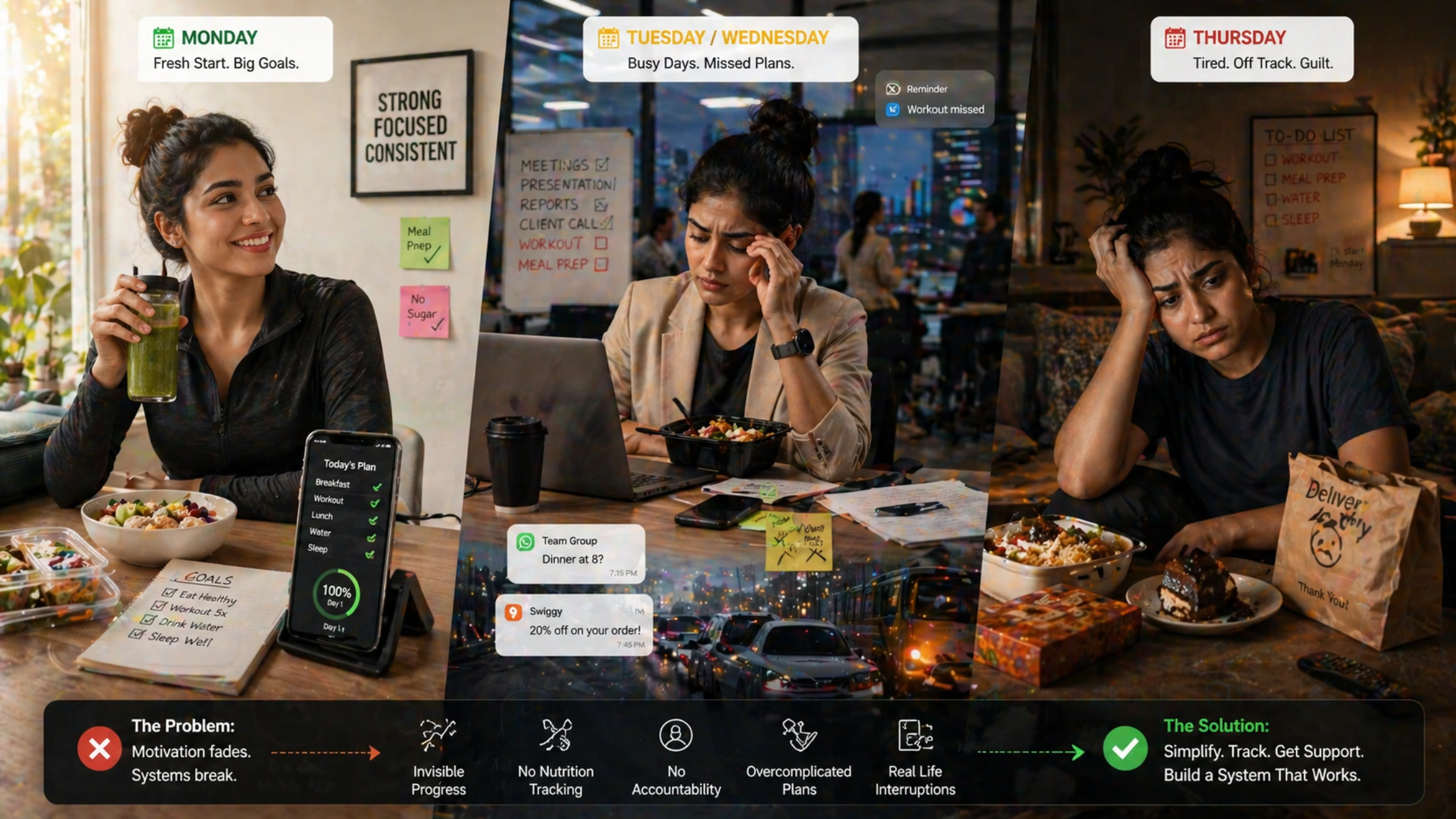
If you’ve ever promised yourself, “This Monday, I’m finally getting healthy,” only to fall off by Thursday, you are not alone.
This cycle is one of the biggest reasons why staying healthy is hard for so many people, especially in India where work schedules, family routines, social eating, and mental fatigue collide daily.
The problem is rarely discipline.
The real issue is that most people are trying to build a healthy lifestyle for busy Indians using systems that are too difficult to sustain.
You do not usually fail because you do not care.
You fail because your system demands too much, too soon.
This is where understanding how to stay consistent with health becomes more important than chasing short bursts of motivation.
For many Indians, lasting lifestyle change does not come from extreme diets or perfect routines. It comes from simpler systems, realistic habits, and sustainable daily choices.
The Monday Motivation Trap
Monday feels powerful.
It represents:
- A fresh start
- A reset button
- New discipline
- Better choices
This is why many people begin:
- Strict fitness diet plans
- Early morning gym commitments
- Full sugar cut-offs
- Aggressive meal tracking
- New “healthy” schedules
For a few days, motivation feels strong.
But motivation is emotional, not structural.
Why Monday Feels Easier
At the beginning, energy is high because:
- Guilt from the previous week is fresh
- Ambition is high
- The plan feels exciting
But by Thursday:
- Work stress increases
- Social plans happen
- Sleep gets disrupted
- Food decisions become harder
This is especially true in a healthy lifestyle India context where:
- Office lunches are unpredictable
- Family dinners are shared
- Travel and traffic consume energy
The issue is not Monday.
It is what happens when life interrupts the plan.
Why Motivation Fades So Fast
Motivation is often misunderstood.
People assume:
“If I really wanted this, I’d stay consistent.”
But this ignores how behavior actually works.
Motivation Is Temporary
Motivation changes based on:
- Sleep
- Stress
- Work pressure
- Mood
- Results
This is why depending only on motivation creates instability.
Indian Lifestyle Reality
A working professional in Mumbai, Bengaluru, or Delhi may:
- Leave home early
- Sit for long hours
- Eat based on convenience
- Return mentally exhausted
Even if they want a healthy lifestyle, complexity becomes the barrier.
The All-or-Nothing Mistake
This is where many people fail.
They think:
- Miss one workout = failed
- Eat dessert = ruined
- Skip meal tracking = off track
So instead of adjusting, they quit.
This all-or-nothing mindset is one of the biggest reasons why diets fail long term.
Consistency is not destroyed by one imperfect day.
It is destroyed when one imperfect day becomes full abandonment.
The Real Problem: Overcomplicated Plans
Most health plans fail because they are designed for ideal lives.
Not real lives.
Common Overcomplicated Systems:
- 6-day workout plans
- Strict calorie counting
- Western meal plans disconnected from Indian food and health
- Full elimination diets
- Advanced tracking systems
These systems often ignore:
- Indian households
- Shared meals
- Roti and rice realities
- Festivals
- Busy work life
Why Complexity Kills Consistency
Every extra step adds friction:
- What should I eat?
- How many calories?
- Can I eat rice?
- Is Indian food healthy?
This creates decision fatigue.
And when health feels mentally exhausting, people stop.
Simplicity Wins
A sustainable system focuses on:
- Familiar Indian diet patterns
- Repeatable health habits
- Low mental load
- Flexibility
For example:
Instead of:
“Never eat rice”
Think:
“How does rice fit into balanced healthy Indian eating habits?”
This shift matters.
Why “Perfect Days” Don’t Work
Many people imagine health as a series of perfect days.
Perfect food. Perfect workouts. Perfect discipline.
Real life does not work like that.
Perfect Days Are Fragile
They collapse when:
- A meeting runs late
- Family orders food
- Travel happens
- Festivals begin
- Stress spikes
Indian Reality
For many families:
- Dinner is social
- Food is cultural
- Refusing repeatedly creates friction
This is why Indian diet without dieting is often more effective than restrictive plans.
Progress vs Perfection
Perfect systems create pressure.
Sustainable systems create resilience.
The goal should be:
- Better decisions most days
- Flexible eating
- Consistent patterns
Not:
- Zero mistakes
This is how sustainable health habits for Indians actually work.
What Actually Builds Consistency
Consistency is not built through intensity.
It is built through repeatability.
Three Things Matter Most:
1. Reduce Friction
Health should be easy enough to follow even on stressful days.
Examples:
- Simple breakfast defaults
- Repeatable lunches
- Familiar dinners
2. Build Around Existing Life
For simple health habits for working professionals, routines should fit:
- Office life
- Family life
- Travel
3. Focus on Systems
Ask:
“What can I repeat daily?”
Not:
“What is the perfect plan?”
Behavior Change Framework:
Good system = Easy + Familiar + Flexible
This is why how to stay healthy without dieting is often more realistic than extreme plans.
Food Clarity Matters
For many Indians, confusion around:
- roti rice weight gain myth
- Portion sizes
- Traditional meals
Creates unnecessary fear.
Health is easier when people understand food, instead of fighting it.
Simple Daily System That Works
A sustainable healthy lifestyle for busy Indians often looks surprisingly simple.
Morning:
- Hydrate
- Protein or balanced breakfast
- Light movement
Afternoon:
- Balanced Indian food meal
- Portion awareness
- Avoid extreme hunger gaps
Evening:
- Walk or movement
- Simple dinner
- Flexible choices
Key Principle:
Keep decisions minimal.
Where Tracking Helps
Simple daily logging reduces decision fatigue and helps you stay consistent.
This is where easy way to track meals, simple meal tracking for Indian food, and food tracking without calorie counting become valuable.
Instead of obsessing over numbers, awareness creates pattern recognition.
Some platforms like Nutrimate simplify this through Indian-first, WhatsApp-first meal tracking, making consistency easier without overcomplication.
Real-Life Example: Office Routine
Let’s take a realistic example.
Rahul, 32, Pune, Sales Professional
Old pattern:
- Monday diet
- Tuesday strict gym
- Wednesday skipped meals
- Thursday client dinner
- Friday gave up
New system:
- Breakfast fixed
- Lunch balanced
- Daily 15-minute walk
- Flexible dinner
- Basic meal tracking
Result:
Not perfection.
But repeatability.
This is how healthy lifestyle for busy Indians becomes practical.
For Parents
This also applies to:
- family health
- family health tracking app use
- health tracking for parents
When systems become simpler, entire households benefit.
Frequently Asked Questions
Most people struggle because their systems are too restrictive or complicated. Unrealistic plans, all-or-nothing thinking, and high mental effort often break consistency faster than lack of motivation.
Focus on simpler, repeatable systems instead of perfect routines. Build habits that fit your real life, reduce friction, and allow flexibility when schedules change.
Not usually. Motivation helps you start, but systems help you continue. Most people fail because their routine is too hard to sustain, not because they lack discipline.
Nutrimate simplifies Indian health tracking with WhatsApp-first meal logging and a unique Caregiver Connection feature that keeps individuals and families consistently supported.