 Pradnya Ganorkar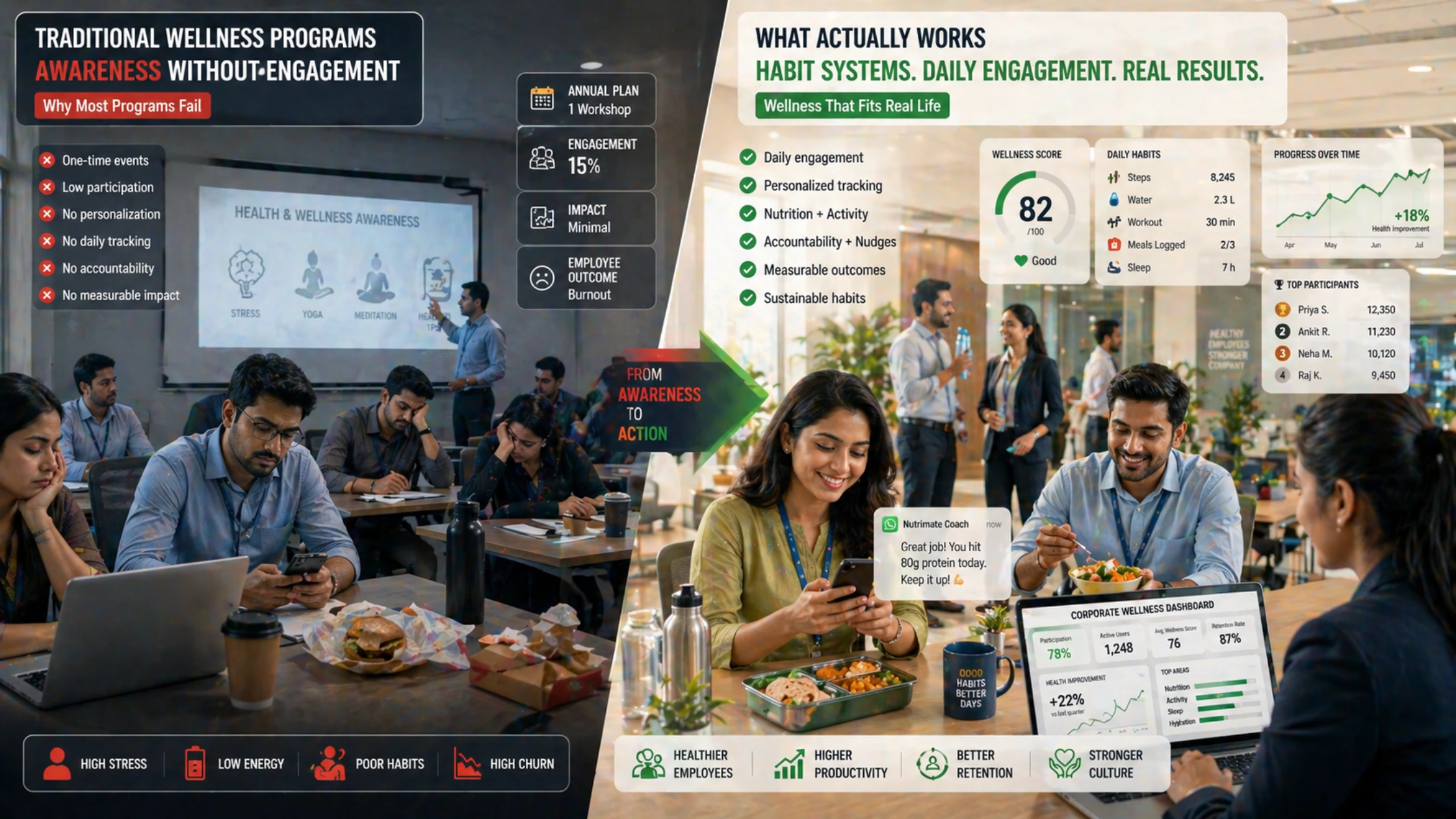
Across India, companies are spending more on employee wellness than ever before.
HR teams invest in:
- Health talks
- Yoga sessions
- Annual health camps
- Stress workshops
- Step challenges
On paper, this looks proactive.
But in reality, many corporate wellness tools India initiatives fail to create measurable long-term health improvement.
The pattern is familiar:
HR spends budget.
Employees attend one session.
A few people participate.
Engagement fades.
Nothing meaningfully changes.
This is one of the biggest reasons workplace wellness engagement tools are evolving beyond event-based wellness.
The core issue is simple.
Most programs create awareness, but not sustained behavior change.
And without daily action, awareness alone rarely improves health outcomes.
For modern Indian companies facing rising concerns around:
- Burnout
- Lifestyle diseases
- Diabetes
- Obesity
- Productivity decline
The future of employee health tracking solutions lies not in occasional wellness campaigns, but in consistent systems that fit real employee lifestyles.
The Reality of Corporate Wellness Today
Most corporate wellness strategies are designed around isolated interventions.
These include:
- Quarterly wellness sessions
- Annual screenings
- One-time diet consultations
- Mental health webinars
These initiatives can create short-term awareness.
But awareness is not the same as action.
The Indian Workplace Reality
For many employees:
- Long commutes
- Desk-heavy workdays
- Irregular meals
- Stress eating
- Sleep disruption
Even after attending a wellness session, most employees return to:
- Missed breakfasts
- Sedentary work
- Late-night meals
- Inconsistent habits
This is why many corporate wellness investments struggle to generate retention-level engagement.
Common Mistake
Companies often assume:
“Information will create change.”
In reality:
Information without systems creates temporary motivation, not sustainable outcomes.
This is why preventive health monitoring tools are becoming more relevant than awareness-only campaigns.
Why Employees Don’t Engage
Low employee engagement is rarely because people do not care.
More often, they disengage because wellness feels:
- Generic
- Time-consuming
- Hard to apply daily
- Disconnected from their routine
Common Employee Frustrations:
- “This sounds good, but I don’t have time.”
- “Healthy eating is hard with office schedules.”
- “One webinar won’t fix my habits.”
- “I already know what’s healthy.”
The Key Problem: Complexity
If wellness requires too much effort, employees deprioritize it.
This is especially true in Indian office culture where:
- Lunch is often convenience-driven
- Meetings disrupt meal timing
- Family obligations continue after work
No Daily Visibility
Most companies do not track:
- Meal consistency
- Daily habits
- Energy patterns
- Behavioral shifts
Without visibility, wellness becomes symbolic.
This is where employee health tracking solutions create more value than passive wellness communication.
The “One-Time Initiative” Problem
A one-time wellness session may inspire.
But inspiration fades quickly.
Why This Happens:
Behavior change requires:
- Repetition
- Tracking
- Feedback
- Reinforcement
A single:
- Nutrition seminar
- Corporate challenge
- Health camp
Cannot replace a system.
Example:
An employee attends a stress management workshop on Friday.
By Monday:
- Inbox overload returns
- Meals become irregular
- Sleep suffers
Without structured follow-through, the session becomes informational entertainment.
Corporate Analogy:
Would one annual sales workshop guarantee year-long sales performance?
No.
Because systems matter more than events.
The same applies to wellness.
What This Means for HR
HR leaders increasingly need:
- digital wellness platform India solutions
- Daily health tracking tools
- Habit systems
- Practical client engagement frameworks
Wellness must move from event to ecosystem.
Awareness vs Daily Action
Awareness answers:
“What should I do?”
Daily action answers:
“Am I actually doing it?”
This distinction changes outcomes.
Awareness Alone:
- Educates
- Inspires
- Starts conversation
Daily Action:
- Builds habits
- Creates accountability
- Improves measurable outcomes
Practical Example:
An employee may know:
- Junk food is unhealthy
- Sleep matters
- Walking helps
But knowledge does not guarantee action.
What Daily Systems Can Track:
- Meal quality
- Water intake
- Movement
- Habit adherence
- Weight trends
This is why some companies now focus on daily habit tracking instead of one-time wellness events.
Indian-Specific Relevance
For Indian teams, health systems must account for:
- Regional meals
- Family schedules
- Work pressure
- Practical food habits
This is where Nutrimate’s Indian-first, AI-powered, WhatsApp-first model becomes relevant as a simplicity enabler, not just another wellness platform.
What Actually Works: Habit-Based Systems
The most effective corporate wellness strategies share one trait:
They reduce friction.
Habit-Based Wellness Prioritizes:
- Simplicity
- Daily consistency
- Low effort
- Measurable progress
Effective Examples:
- Simple nutrition tracking
- Habit nudges
- Meal visibility
- Trainer or HR dashboards
- Departmental accountability
Why This Works Better
Employees do not need more information.
They need easier execution.
The Shift:
From:
“Wellness education”
To:
“Wellness integration”
Cross-Sector Parallel
This same model is also improving:
- gym member retention tools
- fitness client engagement platform systems
- client meal tracking for trainers
- nutrition tracking for clinics
- patient diet tracking tool models
The principle remains the same:
Daily visibility drives better consistency.
Step-by-Step Fix for HR Teams
Step 1: Stop Measuring Attendance Alone
Participation in wellness events is not enough.
Track:
- Habit engagement
- Meal consistency
- Behavioral participation
Step 2: Focus on Simplicity
Complex apps often fail due to:
- High friction
- Manual effort
- Low adoption
WhatsApp-first or low-friction systems often perform better in India.
Step 3: Build Daily Visibility
Use:
- employee health tracking solutions
- Habit dashboards
- Progress systems
Step 4: Make Wellness Relevant
Generic advice fails.
Contextual wellness wins:
- Diabetes-focused employees
- Desk workers
- Frequent travelers
- Parents
This is where diabetes diet tracking India and targeted preventive health systems matter.
Step 5: Position Wellness as Productivity
Health is not just a benefit.
It influences:
- Focus
- Energy
- Sick days
- Retention
This makes corporate wellness tools India a business strategy, not just HR policy.
Example: Office Employee
Meet Priya, 34, Bengaluru, HR Manager
Traditional Corporate Wellness:
- Attends webinar
- Gets inspired
- Busy week begins
- No follow-up
- Habits unchanged
Habit-Based System:
- Daily meal check-ins
- Simple nutrition tracking
- Water goals
- Stress awareness
- Weekly progress visibility
Result:
Not perfection.
But:
- Better consistency
- Greater awareness
- Reduced friction
This is the difference between wellness campaigns and wellness systems.
Broader Strategic Opportunity
Modern organizations are beginning to realize wellness systems can expand into:
- fitness software
- gym management
- trainer nutrition tracking dashboard
- fitness coach client management software
- Insurance-linked preventive health monitoring tools
This creates stronger overlap between:
- HR
- Healthcare
- Fitness
- Family wellness
Companies that adapt early can move beyond reactive healthcare into sustainable workforce health.
Frequently Asked Questions
Most corporate wellness programs fail because they focus too heavily on one-time awareness sessions instead of daily habit systems. Without ongoing engagement, tracking, and behavioral support, employees often return to old routines quickly.
Employee health engagement improves when wellness becomes simple, daily, and practical. Habit tracking, easy meal visibility, personalized systems, and low-friction tools create stronger participation than occasional sessions alone.
Habit-based systems work better than one-time wellness sessions. Daily health tracking, consistent engagement, practical nutrition systems, and visible progress create stronger long-term outcomes than awareness events alone.
Nutrimate simplifies Indian health tracking with WhatsApp-first meal logging and a unique Caregiver Connection feature that keeps individuals and families consistently supported.