 Pradnya Ganorkar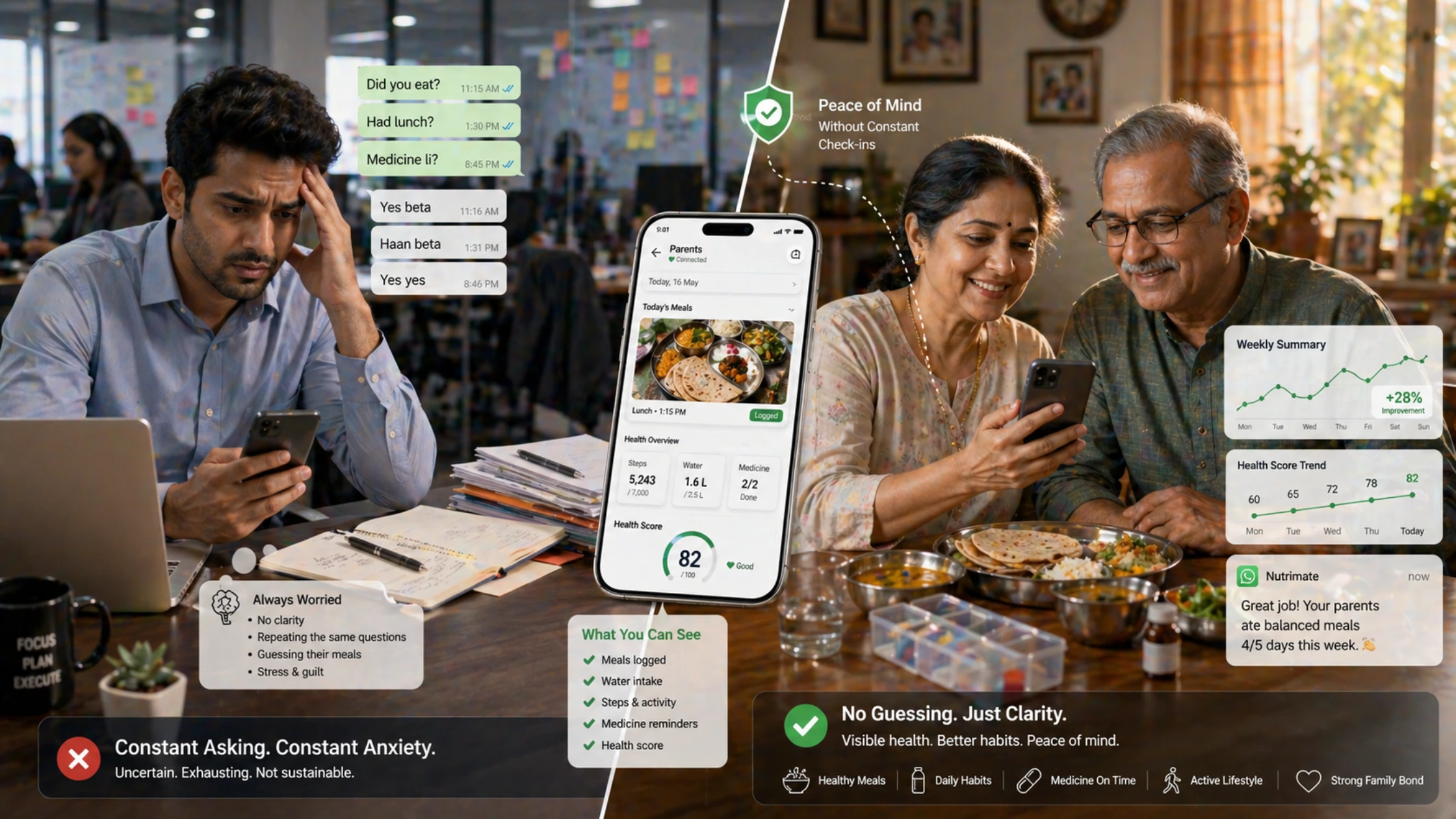
For millions of working Indians living away from home, one question repeats almost every day:
“Did you eat?”
It sounds simple.
But for many families, this question represents something much deeper:
Concern. Guilt. Responsibility. Distance.
This is where health tracking for parents becomes emotionally important.
Adult children often call daily to check:
- Meals
- Medicines
- Sugar levels
- Sleep
- Energy
Yet even after regular calls, many still feel uncertain.
Did they actually eat properly?
Are they skipping meals?
Are they just saying “yes” to avoid worrying you?
This is one of the biggest hidden gaps in modern family wellness India.
The challenge is not care.
It is visibility.
For families trying to balance careers, distance, and caregiving, the goal is not constant questioning. It is building a better system.
This is why family health tracking app models, caregiver health tools, and simple track parents diet systems are becoming increasingly relevant.
The real solution is not more calls.
It is smarter, lower-friction awareness.
The “Did You Eat?” Problem
In Indian families, food is often the first sign of health.
When parents age, children naturally worry about:
- Missed meals
- Diabetes management
- Medication timing
- Appetite loss
- Poor Indian diet balance
So the default behavior becomes frequent check-ins.
Common Pattern:
- “Did you eat?”
- “What did you eat?”
- “Did you take your medicine?”
- “Did you check sugar?”
This approach comes from love.
But it often creates two problems:
1. Repetition Fatigue
Parents may feel:
- Monitored
- Repeatedly questioned
- Emotionally tired
2. Incomplete Accuracy
Many parents simplify responses:
- “Yes, I ate.”
- “Everything is fine.”
Not because they are hiding.
But because they do not want to create stress.
The Emotional Cost
For working professionals, this creates:
- Constant worry
- Mental distraction
- Caregiver guilt
This is one reason family health can feel emotionally exhausting even when communication is frequent.
Why Parents Don’t Share Health Details
Many adult children assume parents will proactively share problems.
Often, they do not.
Common Reasons:
- They do not want to “burden” children
- They normalize symptoms
- They underestimate dietary importance
- They forget specifics
- They avoid worry
Indian Family Dynamic
In many Indian households:
Parents protect children emotionally, even when children are adults.
So instead of saying:
“I skipped lunch”
They may say:
“I’m fine.”
Diet Complexity
This matters even more for:
- Diabetes
- Blood pressure
- Low appetite
- Weight loss
- Medication-linked nutrition
This is why track parents diet systems are often more useful than relying only on memory-based updates.
Common Mistake:
Families assume communication = clarity.
But communication without visibility often leaves blind spots.
The Visibility Gap in Family Health
This is the real issue.
Most families care deeply.
But they lack structured awareness.
Current Reality:
You may know:
- They are “okay”
But not know:
- Meal quality
- Nutritional consistency
- Appetite changes
- Repeated skipped meals
- Protein intake
This visibility gap matters because health decline often happens gradually, not dramatically.
Small Patterns Matter:
- Eating less regularly
- More tea, fewer meals
- High sugar snacks
- Reduced hydration
These patterns often go unnoticed until larger issues emerge.
Why Traditional Monitoring Fails
Most families rely on:
- Calls
- Occasional visits
- Doctor appointments
But this creates reactive caregiving.
Better Approach:
Ongoing passive awareness.
This is where family nutrition habits India become strategically important.
When families understand patterns, they can respond earlier.
What Actually Works: Passive Tracking
Passive tracking does not mean surveillance.
It means reducing uncertainty without increasing emotional pressure.
Passive Tracking = Low-Effort Visibility
Examples:
- Simple meal logging
- Shared food updates
- Daily wellness patterns
- Medication check-ins
- Sugar trends
Why Passive Systems Work Better:
They reduce:
- Repetitive questioning
- Parent resistance
- Child anxiety
They improve:
- Awareness
- Pattern recognition
- Calm communication
Example:
Instead of:
“Did you eat lunch?”
You can know:
- Meal logged
- Approximate food type
- Timing
This creates informed conversations.
Indian-Specific Benefit
Because Indian food and health patterns vary widely by region and family style, passive systems work best when designed around real meals:
- Roti
- Dal
- Rice
- Sabzi
- Snacks
This is why Nutrimate’s AI-powered, Indian-first, WhatsApp-first approach can fit naturally into health tracking for parents without requiring complicated food tracking without calorie counting.
Simple Daily System for Families
A practical family system should feel supportive, not burdensome.
Step 1: Focus on Awareness, Not Perfection
Goal:
Understand trends.
Not:
Control every meal.
Step 2: Use Familiar Routines
Examples:
- Breakfast check
- Lunch meal photo
- Evening hydration
- Medicine confirmation
Step 3: Simplify Logging
Complex systems fail quickly.
Simple systems fit better into:
- Older adults
- Busy professionals
- Shared caregiving
Step 4: Track Key Signals
Priority:
- Meal regularity
- Sugar-sensitive eating
- Appetite changes
- Energy
Step 5: Share Responsibility
Family wellness India works better when siblings or caregivers share awareness instead of one person carrying all pressure.
Real Example: Working Son/Daughter
Meet Ananya, 31, Bengaluru
Her parents live in Nagpur.
Old Routine:
- 3 calls daily
- Constant “Did you eat?”
- Guilt during meetings
- Still uncertain
Problem:
High emotional effort, low clarity.
New Routine:
- Parent meal photo logging
- Weekly pattern visibility
- Calm calls
- Better food awareness
Result:
Not perfect control.
But:
- Reduced caregiver stress
- Better family health visibility
- Less repetitive friction
This is the difference between emotional monitoring and practical systems.
Do vs Don’t
DO:
- Build simple health habits around awareness
- Use family health tracking app or passive systems
- Focus on patterns
- Respect parent autonomy
- Keep systems low-friction
DON’T:
- Constantly interrogate
- Assume “fine” means clarity
- Overcomplicate tracking
- Focus only during emergencies
- Create guilt-based caregiving
Bigger Shift: From Caregiver Anxiety to Family Systems
The future of caregiver health tools is not control.
It is:
- Visibility
- Simplicity
- Shared awareness
This matters especially in India where:
- Children often live in different cities
- Parents may manage chronic conditions
- Food habits strongly affect health
A better system supports:
- healthy Indian eating habits
- family nutrition habits India
- Lower stress
- Sustainable lifestyle change
Ultimately, the goal is simple:Less guessing.
Less guilt.
More calm clarity.
Frequently Asked Questions
The best approach is using simple passive systems like meal logging, shared updates, or structured health tracking that improves visibility without constant calls. Focus on patterns, not pressure.
A low-friction system that tracks meal regularity, food quality, hydration, and dietary consistency works best. Simplicity is critical, especially when tracking familiar Indian meals.
Reduce caregiver stress by shifting from repetitive questioning to structured awareness systems. Shared family responsibility, passive tracking, and visibility tools can lower uncertainty and emotional burnout.