 Pradnya Ganorkar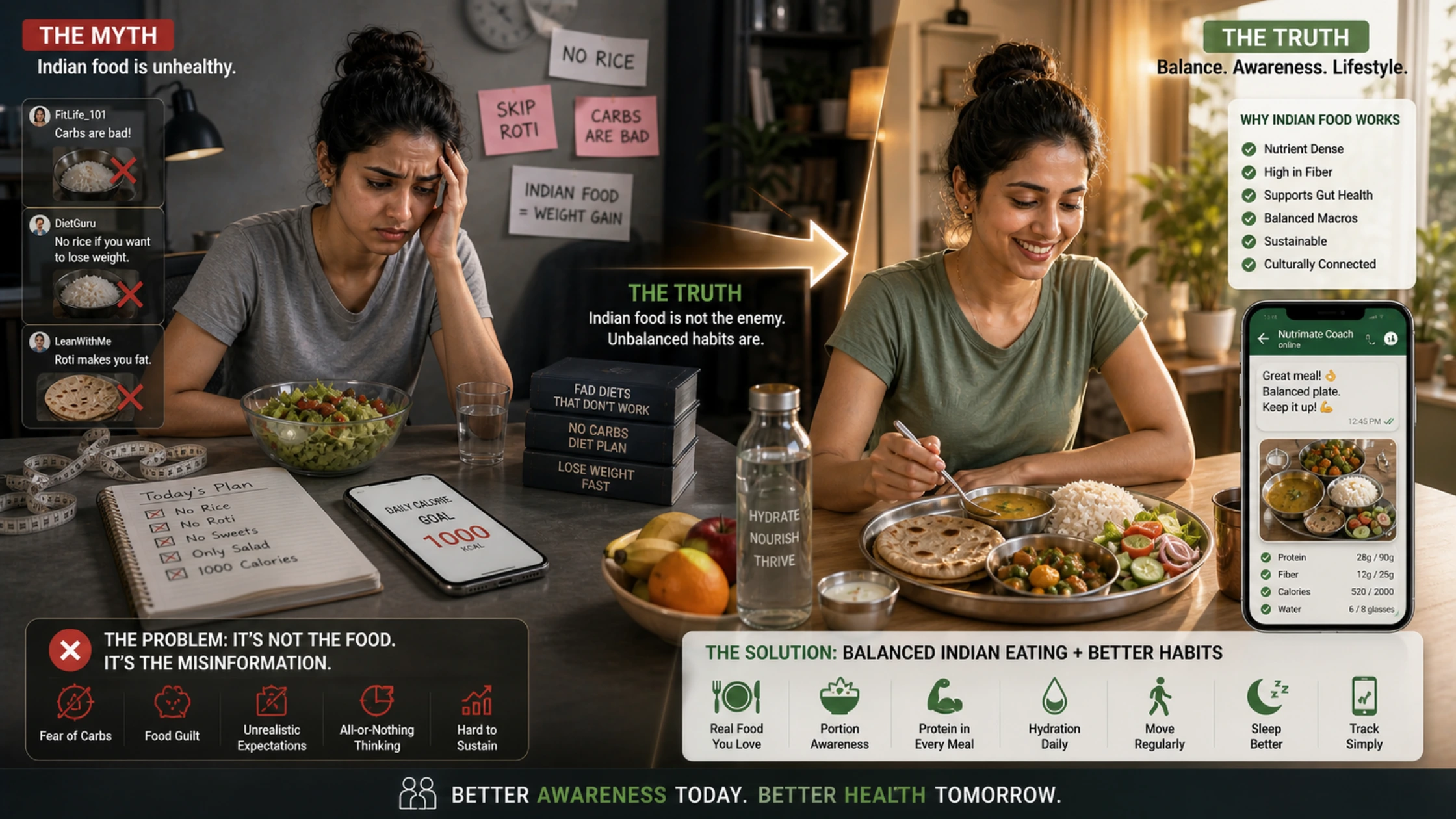
For millions of people trying to eat better, one question keeps coming up:
Is Indian food healthy?
This question often appears after someone is told:
“Stop eating rice.”
“Roti causes weight gain.”
“Indian food is too carb-heavy.”
“You need a completely different diet.”
For many Indians trying to build a healthy lifestyle for busy Indians, this creates confusion fast.
Because the problem is not just food.
It is food perception.
Traditional Indian food and health conversations are often shaped by oversimplified diet culture, social media trends, and Western nutrition narratives that do not always match Indian eating realities.
This has created one of the biggest modern Indian diet myths:
That Indian food itself is the problem.
But for most people, the truth is more nuanced.
Indian food is not automatically unhealthy.
What often matters more is:
- Quantity
- Frequency
- Preparation
- Lifestyle
- Movement
- Awareness
In many cases, people are not struggling because of roti or rice.
They are struggling because of inconsistent habits, hidden calories, poor portion awareness, and lifestyle patterns.
This is why building sustainable health habits for Indians usually starts with understanding food better, not fearing it.
Why Indian Food Gets Blamed
Indian food is often unfairly criticized because it is easy to oversimplify.
Common Assumptions:
- Rice = fattening
- Roti = too many carbs
- Ghee = unhealthy
- Dal = incomplete
- Traditional meals = outdated
This blame often ignores context.
Reality:
Most traditional Indian meals were originally built around:
- Whole grains
- Pulses
- Vegetables
- Fermented foods
- Seasonal ingredients
- Home cooking
So Why the Blame?
Because modern eating patterns have changed faster than traditional perceptions.
What Changed:
- Larger portions
- More fried snacks
- Restaurant-style cooking
- Sugar-heavy beverages
- Sedentary work culture
- Frequent ordering out
Important Distinction:
Traditional healthy Indian eating habits are different from highly processed, convenience-heavy eating.
Myth vs Reality
Myth:
Indian food is unhealthy
Reality:
Indian food can be highly nutritious or highly calorie-dense depending on preparation, portions, and routine
Strategic Insight:
Blaming all Indian food and health challenges on staple foods often distracts from the real issue:
Behavior patterns.
The Real Issue: Quantity & Frequency
For most people, food type alone is rarely the full story.
The bigger drivers are:
Quantity:
How much you eat
Frequency:
How often you overconsume
Example:
Two rotis with balanced dal and sabzi can be very different from:
Four butter rotis + fried sides + dessert + sugary chai
Common Indian Lifestyle Pattern:
- Heavy breakfast skipped
- Large lunch
- Tea snacks
- Late dinner
- Weekend indulgence
This inconsistency often creates bigger metabolic problems than any single food.
Why This Matters:
A bowl of rice is not automatically harmful.
But:
Large portions + low movement + poor sleep + repeated excess can create issues.
This is where many Indian diet myths become misleading.
People often remove staple foods before examining:
- Portion size
- Oil quantity
- Snacking
- Sugar
- Eating frequency
Practical Rule:
Before blaming food, assess behavior.
Better Question:
Not:
“Is rice bad?”
But:
“How does my total pattern look?”
This mindset supports stronger lifestyle change than food fear.
Home Food vs Outside Food
One of the most overlooked factors in is Indian food healthy conversations is source.
Home-Cooked Indian Food Often Includes:
- Controlled oil
- Familiar ingredients
- Balanced staples
- Portion flexibility
Outside Food Often Includes:
- Hidden oils
- Sugar
- Butter
- Cream
- Oversized portions
- Hyper-palatable combinations
Practical Example:
Home:
Roti + dal + sabzi
Restaurant:
Butter naan + paneer makhani + dessert
Both are “Indian food.”
But nutritionally, they are very different.
Why This Distinction Matters:
People often blame cuisine when the bigger variable is preparation style.
Indian-Specific Challenge:
Frequent ordering, office lunches, social meals, and packaged snacks can distort what “Indian food” actually means.
Strategic Takeaway:
For many families, improving healthy Indian eating habits often means returning to more balanced home patterns, not abandoning cultural food.
Why Tracking Matters More Than Food Type
Many people assume they know what they are eating.
Often, they do not.
Common Misjudgments:
- “I only eat home food”
- “I don’t eat much rice”
- “My diet is mostly healthy”
But without awareness, assumptions can be misleading.
This is why meal tracking matters.
Not because food should feel restrictive.
But because visibility changes behavior.
Tracking Helps Answer:
- How often am I overeating?
- Am I skipping protein?
- Are snacks adding up?
- Is tea sugar frequent?
- Are portions larger than I think?
Important:
Meal tracking does not always mean obsessive calorie counting.
Many people do better with:
- Pattern awareness
- Simple logging
- How to stay healthy without dieting approaches
Productive Shift:
Tracking helps you understand your actual intake, not assumptions.
This is where simple tools like Nutrimate’s Indian-first, AI-powered, WhatsApp-first system can reduce friction by making meal tracking easier for Indian meals without forcing rigid diet culture.
Key Principle:
Awareness often beats elimination.
Example: Roti, Dal, Rice
Few foods are blamed more than these staples.
Let’s Break It Down:
Roti:
Often blamed for carbs
Rice:
Often blamed for weight gain
Dal:
Often underestimated
Actual Reality:
Together, these can form a balanced meal depending on:
- Portion
- Protein balance
- Vegetables
- Oil use
- Activity level
Example Balanced Meal:
- 2 rotis
- Dal
- Sabzi
- Salad
Example Less Balanced Meal:
- Excess rice
- Fried sides
- Sugary beverage
- Dessert
Important:
Roti and rice are not automatically the issue.
The Real Issue:
Repeated imbalance
This is especially relevant for people seeking:
- How to stay consistent with health
- Simple health habits for working professionals
- Healthy lifestyle for busy Indians
Because sustainable systems usually outperform food guilt.
Simple Fixes
If your goal is better health without abandoning Indian food, focus on practical upgrades.
1. Keep Familiar Foods
Do not unnecessarily eliminate:
- Roti
- Rice
- Dal
2. Improve Structure
Add:
- Protein
- Vegetables
- Better timing
3. Watch Frequency
Reduce:
- Fried snacks
- Sugary drinks
- Repeated overeating
4. Prioritize Awareness
Use:
- Meal tracking
- Habit observation
- Portion awareness
5. Focus on Sustainability
The best plan is usually the one you can repeat.
Strategic Truth:
For most people, healthy Indian eating habits are more about consistency than food replacement.
Frequently Asked Questions
No. Indian food is not automatically bad for weight loss. Weight management usually depends more on portion size, preparation methods, total calorie intake, and lifestyle patterns than on Indian cuisine itself.
Yes. You can lose weight while eating roti and rice if your overall portions, meal balance, activity levels, and consistency support your health goals. Staple foods alone are rarely the sole cause of weight gain.