 Pradnya Ganorkar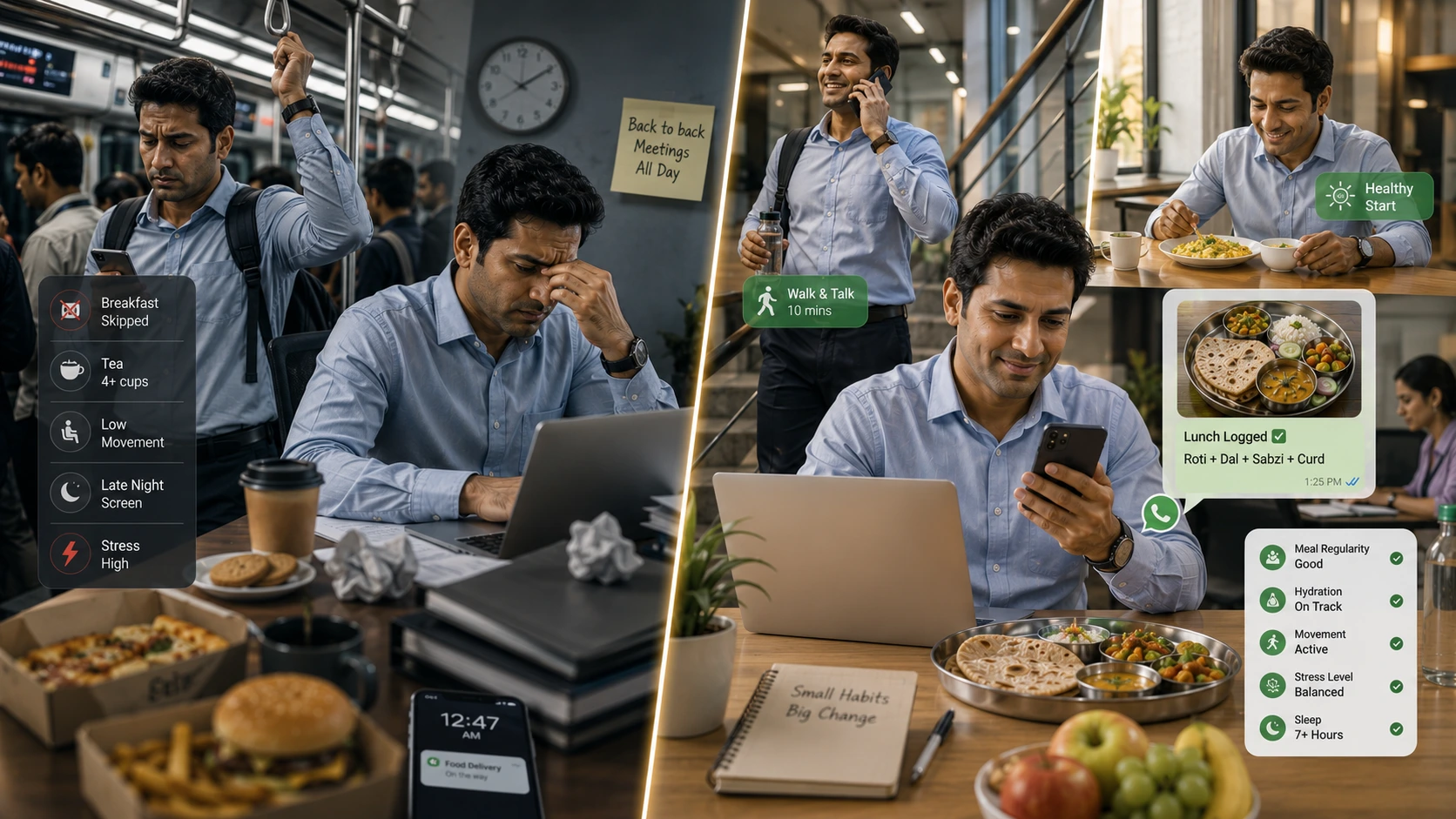
For millions of Indians balancing office deadlines, traffic, meetings, family responsibilities, and inconsistent schedules, the biggest health frustration is not lack of awareness.
It is lack of time.
This is why building a healthy lifestyle for busy Indians often feels harder than it should.
You know health matters.
You know sleep matters.
You know food matters.
But real life often looks like:
- Skipping breakfast
- Tea and biscuits between calls
- Late lunches
- Evening cravings
- Office parties
- Long commutes
- Weekend overeating
This creates a common belief:
“Healthy living requires major routine changes.”
For most working professionals, that assumption becomes the biggest blocker.
Because when health feels like a full extra project, consistency breaks.
This is exactly why many people struggle with how to stay consistent with health.
The good news is this:
You often do not need a new life.
You need smarter systems inside your existing one.
For most professionals, simple health habits for working professionals work better than extreme routines because they reduce friction instead of increasing pressure.
This article explores how Indian professionals can create a healthy lifestyle, improve office health habits, and build sustainable health habits for Indians without unrealistic diets, heavy gym dependency, or complete schedule overhauls.
In many cases, practical tools like India’s #1 whatsapp meal logging feature and Unique Caregiver feature are helping busy people simplify meal tracking and maintain awareness without adding complexity.
Because for modern professionals, health usually improves not through perfection, but through easier daily decisions.
The “No Time for Health” Problem: healthy lifestyle for busy Indians, office health habits, and why staying healthy is hard
One of the biggest myths in Indian professional life is:
“I’ll focus on health when life slows down.”
But for most people:
Life rarely slows down.
Common Reality:
- 9 to 10-hour workdays
- Commutes
- Client calls
- Family duties
- Social obligations
This creates a dangerous cycle:
Busy → tired → convenience eating → lower energy → less movement → guilt → restart Monday
Why This Happens:
Health often gets treated like an additional task instead of a built-in system.
Major Indian-Specific Challenges:
1. Work Culture
Long desk hours and unpredictable schedules
2. Food Accessibility
Office snacks, chai, takeout, and quick outside meals
3. Mental Fatigue
Decision overload leads to convenience choices
4. All-or-Nothing Thinking
People assume:
“If I can’t do full workouts and perfect diets, why bother?”
Myth vs Reality
Myth: Health requires big free time
Reality: Better health habits often come from small, repeatable adjustments
Strategic Insight:
The issue is not always motivation.
Often, why staying healthy is hard comes down to system design.
Why Health Feels Like Extra Work: simple health habits for working professionals, how to stay healthy without dieting, and lifestyle change
Many professionals fail not because they are lazy.
They fail because health plans feel operationally unrealistic.
Common Overcomplicated Health Advice:
- Cook separate meals
- Track every calorie
- Gym 6 days a week
- No rice
- No sweets
- Wake at 5 AM
For a busy Indian professional, this often creates resistance.
Why?
Because sustainable behavior usually fits life.
It does not constantly fight it.
Example:
A marketing executive in Mumbai may struggle with:
- Client lunches
- Evening fatigue
- Local train commutes
- Irregular meal timing
A rigid “perfect” plan may collapse quickly.
Better Framework:
Instead of:
“Change everything.”
Try:
“Reduce friction.”
Practical Examples:
- Keep breakfast simple, not elaborate
- Improve office snack quality
- Walk during calls
- Structure outside eating better
- Use food tracking without calorie counting
Important:
How to stay healthy without dieting often depends more on realistic structure than restriction.
Small Changes That Actually Work: sustainable health habits for Indians, meal tracking, and Indian diet for busy professionals
This is where most successful professionals differ.
They do not necessarily do more.
They do simpler things more consistently.
High-Impact Low-Effort Habits:
1. Anchor Meals
Create predictable defaults:
- Poha + curd
- Idli + sambar
- Roti + sabzi
- Dal + rice
2. Improve, Don’t Eliminate
Instead of removing Indian food, improve portions and balance.
3. Use Awareness Systems
Simple meal tracking reduces unconscious overeating.
4. Reduce Energy Crashes
Avoid long gaps that lead to binge eating.
5. Build Movement Into Existing Life
- Stairs
- Walking meetings
- Standing breaks
Key Principle:
Consistency beats intensity.
Why This Matters:
Sustainable health habits for Indians often work better when they align with:
- Family meals
- Indian work schedules
- Real food preferences
Nutrimate Context:
AI-powered, Indian-first systems like Nutrimate support this by making simple meal tracking for Indian food easier within WhatsApp-based routines.
Office + Commute Routine Example: office health habits, simple meal tracking for Indian food, and healthy lifestyle for busy Indians
Scenario:
32-year-old corporate employee in Bengaluru
Old Pattern:
- Skip breakfast
- Coffee
- Heavy lunch
- Snacks
- Late dinner
Common Result:
Low energy, cravings, inconsistent healthy eating
Better Practical Routine:
Morning:
- Banana + nuts OR dosa + sambar
- Hydration
Commute:
- Avoid random packaged snacking
Office:
- Structured lunch
- Tea without frequent biscuits
- Protein-based snack if needed
Evening:
- Light movement after work
Dinner:
- Familiar Indian meal, portion aware
Tracking:
A quick meal photo or simple log creates visibility.
Benefit:
This approach supports:
- Better lifestyle change
- Lower mental load
- Better consistency
Important:
This is not about “fitness perfection.”
It is about operational health.
Weekend Reality: Indian diet without dieting, stress free living, and healthy lifestyle
Weekends are where many routines collapse.
Common Weekend Mistakes:
- “Cheat day” mentality
- Heavy restaurant food
- Alcohol
- Sleep disruption
- Zero structure
Better Weekend Strategy:
1. Flexibility Without Chaos
Enjoy meals, but avoid full habit collapse.
2. Keep Basic Anchors
- Hydration
- Breakfast awareness
- Portion balance
3. Avoid Guilt Spiral
One indulgent meal is not failure.
Why This Matters:
Many professionals fail because weekends erase weekday effort.
Myth vs Reality
Myth: Health breaks from one meal
Reality: Health patterns usually break from repeated inconsistency
Better Question:
Not:
“Was my weekend perfect?”
But:
“Did I completely lose awareness?”
Do vs Don’t: how to stay consistent with health, healthy lifestyle India, and simple health habits
DO:
- Build around current routine
- Improve existing meals
- Use easy systems
- Focus on consistency
- Track patterns simply
- Prioritize realistic lifestyle change
DON’T:
- Wait for perfect time
- Remove all favorite foods
- Depend only on motivation
- Restart every Monday
- Treat health like punishment
- Assume gym is the only solution
Strategic Truth: Health for Busy Professionals Is About Design, Not Discipline
For most Indian professionals, health does not fail because they do not care.
It fails because:
- Plans are too hard
- Systems are unclear
- Habits are unsustainable
The strongest long-term healthy lifestyle for busy Indians often comes from:
Simple systems
Daily awareness
Lower friction
Better defaults
This is why easy way to track meals, food tracking without calorie counting, and behavior-friendly systems are becoming increasingly valuable.
Because health should fit life.
Not constantly compete with it.
With tools like India’s #1 whatsapp meal logging feature and Unique Caregiver feature, busy users can stay aware without turning wellness into another exhausting task.
The goal is not perfection.
It is practical consistency.
Frequently Asked Questions
You can stay healthy with a busy job by focusing on simple, repeatable habits like balanced meals, movement during work hours, better snack choices, hydration, and easy meal awareness instead of extreme diets or unrealistic routines.
Yes. You can maintain health without gym by improving daily food patterns, walking more, managing portions, sleeping better, and building sustainable habits into your existing lifestyle. Consistency matters more than intensity.