 Pradnya Ganorkar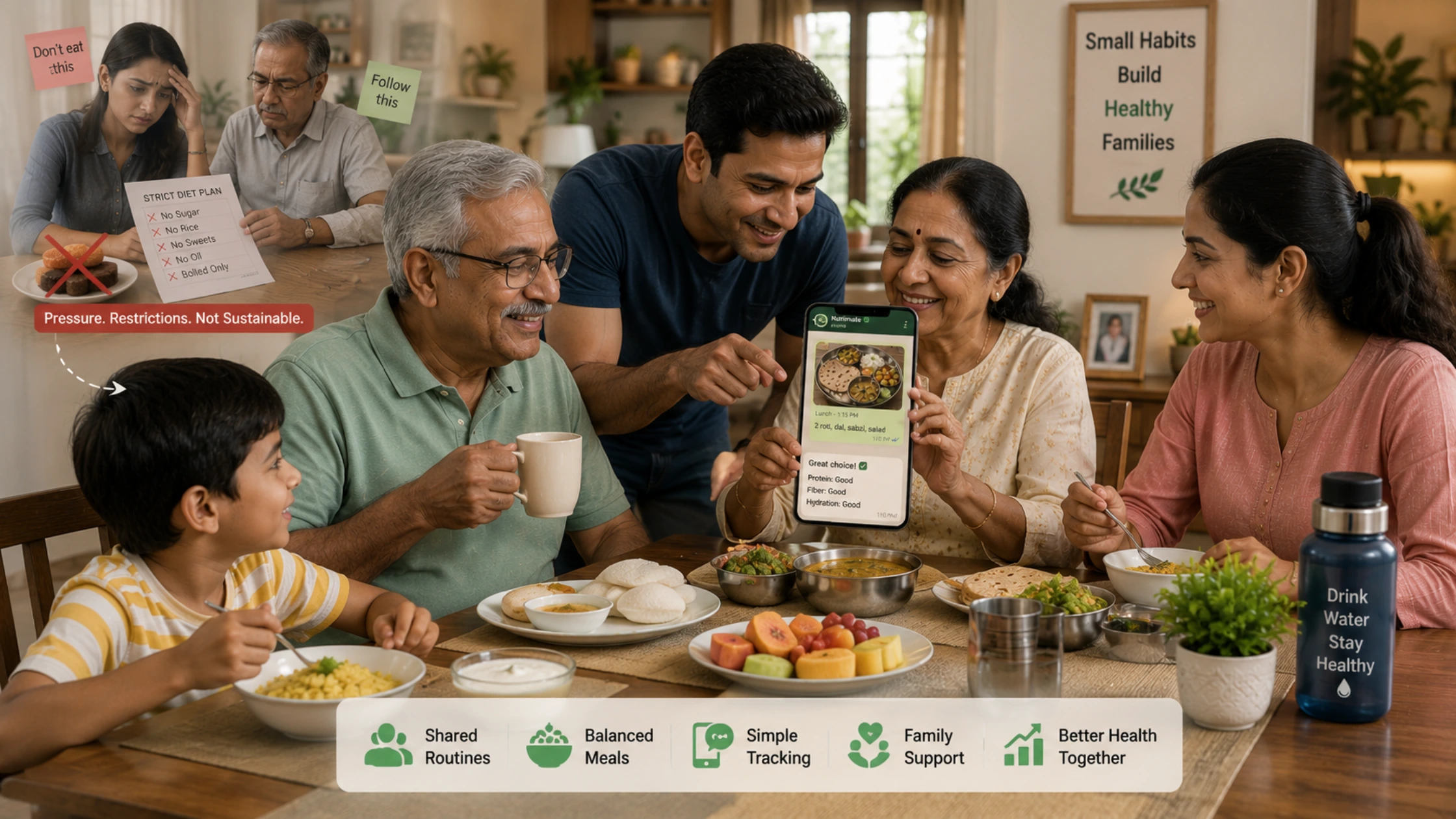
For many Indian families, health is deeply valued.
Parents worry about children.
Children worry about parents.
Spouses encourage each other.
Caregivers try to help everyone.
Yet despite good intentions, one common problem appears in households across India:
The more health is forced, the more resistance often grows.
“Eat less sugar.”
“Stop skipping walks.”
“Don’t eat rice.”
“Sleep early.”
“Exercise more.”
These conversations usually come from care.
But they can often feel like pressure.
This is one of the biggest reasons family healthy habits India often become emotionally difficult.
Because behavior change rarely succeeds through control alone.
It usually works better through environment, influence, and consistency.
This matters especially in Indian households where:
- Food is shared
- Meals are emotional
- Traditions are strong
- Generations live differently
- Family routines are interconnected
This is why building Indian family health habits is often less about enforcing strict rules and more about creating systems that naturally shift behavior over time.
For most families, real lifestyle change family success happens when healthier defaults become easier than unhealthy ones.
This article explores how to improve family wellness India, encourage behavior change family, and support sustainable routines without turning health into daily conflict.
Increasingly, simple systems like India’s #1 whatsapp meal logging feature and Unique Caregiver feature are helping families create awareness without constant reminders.
Because in family health, influence often works better than pressure.
Why Forcing Health Doesn’t Work: family healthy habits India, behavior change family, family wellness India, and health tracking for parents
One of the most common mistakes families make is assuming:
“If people know what’s healthy, they’ll do it.”
In reality, health behavior is rarely just about information.
It is often shaped by:
- Habit
- Emotion
- Convenience
- Identity
- Environment
Common Indian Family Pattern:
A daughter tells parents:
“Please stop eating sweets.”
A spouse says:
“You need to walk daily.”
A parent says:
“Stop ordering outside food.”
Result?
Often:
- Defensiveness
- Resistance
- Temporary compliance
- Long-term inconsistency
Why?
Because forced health can feel like loss of freedom.
Psychology Insight:
People often resist when they feel controlled, even if advice is correct.
Myth vs Reality
Myth: More reminders create better habits
Reality: Too much pressure often creates avoidance
Example:
Constantly policing food may increase secrecy rather than consistency.
Strategic Truth:
Health tracking for parents or family wellness works better when it feels supportive, not supervisory.
The Psychology of Habit Change: lifestyle change family, family nutrition habits India, how to stay consistent with health, and healthy lifestyle
To build healthier families, it helps to understand one key principle:
Behavior change is easier when habits feel natural.
Habit Change Usually Improves Through:
1. Visibility
People notice patterns
2. Environment
Better choices become easier
3. Social Modeling
One person influences others
4. Repetition
Small actions become normal
Indian Family Example:
If one person begins:
- Evening walks
- Better breakfast choices
- Reduced sugary chai frequency
Others often observe.
Over time, these shifts can influence broader family nutrition habits India.
Important:
You do not always need everyone to “agree” immediately.
You often need one sustainable example.
Family Health Insight:
Influence spreads faster than instruction when it feels practical.
Small Changes That Influence Everyone: family health tracking app, family healthy habits India, simple health habits for working professionals, and food tracking without calorie counting
Large health overhauls often fail.
Small visible shifts often last longer.
Practical High-Influence Changes:
1. Shared Meal Adjustments
Without banning foods:
- Add vegetables
- Adjust portions
- Improve breakfast
- Reduce unconscious snacking
2. Household Defaults
Keep:
- Fruit visible
- Water accessible
- Healthier snacks easier
3. Shared Routines
Examples:
- Post-dinner walks
- Sunday meal prep
- Weekend activity
4. Simple Awareness
This is where a family health tracking app or easy meal tracking can help by showing patterns.
Important:
Awareness should not feel like policing.
Better Goal:
Not:
“Control every meal.”
But:
“Notice family patterns.”
Why This Works:
Food tracking without calorie counting often feels less emotionally exhausting.
Example: Family Routine: Indian family health habits, track parents diet, family wellness India, and healthy Indian eating habits
Scenario:
Urban Indian family:
Working couple + aging parents + school-going child
Common Challenges:
- Different schedules
- Outside food
- Parent health concerns
- Weekend inconsistency
Old System:
Health only discussed when someone gains weight or falls sick
New Family Habit Model:
Morning:
- Shared breakfast rhythm
- Simpler healthy Indian eating habits
Afternoon:
- Better awareness for parents’ meal timing
Evening:
- Family walk or movement
Weekend:
- Flexible meals, but basic structure
Tracking:
A light-touch system such as India’s #1 whatsapp meal logging feature and Unique Caregiver feature can improve visibility without emotional pressure.
Outcome:
- Better track parents diet
- Lower caregiver anxiety
- More natural family health
Key Lesson:
The goal is not perfect discipline.
It is shared awareness.
Do vs Don’t: family healthy habits India, behavior change family, stress free living, and lifestyle change
DO:
- Lead by example
- Change environment gradually
- Focus on shared habits
- Use gentle awareness
- Normalize progress
- Improve routines realistically
DON’T:
- Force strict diets
- Shame food choices
- Constantly criticize
- Expect instant transformation
- Turn health into conflict
- Assume one lecture changes habits
Family Health Principle:
Calm systems usually outperform pressure systems.
Long-Term Consistency: family healthy habits India, sustainable health habits for Indians, family health tracking app, and family wellness India
The biggest family health mistake is treating wellness like a short-term project.
Common Pattern:
Health scare → strict changes → fatigue → old habits
Better Pattern:
Small improvements → repeatable routines → less pressure → better consistency
Long-Term Drivers:
1. Simplicity
2. Emotional comfort
3. Shared systems
4. Flexibility
Why This Matters:
Indian households are dynamic.
Festivals, social events, family gatherings, travel, and generational preferences all affect behavior.
Rigid systems often break.
Flexible systems often last.
Strategic Reality:
Strong family healthy habits India are usually built through:
- Environment
- Modeling
- Routine
- Awareness
Not force.
Nutrimate Context:
As an AI-powered, Indian-first health platform, Nutrimate aligns with this philosophy by supporting simple family awareness through WhatsApp-first behavior systems.
Because families often sustain what feels natural.
Frequently Asked Questions
The best way to help families follow healthy habits is through influence, shared routines, environmental changes, and simple awareness rather than strict control or constant pressure. Leading by example often works better than forcing behavior.
You can influence parents’ lifestyle by making small practical changes, improving shared routines, encouraging healthier defaults, tracking patterns respectfully, and focusing on support instead of criticism. Consistency and empathy matter more than control.