 Pradnya Ganorkar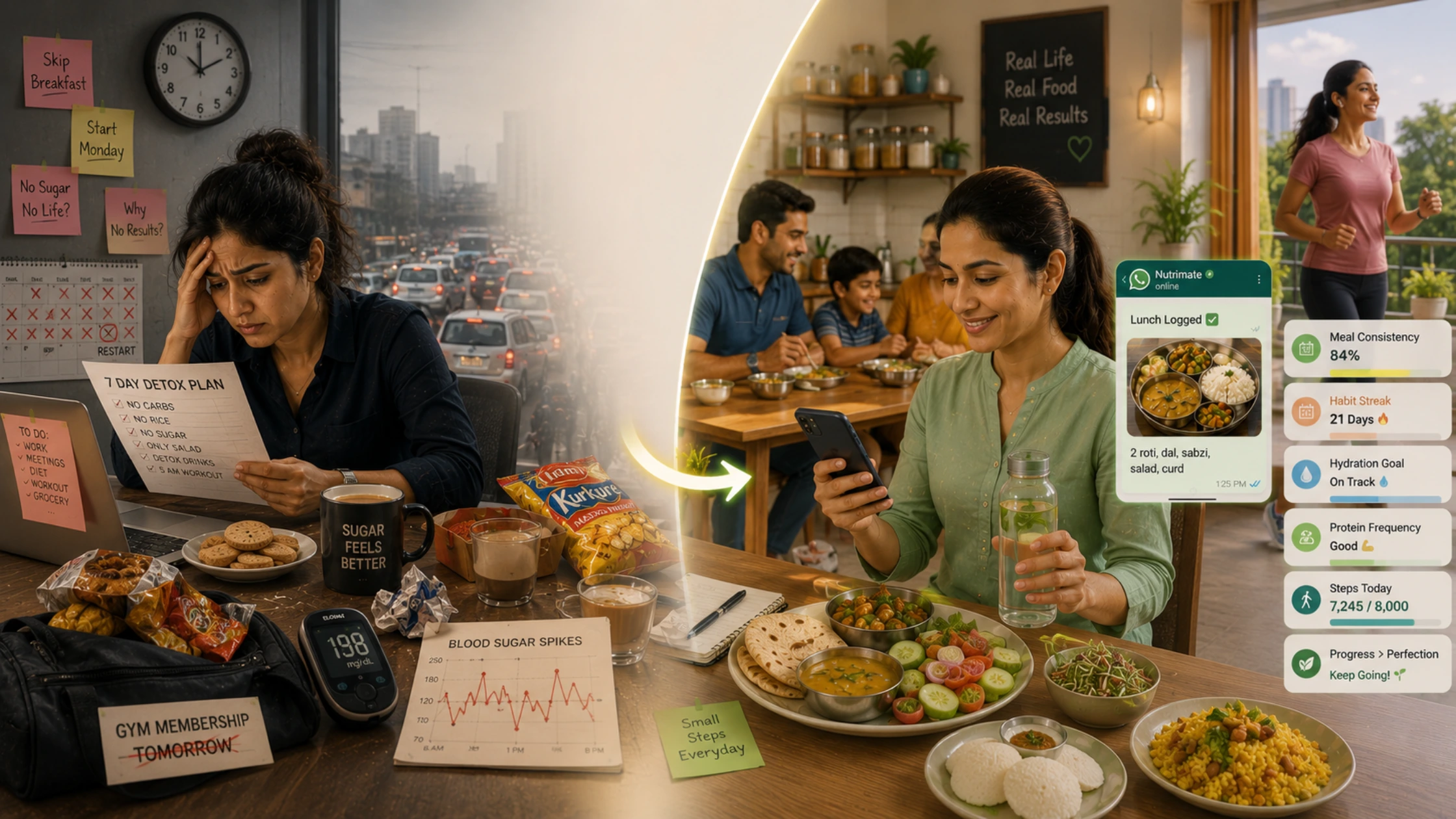
For millions of Indians, health often begins with strong intention.
A new diet on Monday.
A gym membership in January.
A sugar detox before summer.
A “healthy lifestyle” promise after a health scare.
But within weeks, many people return to old routines.
This is not always because people are lazy.
More often, it is because most health advice is designed for short-term intensity, not real life.
This is why building sustainable health habits for Indians requires a different mindset.
In Indian reality, health is shaped by:
- Family meals
- Office schedules
- Commutes
- Social eating
- Festivals
- Budget constraints
- Emotional fatigue
- Inconsistent routines
This makes extreme plans difficult to sustain.
For most people, the real challenge is not starting.
It is maintaining.
This is where healthy lifestyle India, lifestyle change, and practical meal tracking become more useful than temporary motivation.
Because lasting health usually depends less on perfection and more on repeatable systems.
For busy professionals, parents, gym members, and families, true healthy lifestyle for busy Indians strategies are built around:
- Simplicity
- Flexibility
- Indian food relevance
- Low friction
- Habit consistency
And increasingly, practical tools like India’s #1 whatsapp meal logging feature and Unique Caregiver feature are helping simplify this process by making health awareness easier without forcing extreme dieting.
Because long-term health is rarely about doing everything perfectly.
It is about building habits you can actually live with.
Why Short-Term Plans Fail: why diets fail long term, healthy lifestyle India, lifestyle change, and sustainable health habits for Indians
Direct Answer:
Most short-term health plans fail because they rely on temporary motivation instead of sustainable systems.
This is one of the biggest reasons why diets fail long term.
Common Pattern:
People often try:
- Zero-carb diets
- Extreme calorie cuts
- Two-hour gym routines
- Completely avoiding Indian food
- Overcomplicated fitness diet plans
Why This Breaks:
These systems often ignore Indian reality.
Example:
A working professional in Bengaluru may:
- Skip breakfast
- Eat office lunch
- Attend evening social dinners
- Travel frequently
A rigid imported diet plan may collapse quickly.
Myth vs Reality
Myth: You need discipline to stay healthy
Reality: You need systems that fit your real routine
Major Problems with Short-Term Plans:
1. Overrestriction
Too many “don’ts”
2. Social Friction
Family food conflict
3. Complexity
Tracking becomes exhausting
4. Identity Fatigue
People feel like health is “extra work”
Strategic Insight:
Long-term lifestyle change requires reducing friction, not increasing pressure.
What Sustainability Actually Means: how to stay healthy without dieting, long-term health habits, healthy Indian eating habits, and sustainable health habits for Indians
Sustainability Defined:
A sustainable lifestyle is a system you can maintain during:
- Busy weeks
- Travel
- Festivals
- Work stress
- Family obligations
This Means:
You do not need perfect eating.
You need repeatable behavior.
Sustainable Health Core Principles:
1. Consistency Over Intensity
80% adherence beats 7-day extremes
2. Flexibility Over Restriction
Roti can fit
Rice can fit
Sweets can fit strategically
3. Awareness Over Obsession
Knowing patterns matters more than guilt
4. Simplicity Over Complexity
If a habit feels exhausting, it usually won’t last
Example:
Instead of:
“No rice ever”
Better:
“Track portions and frequency”
This is why understanding Indian food and health matters more than blindly blaming carbs.
Important:
Health should support life, not dominate it.
Indian Lifestyle Challenges: healthy lifestyle for busy Indians, Indian diet for busy professionals, simple health habits for working professionals, and how to stay consistent with health
Indian health challenges are unique.
Common Indian Reality:
Work:
- Long office hours
- Sedentary jobs
- Late meetings
Food:
- Family cooking
- Oil-heavy outside food
- Tea + snacks
- Celebratory eating
Lifestyle:
- Poor sleep
- Weekend overeating
- Inconsistent workouts
Why Staying Healthy Is Hard:
This explains why staying healthy is hard for many Indians.
Because health is often treated like an “extra task” rather than integrated behavior.
Example:
A Mumbai commuter may spend:
- 2 hours traveling
- 9 hours working
- Late dinner at home
Traditional fitness advice may feel unrealistic.
Better Framework:
Build simple health habits for working professionals:
- Protein at breakfast
- Walking calls
- Portion awareness
- Meal visibility
- Flexible routines
Strategic Insight:
Health improves faster when systems match life.
Habit Stacking Approach: how to stay consistent with health, easy way to track meals, meal tracking, and lifestyle change
What Is Habit Stacking?
Habit stacking means attaching health actions to routines you already do.
Example:
After chai → drink water
After lunch → 5-minute walk
Before dinner → log meal
During commute → step target
Why It Works:
Habit stacking reduces mental effort.
Psychological Advantage:
New habits fail less when linked to existing behavior.
Practical Indian Examples:
Morning:
Tea + protein source
Office:
Lunch + portion check
Evening:
Snack + fruit swap
Night:
WhatsApp meal log
Product Integration:
This is where Nutrimate’s simple, Indian-first meal tracking approach can support consistency by fitting into everyday behavior instead of adding complexity.
Key Point:
The easier the habit, the longer it lasts.
Daily Routine Example: healthy lifestyle for busy Indians, Indian diet without dieting, food tracking without calorie counting, and healthy eating
Morning:
- Normal breakfast (poha, eggs, idli, paratha with moderation)
- Protein inclusion
- Hydration
Midday:
- Balanced thali
- Portion awareness
- Fewer sugary beverages
Evening:
- Planned snack
- Walk or movement
Dinner:
- Regular home food
- Avoid unconscious overeating
Why This Works:
It supports:
Indian diet without dieting
Important:
You do not need to reject culture.
You need to manage patterns.
Myth:
Healthy means Western food
Reality:
Healthy Indian eating habits can absolutely work when portions, frequency, and consistency improve.
Do vs Don’t: health habits, lifestyle change, meal tracking, and stress free living
Do:
- Focus on repeatable systems
- Keep Indian food practical
- Use simple meal tracking
- Improve awareness
- Build gradually
Don’t:
- Chase extreme diets
- Remove all favorite foods
- Depend only on motivation
- Overcomplicate health
- Quit after one bad week
Strategic Truth:
Missing one day does not fail you.
Quitting usually does.
Content Direction: Long-Term Thinking Through sustainable health habits for Indians
Long-term health is built through:
- Identity
- Routine
- Simplicity
- Flexibility
- Awareness
Not:
- Guilt
- Restriction
- Perfection
Internal Linking Insight:
If users struggle with:
- Consistency → See Blog 7
- Busy routines → See Blog 6
Bigger Lesson:
Your goal is not to “go on a health plan.”
Your goal is to become someone whose habits naturally support health.
Final Strategic Insight:
Tracking daily habits helps you build consistency over time.
This is why practical tools like India’s #1 whatsapp meal logging feature and Unique Caregiver feature can support sustainable behavior by reducing effort and improving awareness for individuals and families.
Because in Indian reality, lasting health is not built through short-term discipline.
It is built through systems that survive real life.
Frequently Asked Questions
Build a sustainable lifestyle by focusing on simple, repeatable habits that fit your real schedule. Prioritize consistency, flexible Indian diet habits, realistic movement, and awareness-based systems over extreme short-term plans.
Habit formation varies, but many habits begin strengthening over weeks through repetition. More important than speed is consistency. Simple habits repeated regularly often last longer than intense routines followed briefly.