 Pradnya Ganorkar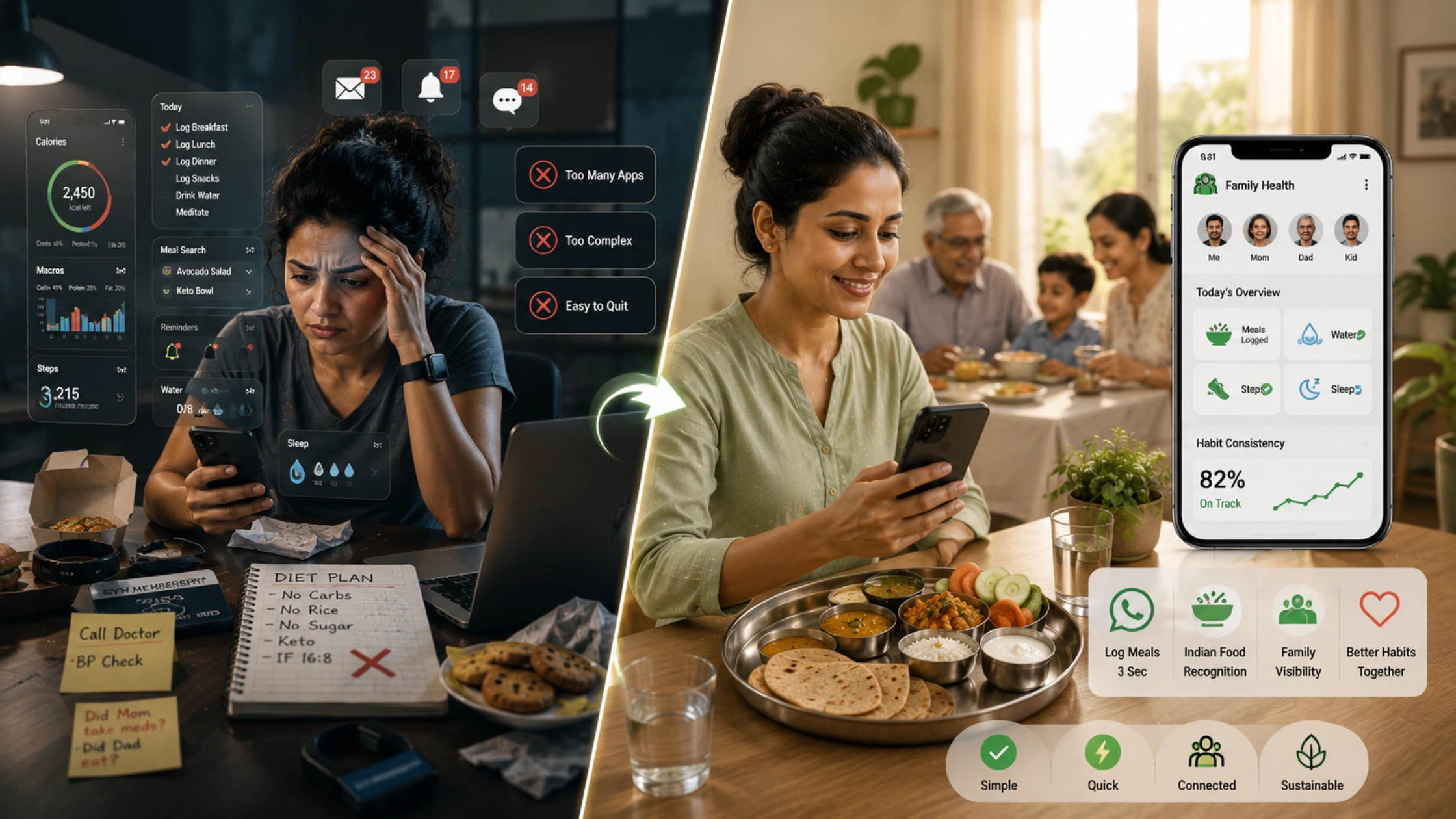
India has no shortage of health apps.
Calorie counters. Fitness trackers. Water reminders. Meditation platforms. Step counters. Meal logging apps.
Yet one common pattern continues:
Download app.
Use for 3 days.
Forget password.
Stop logging.
Quit.
This is one of the biggest reasons many digital wellness platform India solutions struggle to create lasting health outcomes.
The problem is not that Indians do not care about health.
The problem is often that many health tracking tools India are built for idealized behavior, not real Indian life.
For most users, health is already competing with:
- Work deadlines
- Family meals
- Regional foods
- Commutes
- Caregiving
- Budget limitations
- Low motivation
This is why why apps fail is increasingly less about technology quality and more about behavior design.
In many cases, users are not rejecting wellness.
They are rejecting complexity.
This matters across:
- corporate wellness
- employee health tracking solutions
- preventive health monitoring tools
- nutrition tracking for clinics
- diabetes diet tracking India
- Family wellness
Because if a system creates friction, most people eventually stop.
What works better in Indian reality is often simpler:
Low-effort, habit-friendly, familiar systems.
This is where India’s #1 whatsapp meal logging feature and Unique Caregiver feature reflects a larger shift in wellness platform thinking:
Simplicity often outperforms sophistication.
Because sustainable health behavior is rarely built through more features.
It is built through easier consistency.
Why Most Health Apps Don’t Work: digital wellness platform India, health tracking tools India, why apps fail, and preventive health monitoring tools
Direct Answer:
Most health apps fail because they ask users to change behavior too drastically, too quickly, and too consistently.
Common Reality:
Many apps expect users to:
- Log every calorie
- Search every meal
- Track macros
- Monitor sleep
- Add workouts manually
- Read dashboards daily
For many Indian users, this becomes exhausting.
Indian-Specific Challenge:
Health apps often fail to match:
- Homemade thalis
- Regional meals
- Shared family food
- Eating out unpredictability
- Parents’ diets
- Language familiarity
Example:
A user eating:
Poha
Roti sabzi
Dosa
Khichdi
Paratha
May struggle if an app is optimized for Western meal categories.
Strategic Problem:
Technology may exist.
But usability often does not.
Myth vs Reality:
Myth: More features = better app
Reality: More friction = lower retention
Key Insight:
A successful digital wellness platform India must fit daily life, not demand lifestyle redesign.
The Complexity Problem: health tracking tools India, patient diet tracking tool, nutrition tracking for clinics, and corporate wellness tools India
Why Complexity Kills Usage:
Health systems often fail when users feel:
- Overwhelmed
- Judged
- Confused
- Time-poor
Example:
A corporate employee may already manage:
- Meetings
- Travel
- Family responsibilities
- Erratic meals
Adding a 12-step health logging system can feel unrealistic.
In Clinical Settings:
A patient diet tracking tool may fail if:
- Logging feels tedious
- Food categories feel irrelevant
- Daily effort feels too high
In Corporate Use:
Even corporate wellness tools India often underperform when participation requires too much manual effort.
Better Question:
Instead of asking:
“How much can users track?”
Ask:
“How little effort can create meaningful awareness?”
Strategic Insight:
Health behavior improves when systems reduce cognitive load.
Why Users Drop Off: why apps fail, workplace wellness engagement tools, employee health tracking solutions, and client engagement
Top Drop-Off Reasons:
1. Too Much Manual Entry
People do not want homework.
2. Unrealistic Precision
Daily perfection feels unsustainable.
3. Motivation Dependency
Apps relying only on willpower often fail.
4. Poor Habit Integration
If it doesn’t fit routine, it disappears.
Indian Lifestyle Drop-Off Example:
Day 1:
User logs breakfast.
Day 3:
Office lunch missed.
Day 5:
Family dinner untracked.
Day 7:
App abandoned.
Emotional Reality:
People often stop not because they failed.
They stop because the system feels tiring.
This Matters for:
- workplace wellness engagement tools
- employee health tracking solutions
- fitness client engagement platform
- trainer nutrition tracking dashboard
Because engagement is not about initial download.
It is about repeat behavior.
Key Lesson:
Retention often depends more on ease than ambition.
What Actually Works: Simplicity + Habit: digital wellness platform India, nutrition tracking, fitness software, and wellness platform
What Drives Better Adoption?
1. Familiarity
Use platforms people already use
2. Speed
Logging should take seconds
3. Indian Relevance
Food recognition matters
4. Daily Awareness
Consistency > perfection
Practical Example:
Instead of:
Search food → Add portion → Track nutrients
Better:
Photo → Quick log → Awareness
This is why simple, low-effort systems often outperform traditional fitness software in long-term engagement.
Product Integration:
Nutrimate reflects this behavior-first model through an AI-powered, Indian-first approach built around India’s #1 whatsapp meal logging feature and Unique Caregiver feature, where logging aligns more naturally with real user habits.
Important:
Technology should support behavior.
Not become another burden.
Real-Life Example: diabetes diet tracking India, health tracking tools India, and employee health tracking solutions
Scenario:
A 38-year-old professional in Pune with:
- Long work hours
- Mild prediabetes
- Family meals
- Frequent chai snacks
Traditional App:
Calorie-heavy
Complex dashboard
High dropout
Result:
Stopped in 1 week
Simpler System:
Daily meal awareness
WhatsApp-first familiarity
Lower friction
Outcome:
- Better visibility
- More consistency
- Reduced mental resistance
Lesson:
The issue was not health ignorance.
It was usability mismatch.
Broader Application:
This same principle applies to:
- employee health tracking solutions
- nutrition tracking for clinics
- diet tracking tool for fitness coaches
- Family health
Do vs Don’t: health tracking tools India, digital wellness platform India, and preventive health
Do:
- Prioritize ease
- Match Indian food habits
- Focus on consistency
- Reduce manual effort
- Build around existing behavior
Don’t:
- Overcomplicate tracking
- Depend only on motivation
- Ignore Indian meal patterns
- Add excessive features
- Design for ideal users only
Strategic Shift:
Health apps succeed when they behave more like habit systems than software products.
Content Direction: The Future of digital wellness platform India
India’s health-tech future is likely moving toward:
Less:
- Heavy dashboards
- Complex tracking
- One-size-fits-all systems
More:
- Habit-first tools
- Regional food intelligence
- Passive health awareness
- Family + caregiver support
- Simplicity-led adoption
Final Strategic Insight:
The biggest reason why apps fail is not because users do not want health.
It is because many systems ask too much.
In India, health tools that work often share one core advantage:
They simplify behavior instead of complicating it.
This is why India’s #1 whatsapp meal logging feature and Unique Caregiver feature represents a broader category shift:
From app dependency
To frictionless health integration
Because lasting wellness is rarely built through complexity.
It is built through consistency people can actually sustain.
Frequently Asked Questions
People often stop using health apps because they feel too complex, time-consuming, or difficult to maintain. Manual logging, unrealistic expectations, and poor habit integration are major reasons for user drop-off.
A successful health app prioritizes simplicity, low-effort engagement, habit consistency, and real-life usability. In India especially, tools that align with Indian meals, familiar platforms, and everyday routines tend to perform better long-term.