 Pradnya Ganorkar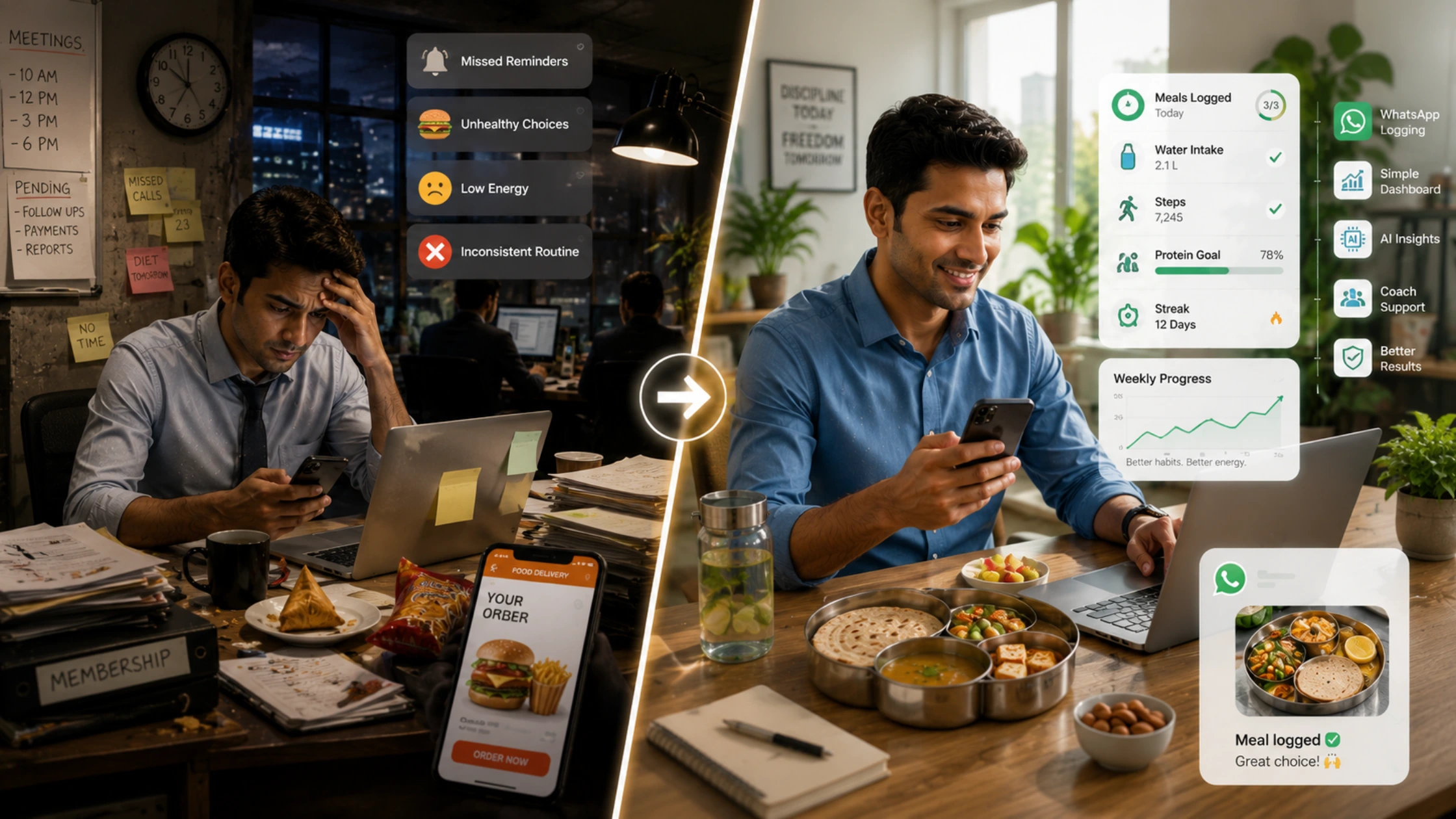
For millions of Indians, staying healthy does not fail because of laziness.
It often fails because modern work culture makes consistency incredibly hard.
If you are trying to follow an Indian diet for busy professionals, you already know the reality:
Skipped breakfasts.
Office chai.
Back-to-back meetings.
Stress eating.
Late dinners.
Food delivery.
This is why healthy lifestyle for busy Indians often feels harder in practice than in theory.
Most health advice assumes:
- You have time to cook
- You can meal prep daily
- You can avoid outside food
- You can follow perfect routines
But for most working Indians, that is not realistic.
The real challenge is not knowledge.
It is execution inside unpredictable schedules.
This is where meal tracking India, healthy habits for office workers, and practical systems built around real Indian life become more useful than strict dieting.
Because long-term healthy eating India is rarely about perfection.
It is about sustainable awareness.
And increasingly, simple systems like India’s #1 whatsapp meal logging feature and Unique Caregiver feature reflect why convenience often matters more than complexity.
The Real Problem: Work Culture vs Health
Modern Indian work life often directly conflicts with health.
Common Daily Reality:
- Commute fatigue
- Missed breakfast
- Excessive chai
- Long sitting hours
- Working lunches
- Late-night dinners
Why This Happens:
Work schedules prioritize urgency.
Health requires consistency.
Core Conflict:
Your calendar often controls your food.
Example:
A Pune IT employee leaves home at 8 AM.
Breakfast skipped.
Office samosa at 11 AM.
Heavy lunch.
Evening chai + biscuits.
Late Swiggy dinner.
This pattern is common.
Strategic Insight:
Full-time job health problems often come less from one unhealthy meal and more from repeated lifestyle disruption.
Bottom Line:
Most professionals are not failing health.
They are navigating a system that makes health inconvenient.
Why Long Hours Break Healthy Plans
Long work hours create hidden nutritional damage.
Major Health Breakdowns:
1. Decision Fatigue
After 10 hours of work, healthy decisions feel harder.
2. Hunger Extremes
Skipping meals often leads to overeating later.
3. Sleep Disruption
Late meals + screen fatigue = poor recovery
4. Movement Decline
Desk jobs reduce calorie burn and metabolic flexibility.
Indian-Specific Problem:
Family expectations + office pressure often reduce personal health priority.
Myth vs Reality:
Myth: Busy people just need discipline
Reality: Busy people need systems that reduce friction
Key Insight:
Lifestyle change India works better when built around work reality, not fantasy schedules.
Office Hunger, Stress, and Convenience Eating
Office food habits are often reactive, not intentional.
Common Triggers:
- Team snacks
- Celebration sweets
- Stress munching
- Vending machine foods
- Cafeteria fried options
Why Stress Eating Happens:
Stress increases convenience-based choices.
People choose:
Fast
Cheap
Comforting
Not necessarily:
Balanced
Nutritious
Sustainable
Office Chai Culture:
Many professionals underestimate:
- Sugar intake
- Biscuits
- Fried snacks
Example:
4 chai breaks + biscuits daily can silently increase sugar load significantly.
Strategic Insight:
The problem is not occasional indulgence.
It is invisible repetition.
Practical Fix:
Awareness of frequency matters more than guilt.
Why “Meal Prep” Advice Often Fails in India
Meal prep can help some people.
But for many Indian professionals, it fails due to lifestyle mismatch.
Common Reasons:
1. Family Cooking Dynamics
Many households cook shared meals.
2. Commute Constraints
Travel time reduces prep time.
3. Fresh Food Preference
Indian households often prioritize fresh meals over stored meals.
4. Social Eating
Office lunches, client dinners, family obligations
Problem:
Generic global fitness advice often ignores Indian realities.
Better Approach:
Instead of:
Perfect prep
Focus on:
Better defaults
Examples:
- Protein-rich breakfast swaps
- Smarter ordering
- Portion awareness
- Chai reduction
- Simple meal visibility
Key Lesson:
For most Indians, how to stay healthy without dieting often means flexibility, not rigid prep.
A Realistic Indian Working Professional Health System
A practical system should reduce pressure.
Step 1: Breakfast Stability
Avoid total fasting if it leads to bingeing.
Simple options:
- Poha + peanuts
- Idli + sambar
- Eggs + toast
- Paneer sandwich
Step 2: Chai Awareness
Not eliminate.
Just reduce sugar-heavy frequency.
Step 3: Lunch Visibility
Track:
- Fried frequency
- Portion size
- Protein presence
Step 4: Evening Control
Prevent extreme hunger before dinner.
Step 5: Late Dinner Damage Reduction
Aim for:
Better portions, not perfection
Strategic Tool:
Simple systems like Nutrimate’s WhatsApp-first structure can support simple meal tracking for Indian food without turning health into another stressful task.
Key Framework:
Awareness → Small shifts → Repeatability
Daily Survival Plan for Office Workers
Morning:
- Water
- Practical breakfast
- Avoid sugar-heavy start
Midday:
- Balanced lunch
- Reduce fried frequency
- Walk briefly post-lunch
Evening:
- Avoid hunger crash
- Smarter snack
Night:
- Lighter portions when possible
- Avoid emotional overeating
Weekly:
Focus on trend, not isolated mistakes.
Important:
One unhealthy lunch does not ruin health.
Repeated invisible habits do.
Strategic Insight:
How to stay consistent with health often depends more on repeatable survival systems than aggressive transformations.
Do vs Don’t
DO:
- Build realistic food awareness
- Adapt Indian meals
- Reduce invisible calories
- Prioritize consistency
- Use simple tracking
DON’T:
- Depend on perfect meal prep
- Skip meals regularly
- Overcompensate with crash diets
- Assume healthy means expensive
- Quit after imperfect days
Final Insight:
For busy Indians, health often improves more from:
Small sustainable corrections
Than:
Extreme temporary plans
Core Truth:
You do not need a perfect routine.
You need a survivable one.
Because why diets fail long term is often not lack of motivation.
It is unsustainable design.
FAQs
Busy Indians can improve health by focusing on simple, repeatable habits like practical breakfasts, smarter office food choices, chai awareness, and food tracking without calorie counting. Sustainable consistency matters more than perfection.
Office life can disrupt health through long sitting hours, stress eating, skipped meals, and poor sleep. But structured healthy habits for office workers can significantly reduce these risks.
Yes. Many professionals succeed by building flexible Indian diet without dieting systems through better food awareness, portion balance, and simple meal visibility rather than strict meal prep.