 Pradnya Ganorkar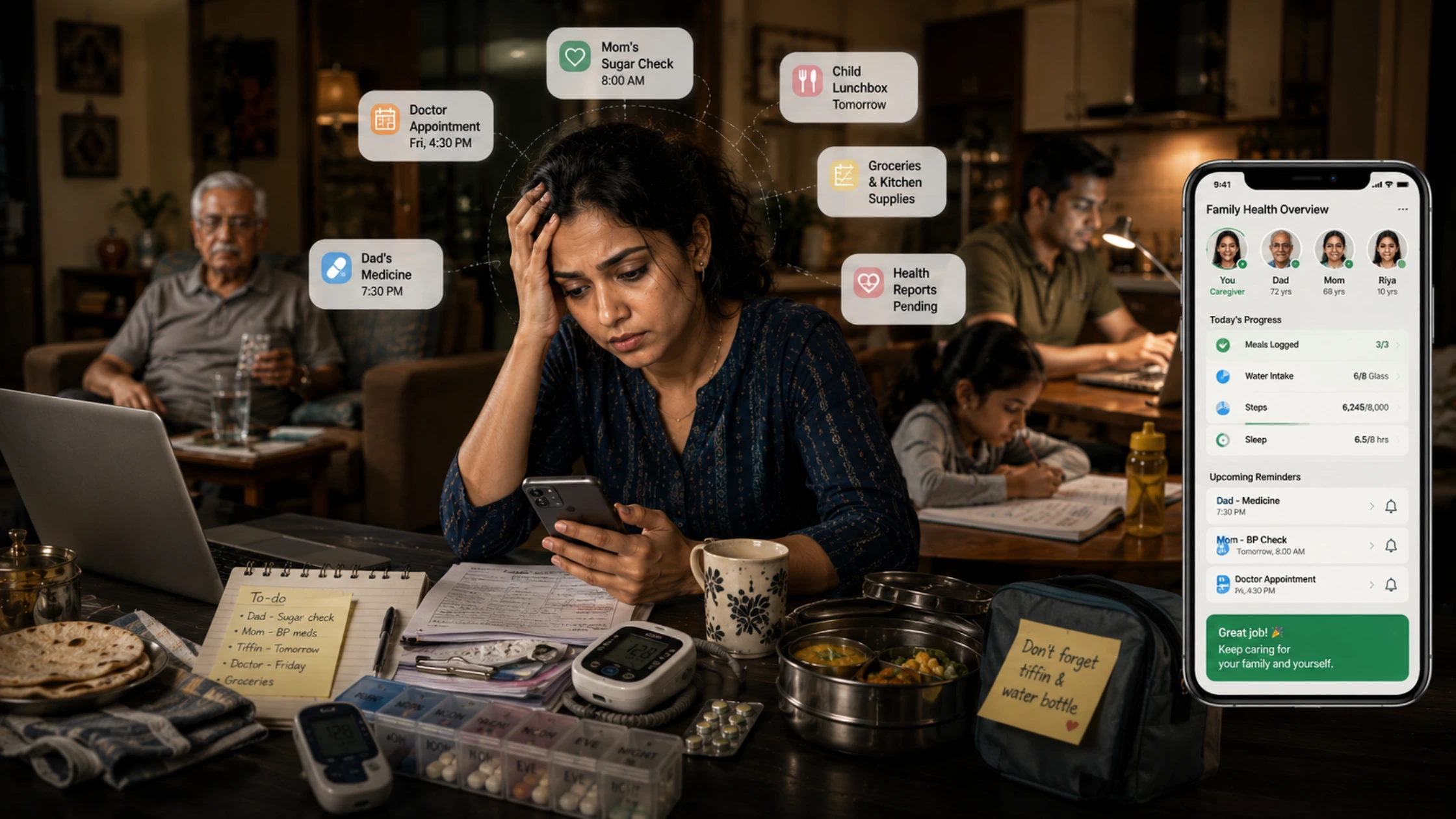
In many Indian homes, one person quietly becomes responsible for everyone’s health.
They remember:
- medicines
- doctor appointments
- diet restrictions
- blood tests
- groceries
- meal timings
- supplements
- parents’ routines
- children’s eating habits
Most of the time, this role is never officially assigned.
It simply happens.
In many households, especially across urban India, this responsibility often falls on:
- mothers
- daughters
- wives
- eldest siblings
- family caregivers
Over time, the emotional pressure builds silently.
This is one of the biggest reasons why caregiver burnout India is becoming an increasingly important health conversation.
The challenge is not just physical work.
It is the constant mental load of remembering, planning, coordinating, monitoring, and worrying.
Many caregivers manage:
- office work
- family meals
- aging parents
- children’s routines
- chronic disease management
- emotional caregiving
all at the same time.
Yet very few people recognize this invisible pressure as a real health issue.
In India, caregiving is often seen as responsibility, duty, or love.
Rarely as labor.
But constant caregiving without systems, support, or recovery can affect:
- sleep
- mental health
- eating habits
- emotional stability
- physical energy
- long-term wellbeing
This is why conversations around:
- family caregiver stress
- caregiver mental health
- family health management India
- preventive family systems
are becoming increasingly relevant.
As Indian families manage rising lifestyle diseases, the need for simple, centralized, low-effort health systems is growing rapidly.
Solutions focused on consistency and visibility, including platforms offering India’s #1 whatsapp meal logging feature and Unique Caregiver feature, reflect this shift toward reducing mental overload instead of adding more complexity.
Because caregiving should not quietly destroy the caregiver’s own health.
What Caregiver Burnout Actually Looks Like
Most people imagine burnout as extreme exhaustion.
But caregiver burnout India often starts subtly.
It builds through:
- constant interruptions
- emotional responsibility
- invisible planning
- repetitive decision-making
- daily worry
Caregiver Burnout Is More Than “Feeling Tired”
It includes:
- mental exhaustion
- emotional fatigue
- decision overload
- resentment
- anxiety
- lack of personal time
- neglecting one’s own health
In many Indian families, caregivers continue functioning normally on the outside while feeling overwhelmed internally.
Common Everyday Examples
A daughter working in Bengaluru may:
- remind parents about medicines remotely
- schedule checkups
- track sugar levels
- order groceries
- coordinate diet instructions
while also handling:
- office deadlines
- commuting stress
- her own meals and sleep
Similarly, many Indian mothers become default health managers for the entire household without realizing the long-term emotional cost.
Why It Often Goes Unnoticed
Caregiver exhaustion becomes normalized because:
- Indian families value sacrifice
- self-care is often deprioritized
- caregiving is treated as expected behavior
- emotional overload is rarely discussed openly
This creates silent stress accumulation.
Quick Summary
Caregiver burnout is not laziness or emotional weakness. It is long-term mental and physical overload caused by continuous responsibility without adequate support.
Why Indian Caregivers Often Ignore Their Own Health
One of the biggest paradoxes in Indian caregiving culture is this:
The person managing everyone else’s health often neglects their own.
Why This Happens
Caregivers commonly prioritize:
- family needs first
- children’s routines
- parents’ medications
- household food planning
- doctor visits
before considering:
- sleep
- exercise
- nutrition
- mental wellbeing
- personal recovery
The “I’ll Handle It” Mentality
Many caregivers operate in survival mode.
They assume:
“I’ll take care of myself later.”
But later rarely comes.
Over time, this affects:
- energy levels
- emotional resilience
- metabolic health
- eating behavior
- stress regulation
Indian Lifestyle Reality
In many urban homes:
- breakfast gets skipped
- lunch happens late
- stress eating increases
- physical activity drops
- sleep becomes inconsistent
Ironically, caregivers helping others maintain routines often lose their own healthy lifestyle balance.
The Emotional Guilt Factor
Many caregivers also feel guilty:
- asking for help
- taking breaks
- outsourcing tasks
- prioritizing themselves
This emotional pattern contributes significantly to caregiver mental health challenges.
Why This Is Becoming a Bigger Problem
India is experiencing:
- rising diabetes rates
- aging parents
- increasing chronic disease burden
- high work stress
- dual-income households
This means caregiving pressure is increasing, especially among working professionals.
Strategic Insight
Family health systems that depend entirely on one person eventually become unsustainable.
Emotional + Physical Exhaustion Signs
Caregiver burnout usually develops gradually.
The signs often appear long before people recognize them.
Emotional Signs
Constant Irritability
Small issues begin feeling overwhelming.
Emotional Numbness
Caregivers may feel detached or emotionally exhausted.
Anxiety About Family Health
Many caregivers constantly worry about:
- missed medicines
- unhealthy eating
- worsening conditions
- emergencies
Decision Fatigue
Simple questions like:
“What should everyone eat today?”
can start feeling mentally exhausting.
Physical Signs
Sleep Problems
Poor sleep becomes extremely common among caregivers.
Chronic Fatigue
Even after resting, exhaustion remains.
Irregular Eating
Many caregivers develop unhealthy eating patterns themselves.
This contributes to:
- weight gain
- fatigue
- low immunity
- hormonal imbalance
Stress-Driven Health Issues
Long-term caregiving stress may contribute to:
- headaches
- digestive issues
- hypertension
- emotional burnout
Behavioral Signs
Caregivers often:
- postpone their own checkups
- stop exercising
- ignore symptoms
- lose motivation
Ironically, they may become disconnected from their own health habits while trying to maintain everyone else’s.
Quick Summary
Burnout affects emotional health, physical health, routines, motivation, and long-term wellbeing simultaneously.
Why Manual Health Management Is Draining
Most Indian households still manage family health manually.
That means:
- remembering medicine schedules mentally
- tracking diets through memory
- saving reports across WhatsApp chats
- coordinating verbally
- relying on handwritten notes
This creates enormous cognitive overload.
Why Memory-Based Systems Fail
Humans are not designed to remember:
- multiple diet restrictions
- test schedules
- doctor instructions
- supplement timing
- family routines
continuously for years.
The Problem Gets Worse with Larger Families
In homes managing:
- diabetes
- hypertension
- PCOS
- thyroid issues
- aging parents
- children’s nutrition
the mental coordination becomes extremely complex.
This is why many families struggle with:
- missed medicines
- inconsistent routines
- forgotten appointments
- unhealthy eating cycles
Fragmentation Creates More Stress
Many caregivers use:
- one app for fitness
- another for medicines
- WhatsApp for reminders
- notes app for groceries
- memory for meal planning
This fragmentation increases exhaustion.
Why Simplicity Matters
Caregivers usually do not want:
- complicated dashboards
- difficult health workflows
- excessive manual logging
They need:
- low-effort systems
- centralized visibility
- simplified routines
- reduced mental burden
This is where platforms like Nutrimate are becoming relevant in Indian households.
Its AI-powered, WhatsApp-first approach helps simplify daily health visibility while supporting Indian food habits, family coordination, and routine tracking without adding unnecessary complexity.
Strategic Insight
Systems reduce cognitive overload better than memory-based caregiving.
Practical Systems That Reduce Burnout
Reducing caregiver stress does not always require dramatic lifestyle changes.
Often, it starts with simplifying repeated tasks.
1. Centralize Health Information
Keep:
- medicines
- reports
- diet routines
- doctor notes
- meal tracking
in one accessible system.
This reduces:
- confusion
- repeated reminders
- mental juggling
2. Use Shared Responsibility
One person should not handle everything alone.
Even simple task distribution helps:
- medicine reminders
- grocery planning
- appointment booking
- activity tracking
3. Reduce Decision Fatigue
Create repeatable systems:
- fixed breakfast rotations
- weekly grocery templates
- standard medication schedules
- recurring health check reminders
This lowers mental exhaustion significantly.
4. Simplify Meal Visibility
Many caregivers constantly worry:
“Did everyone eat properly today?”
Simple meal tracking systems help reduce uncertainty.
Especially in Indian households where:
- meals vary daily
- outside food is common
- family members follow different diets
5. Focus on Consistency, Not Perfection
Many caregivers try to maintain unrealistic standards.
But sustainable systems prioritize:
- repeatability
- simplicity
- visibility
not perfection.
6. Use Low-Friction Tracking
Complex health apps often increase stress.
Simple systems usually work better.
That is why WhatsApp-based logging models are becoming more practical for Indian families compared to complicated manual workflows.
Quick Summary
Caregiver burnout reduces when systems reduce mental load, simplify routines, and create shared visibility.
Small Changes That Help
Burnout recovery often begins with small behavioral changes.
Not massive transformations.
Start With Self-Awareness
Caregivers must first recognize:
constant exhaustion is not normal.
Build “Micro Recovery” Habits
Examples:
- 10-minute walks
- regular hydration
- fixed sleep timing
- simplified meal routines
- reduced multitasking
These small habits improve long-term resilience.
Stop Trying to Manage Everything Mentally
External systems reduce stress.
This includes:
- reminders
- tracking systems
- shared dashboards
- routine templates
Normalize Asking for Help
Many caregivers feel pressure to appear “strong.”
But shared responsibility improves both:
- family health
- caregiver wellbeing
Protect Personal Health Too
Caregivers often postpone:
- blood tests
- exercise
- sleep
- nutrition
But long-term family preventive health India systems cannot function sustainably if the caregiver’s own health declines.
Product Integration
This is why centralized health visibility systems are becoming increasingly valuable for Indian families.
Simple tracking systems help reduce repeated mental effort while improving awareness around meals, routines, and consistency.
Nutrimate’s Indian-first ecosystem focuses on reducing friction through WhatsApp-based logging, family visibility, and simplified health coordination designed around real Indian household behavior.
Caring for family can quietly become overwhelming.
Especially when one person becomes responsible for:
- meals
- medicines
- routines
- appointments
- emotional support
- nutrition tracking
without enough support themselves.
The emotional burden often remains invisible.
But ignoring caregiver stress eventually affects:
- family systems
- consistency
- emotional wellbeing
- long-term health outcomes
India’s growing lifestyle disease burden means caregiving responsibility will likely continue increasing.
That makes sustainable family systems more important than ever.
The future of family wellness may depend less on motivation and more on:
- simplified systems
- shared visibility
- reduced cognitive load
- practical daily consistency
because caregivers also deserve care.
FAQs
Caregiver burnout is a state of emotional, mental, and physical exhaustion caused by long-term caregiving responsibility. It often develops gradually through continuous stress, decision overload, and lack of personal recovery time.
Reducing caregiver stress usually requires:
– simplifying routines
– sharing responsibilities
– using centralized tracking systems
– improving meal and health visibility
– prioritizing sleep and recovery
– reducing manual coordination overload
Small, consistent systems often work better than complicated health management methods.