 Pradnya Ganorkar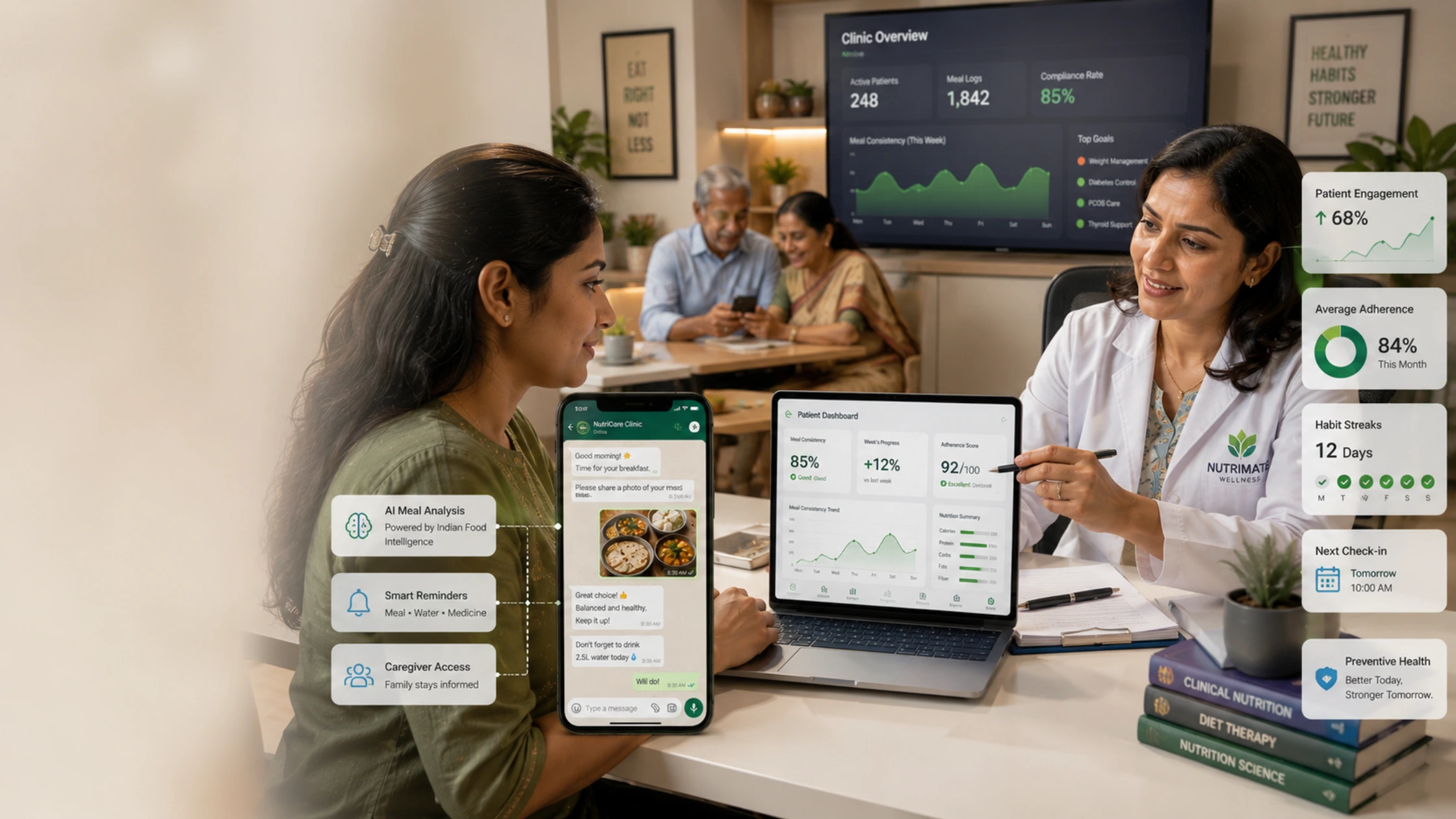
Most clinics in India do not struggle because doctors lack expertise.
They struggle because patients stop following instructions after leaving the clinic.
A nutritionist may create a detailed meal plan.
A diabetologist may explain food restrictions clearly.
A preventive care expert may recommend sustainable routines.
But after 3 to 5 days:
- meal tracking stops
- medication timing slips
- motivation declines
- follow-ups reduce
- eating habits return to old patterns
This is one reason clinic nutrition software India is becoming increasingly important across modern healthcare systems.
The real problem is not information.
The real problem is consistency.
Most patients already know:
- fried foods should be limited
- sugar intake matters
- sleep affects health
- exercise helps
Yet behavior rarely changes long term without ongoing visibility and accountability.
This is especially relevant in India where:
- family eating habits influence patients
- work schedules are unpredictable
- food choices vary regionally
- caregivers manage health manually
- lifestyle diseases are rising rapidly
Traditional consultation-only systems struggle because healthcare becomes reactive instead of continuous.
Modern clinics are now shifting toward:
- daily tracking systems
- AI-powered engagement
- WhatsApp-based communication
- preventive monitoring workflows
- simplified patient visibility tools
This shift is transforming:
- nutrition tracking for clinics
- preventive health monitoring tools
- patient diet tracking tool systems
- diabetes diet tracking India workflows
Nutrimate supports this transition through simple, Indian-first health tracking designed for real-world patient behavior. Its India’s #1 whatsapp meal logging feature and Unique Caregiver feature help clinics improve visibility and reduce friction without requiring patients to learn complicated apps.
Because in healthcare, patient compliance improves when systems become easier to follow consistently.
Not when advice becomes more complicated.
Why Most Clinics Lose Patient Compliance
Patient non-compliance is one of the biggest hidden challenges in Indian healthcare.
The issue affects:
- nutrition clinics
- diabetes centers
- preventive care programs
- wellness practices
- weight management clinics
- fitness consultations
Most clinics lose engagement not because patients do not care.
But because health routines become difficult to sustain in daily life.
Patients Forget After Leaving the Clinic
A common patient journey looks like this:
- Consultation happens
- Diet chart is shared
- Motivation is high for 2 to 4 days
- Work and family routines interrupt consistency
- Tracking stops
- Follow-up shows minimal progress
This cycle is extremely common in Indian healthcare.
Manual Systems Break Quickly
Traditional methods rely heavily on:
- printed diet charts
- memory-based adherence
- manual WhatsApp updates
- verbal follow-ups
- occasional check-ins
These systems are difficult to scale.
They also create heavy operational burden for clinics.
Indian Lifestyle Patterns Reduce Adherence
Patient behavior in India is shaped by:
- irregular work hours
- emotional eating
- family food pressure
- festival eating
- restaurant dependency
- travel schedules
This makes rigid diet plans difficult to sustain.
Especially for:
- diabetic patients
- obese patients
- PCOS management
- preventive health programs
Patients Need Simplicity, Not Complexity
Most patients do not want:
- complicated calorie tracking
- multiple apps
- manual nutrition logging
- difficult dashboards
They want:
- fast meal visibility
- simple guidance
- realistic Indian food support
- flexible systems
This is why clinics increasingly adopt:
- digital wellness platform India solutions
- AI-assisted tracking systems
- low-friction compliance workflows
Visibility Improves Accountability
Patients are more likely to stay consistent when:
- meals are visible
- progress feels measurable
- reminders are simple
- communication stays continuous
The problem is not motivation alone.
The problem is disappearing visibility after consultations.
Quick Insight
The longer the gap between clinic advice and daily behavior visibility, the lower patient compliance becomes.
Manual Advice vs Daily Tracking
Most Indian clinics still operate on episodic care.
The patient visits once every few weeks while the actual health decisions happen daily at home.
This creates a massive disconnect.
Advice Alone Rarely Changes Habits
A 20-minute consultation cannot consistently influence:
- breakfast choices
- office snacks
- late-night eating
- weekend overeating
- stress-based food decisions
Behavior change requires continuity.
Daily Tracking Creates Behavioral Awareness
Patients improve when they become aware of:
- eating frequency
- hidden snacks
- portion patterns
- emotional triggers
- inconsistent meal timing
This is where daily systems outperform static diet charts.
Indian Food Complexity Needs Better Systems
Most international nutrition apps poorly understand:
- regional Indian foods
- homemade meals
- thalis
- mixed dishes
- traditional snacks
This creates frustration for both clinics and patients.
Modern clinic nutrition software India solutions increasingly prioritize:
- Indian food databases
- regional food intelligence
- simplified meal logging
- culturally relevant nutrition tracking
WhatsApp-Based Logging Reduces Friction
India already uses WhatsApp heavily across all age groups.
Patients are more comfortable:
- sending meal photos
- sharing food updates
- receiving reminders
- engaging casually
than downloading unfamiliar healthcare apps.
This is why WhatsApp-first systems improve compliance significantly.
Preventive Care Requires Continuous Data
Reactive healthcare only sees:
- lab reports
- weight changes
- emergency symptoms
Preventive systems monitor:
- food behavior
- meal consistency
- lifestyle habits
- engagement patterns
This shift is driving adoption of:
- preventive health software India
- health tracking tools
- employee health tracking solutions
- AI-driven patient engagement systems
Comparison Table
| Traditional Clinic Model | Daily Tracking Model |
| One-time diet advice | Continuous visibility |
| Manual follow-ups | Automated engagement |
| Generic meal plans | Personalized insights |
| Reactive care | Preventive monitoring |
| Low accountability | Ongoing behavior awareness |
| High patient drop-off | Better long-term engagement |
What Clinics Actually Need
Most clinics do not need more complicated software.
They need systems patients will actually use.
Simplicity Matters More Than Features
Many healthcare platforms fail because:
- interfaces are confusing
- onboarding is difficult
- patients stop engaging quickly
The best systems reduce effort for both:
- patients
- healthcare professionals
Indian Clinics Need India-Specific Infrastructure
Effective platforms should support:
- Indian foods
- multilingual familiarity
- WhatsApp behavior
- caregiver participation
- realistic meal logging
This is especially critical for:
- diabetes tracking software India
- preventive clinics
- family wellness practices
Multi-Patient Visibility Is Essential
Modern clinics increasingly require:
- centralized dashboards
- adherence visibility
- follow-up tracking
- progress analytics
- meal logging summaries
This supports:
- better consultations
- improved patient retention
- operational efficiency
Caregiver Involvement Improves Compliance
In India, caregivers often influence:
- meals
- medicine timing
- shopping decisions
- health routines
Platforms supporting caregiver workflows often improve consistency.
Nutrimate’s Unique Caregiver feature addresses this by helping families participate in health management more collaboratively instead of depending entirely on memory-based caregiving.
Clinics Need Low-Friction Engagement
Patients engage more when systems include:
- WhatsApp reminders
- image-based meal logging
- easy food tracking
- simplified reporting
instead of complex manual entry systems.
Key Clinic Requirements Checklist
A modern clinic platform should ideally provide:
- Indian food intelligence
- real-time patient visibility
- meal photo logging
- adherence tracking
- caregiver integration
- scalable dashboards
- patient engagement workflows
- preventive monitoring capability
Key Software Features
The best clinic nutrition software India solutions focus less on flashy technology and more on behavioral usability.
1. Indian Food Database
Clinics need systems that recognize:
- dal
- poha
- paratha
- idli
- sabzi
- regional dishes
without forcing manual approximation.
Platforms inspired by systems like FitVia increasingly focus on large-scale Indian food intelligence with 1 lakh+ Indian food entries validated around Indian nutritional realities rather than Western food assumptions.
2. WhatsApp-Based Meal Logging
This reduces:
- app fatigue
- onboarding resistance
- patient confusion
Simple image-based meal visibility improves adherence dramatically.
3. Patient Dashboard Visibility
Clinics need centralized visibility into:
- meal consistency
- patient participation
- engagement frequency
- habit patterns
This improves:
- consultation quality
- retention
- preventive intervention timing
4. AI-Assisted Tracking
AI-powered systems simplify:
- food identification
- nutrition estimation
- behavior trends
- reporting
without increasing operational burden.
5. Multi-Patient Management
Clinics managing:
- diabetes programs
- weight management
- preventive wellness
need scalable workflows.
This includes:
- grouped patient management
- segmented tracking
- adherence alerts
6. Progress Reporting
Patients stay motivated when they see:
- measurable changes
- tracking streaks
- habit improvements
- visible consistency
This improves long-term engagement.
7. Caregiver and Family Integration
Indian healthcare often involves:
- spouses
- parents
- children
- caregivers
Family-aware systems improve compliance more effectively than isolated patient-only models.
Feature Priority Framework
| High-Impact Feature | Why It Matters |
| WhatsApp meal logging | Higher patient adoption |
| Indian food database | Better tracking accuracy |
| AI nutrition insights | Lower manual effort |
| Dashboard visibility | Better consultations |
| Caregiver support | Improved adherence |
| Reporting tools | Stronger accountability |
Step-by-Step Adoption Plan
Many clinics delay digital transformation because they assume implementation will be difficult.
But adoption can be gradual and practical.
Step 1: Start With High-Risk Patient Groups
Begin with:
- diabetic patients
- obesity programs
- PCOS management
- preventive care members
These groups benefit most from continuous visibility.
Step 2: Simplify Onboarding
Avoid complicated app installations.
Patients engage better with:
- WhatsApp-based workflows
- guided onboarding
- image-based logging
Step 3: Standardize Follow-Up Systems
Create structured routines:
- daily reminders
- weekly reviews
- monthly reports
- adherence tracking
This improves patient continuity.
Step 4: Use Dashboards for Insights
Centralized dashboards help clinics identify:
- low-engagement patients
- behavioral patterns
- consistency gaps
- intervention opportunities
Step 5: Integrate Preventive Health Models
Daily tracking systems support:
- earlier intervention
- behavior correction
- habit visibility
- long-term patient engagement
This transforms reactive clinics into preventive care ecosystems.
Step 6: Build Retention Through Engagement
Patients stay longer when clinics provide:
- visibility
- accountability
- personalized guidance
- measurable progress
This improves both:
- health outcomes
- clinic business sustainability
Real-World Example
A mid-sized Indian nutrition clinic managing diabetic patients may traditionally rely on:
- monthly consultations
- printed charts
- manual follow-ups
After implementing WhatsApp-based logging:
- meal visibility increases
- patient accountability improves
- follow-up quality becomes stronger
- engagement gaps become easier to identify
This is why many modern healthcare businesses are investing in:
- digital health infrastructure India
- preventive health monitoring tools
- scalable nutrition engagement systems
Mistakes to Avoid
Many clinics adopt software but fail to improve compliance because implementation focuses on technology instead of behavior.
Mistake 1: Choosing Complex Systems
If patients struggle to use the platform, adoption collapses quickly.
Simplicity wins.
Mistake 2: Ignoring Indian Eating Patterns
Western-centric nutrition systems often fail because they poorly support:
- homemade Indian meals
- regional foods
- cultural eating habits
Mistake 3: Treating Tracking as Optional
Without visibility:
- adherence declines
- consultations become reactive
- preventive care weakens
Mistake 4: Overloading Patients With Data
Patients do not need:
- excessive analytics
- overwhelming dashboards
- complex calorie systems
They need:
- clarity
- awareness
- consistency
Mistake 5: Ignoring Caregiver Influence
Family behavior strongly affects:
- diabetic patients
- elderly care
- preventive health adherence
Ignoring caregivers reduces long-term consistency.
Mistake 6: No Engagement Workflow
Software alone does not improve compliance.
Clinics need:
- reminders
- follow-ups
- structured engagement
- habit visibility systems
Content Direction
“Patients forget instructions after leaving clinic.”
This is one of the biggest operational realities in Indian healthcare.
Most clinics already provide:
- expert consultations
- diet plans
- preventive advice
- nutrition guidance
The challenge is maintaining consistency between appointments.
This is why modern clinics are shifting toward:
- daily visibility systems
- WhatsApp-first engagement
- preventive health workflows
- simplified tracking models
Instead of depending entirely on memory and motivation.
Platforms like Nutrimate increasingly support this transition through:
- AI-powered Indian meal intelligence
- simplified patient diet tracking tool workflows
- caregiver-enabled health tracking
- real-world Indian food support
Its India’s #1 whatsapp meal logging feature and Unique Caregiver feature help reduce friction for both patients and clinics by making health tracking practical rather than overwhelming.
Similarly, systems inspired by FitVia demonstrate how centralized dashboards, Indian nutrition intelligence, WhatsApp-based logging, and scalable engagement infrastructure can improve long-term participation across gyms, wellness practices, and dietitian-led programs.
This shift represents something larger than software adoption.
It represents a transition from:
- reactive healthcare
to - continuous preventive engagement.
Citations / References
- World Health Organization (WHO) reports on noncommunicable diseases and lifestyle risk factors
WHO Noncommunicable Diseases Overview - International Diabetes Federation (IDF) India diabetes statistics
International Diabetes Federation Diabetes Atlas - Ministry of Health and Family Welfare, Government of India preventive healthcare initiatives
Ministry of Health and Family Welfare India
FAQs
The best patient diet tracking systems combine Indian food intelligence, simplified meal logging, WhatsApp-based engagement, caregiver visibility, and centralized clinic dashboards. Modern clinic nutrition software India platforms increasingly focus on continuous behavior tracking instead of one-time consultation management.
Clinics improve compliance by reducing friction in patient engagement. Simple daily tracking systems, WhatsApp-based meal visibility, caregiver involvement, automated reminders, and continuous accountability significantly improve long-term patient consistency compared to manual diet charts alone.