 Pradnya Ganorkar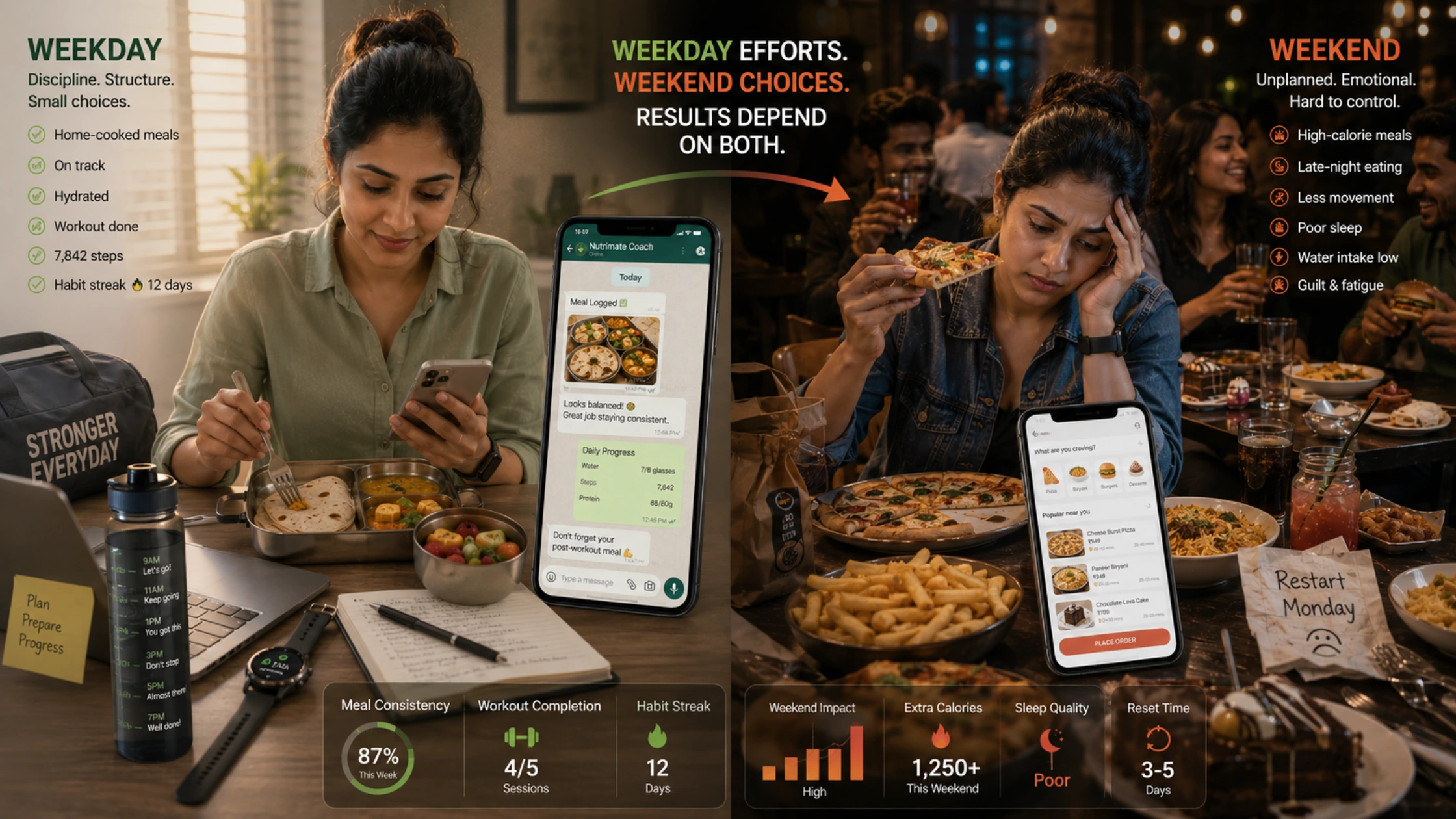
Many Indians spend Monday to Friday trying to stay disciplined.
They wake up early, carry home food to work, avoid sugar in chai, reduce rice portions, track workouts, and try following a structured fitness diet. But by Saturday evening, routines often collapse completely.
Restaurant dinners, alcohol, late-night snacking, buffet brunches, desserts, family gatherings, and food delivery apps quickly undo weekday consistency.
This is one reason so many people struggle with healthy lifestyle consistency despite “trying hard.”
The issue is not laziness.
The issue is behavioral imbalance.
Most people treat weekends as emotional compensation for stressful weekdays. That creates a cycle of restriction followed by overeating. Over time, this pattern damages energy levels, weight goals, digestion, sleep quality, and long-term health habits.
This is especially common among:
- Corporate professionals
- Gym members
- Young couples
- College students
- Working parents
- Socially active urban Indians
A major challenge with weekend eating habits India is that people underestimate cumulative intake.
One heavy weekend can quietly erase five disciplined weekdays.
According to the World Health Organization, unhealthy diets and physical inactivity are among the leading contributors to lifestyle diseases globally.
Research published by the National Institutes of Health (NIH) also shows that consistency and long-term eating behavior patterns matter more than short bursts of strict dieting.
The solution is not avoiding enjoyment.
The solution is building sustainable systems that work even during weekends.
The Monday–Friday Illusion
Many people believe they are “healthy” because weekdays feel controlled.
A typical weekday may include:
- Home breakfast
- Controlled lunch
- Gym sessions
- Less sugar
- More water
- Reduced snacking
But weekends introduce completely different behavior patterns.
This creates what can be called the Monday–Friday illusion.
People assume:
- “I ate clean all week.”
- “I deserve a cheat day.”
- “One weekend won’t matter.”
- “I’ll restart Monday.”
The problem is cumulative compensation.
For example:
- Five controlled weekdays may create a calorie deficit
- Two uncontrolled days can eliminate it completely
This is especially common in urban India where weekends revolve around:
- Café hopping
- Dining out
- House parties
- Alcohol
- Desserts
- Ordering food late at night
This pattern also explains why many people ask:
- “why staying healthy is hard”
- “why diets fail long term”
- “how to stay consistent with health”
The issue is rarely weekday discipline alone.
It is inconsistency across the entire week.
Another problem is emotional overcorrection.
People eat minimally during weekdays and then binge emotionally during weekends because the body and mind feel deprived.
This creates unstable healthy eating India patterns.
A sustainable system should not require extreme weekday restriction.
Instead, it should support realistic balance throughout the week.
Weekend Overeating Psychology
Weekend overeating is rarely just about hunger.
It is usually emotional, social, or stress-driven.
For many working professionals, weekends feel like:
- Freedom
- Reward
- Social recovery
- Escape from routine
Food becomes part of that emotional release.
This is particularly common among people following aggressive weekday diets.
For example:
- Avoiding carbs Monday to Friday
- Skipping favorite foods completely
- Excessive calorie restriction
- Overtraining at the gym
- Obsessive food control
Eventually, the body responds with cravings and rebound eating.
This is why extreme dieting rarely supports a sustainable Indian diet.
The body does not only respond to calories.
It responds to behavior patterns, stress, sleep, emotions, and restriction cycles.
Another overlooked factor is decision fatigue.
By weekend:
- Mental energy is lower
- Social invitations increase
- Sleep schedules shift
- Food exposure rises
- Routine weakens
This combination increases overeating probability dramatically.
Many Indians also underestimate liquid calories.
Examples:
- Weekend cocktails
- Sweetened coffee
- Cold drinks
- Bubble tea
- Alcohol mixers
These quietly increase intake without creating fullness.
This explains why some gym-goers maintain strict weekday routines but still fail to see progress.
Consistency matters more than temporary perfection.
Social Eating + Alcohol + Dining Out
Indian social culture revolves heavily around food.
Birthdays, weddings, office outings, family dinners, festivals, cricket nights, and weekend gatherings usually involve overeating opportunities.
The challenge is not just restaurant food.
It is environmental stacking.
For example:
- Starters before dinner
- Sugary beverages
- Fried snacks
- Desserts after meals
- Late-night eating
- Minimal movement
One dinner outing can easily become a 2500+ calorie evening without people realizing it.
This is especially common with:
- Biryani
- Butter naan meals
- Buffet dining
- Chaat
- Shawarma
- Pizza nights
- Desserts
- Alcohol combinations
This does not mean Indian food and health are incompatible.
The issue is portion frequency and environment.
Many traditional Indian foods can absolutely support a healthy lifestyle when eaten mindfully.
The bigger problem is unconscious eating.
For example:
- Eating because everyone else is eating
- Ordering extra food due to social pressure
- Finishing leftovers unnecessarily
- Drinking while distracted
- Eating too fast
This also explains why healthy eating outside home India becomes difficult for many people.
Restaurant environments are designed around indulgence and abundance.
Without awareness, overeating becomes automatic.
Why “Cheat Days” Backfire
The concept of cheat days has become extremely normalized in fitness culture.
But for many Indians, cheat days quietly become binge days.
This creates multiple problems.
1. Emotional Relationship with Food Becomes Unhealthy
Food becomes:
- “Good” vs “bad”
- “Allowed” vs “forbidden”
This increases cravings psychologically.
2. Weekday Restriction Intensifies
People become overly strict Monday to Friday.
That makes weekends harder to control.
3. Overeating Feels Justified
People mentally excuse excessive intake because:
- “I earned it.”
- “It’s my cheat meal.”
- “I’ll compensate tomorrow.”
4. Consistency Breaks
One uncontrolled meal often becomes:
- Entire cheat day
- Entire cheat weekend
- Monday guilt cycle
This cycle damages long-term adherence.
A better approach is flexibility without emotional extremes.
Instead of cheat days:
- Plan enjoyable meals consciously
- Maintain portion awareness
- Avoid guilt
- Balance meals naturally
This supports Indian diet without dieting far better than aggressive restriction cycles.
It also reduces burnout.
Many people trying to build healthy habits for office workers fail because their systems are emotionally exhausting.
Sustainable systems feel flexible, not punishing.
Sustainable Weekend Framework
The goal is not eliminating enjoyment.
The goal is reducing damage while maintaining consistency.
Here is a realistic Indian weekend framework.
1. Avoid “All or Nothing” Thinking
One heavy meal is manageable.
An entire uncontrolled weekend is different.
Balance matters more than perfection.
2. Keep Breakfast Stable
Many people skip breakfast before outings to “save calories.”
This often backfires later.
Instead:
- Eat protein-rich breakfasts
- Stay hydrated
- Avoid starting the day starving
Examples:
- Eggs + toast
- Poha + peanuts
- Idli + sambar
- Paneer sandwich
- Dahi + fruit
3. Plan Indulgence Instead of Random Eating
Choose:
- One dessert
- One social meal
- One drink category
Not unlimited everything.
4. Maintain Movement
Weekend inactivity amplifies overeating impact.
Simple activities help:
- Walking after meals
- Sports
- Morning workouts
- Family outings
- Cycling
5. Watch Liquid Calories
Alcohol often increases:
- Appetite
- Late-night eating
- Sleep disruption
- Weekend recovery time
Moderation matters significantly.
6. Prioritize Protein
High-protein meals improve fullness.
This reduces binge patterns later.
7. Use Awareness Systems
Many people underestimate weekend intake.
Simple tracking improves awareness dramatically.
This is where platforms like Nutrimate support consistency through Indian-first, AI-powered, WhatsApp-based meal visibility instead of complex calorie counting systems.
Often, users discover their biggest nutrition gaps happen only during weekends.
Real-Life Indian Scenarios
Scenario 1: Corporate Employee in Bangalore
Weekdays:
- Gym at 7 AM
- Home lunch
- Protein intake controlled
Weekend:
- Brewery visits
- Pizza night
- Late waking
- Sunday buffet
Result:
Progress stalls despite weekday discipline.
Scenario 2: Young Couple in Mumbai
Weekdays:
- Structured eating
- Controlled office meals
Weekend:
- Zomato ordering twice daily
- Netflix snacking
- Desserts
- Minimal movement
Result:
Slow weight gain over time.
Scenario 3: Gym Member in Pune
Weekdays:
- Strict bodybuilding meals
Weekend:
- “Cheat day” mentality
- Excessive burgers and sweets
- Alcohol
Result:
Energy fluctuations and inconsistent physique progress.
Scenario 4: Family Gatherings
Weekdays:
- Balanced eating
Weekend:
- Relatives visiting
- Sweets
- Fried snacks
- Emotional pressure to eat more
Result:
Loss of healthy lifestyle consistency.
These examples show why meal tracking India needs to reflect real-life behavior instead of idealized dieting.
Modern health systems increasingly focus on visibility and behavior awareness rather than strict restriction.
Nutrimate’s India’s #1 whatsapp meal logging feature and Unique Caregiver feature are designed around this practical reality by helping users track actual Indian eating behavior in a simpler and more sustainable way.
Content Direction
Pain:
“Healthy weekdays, unhealthy weekends”
Most Indians do not fail because they lack nutrition knowledge.
They struggle because weekends quietly disrupt consistency through emotional eating, social pressure, dining out, alcohol, and unstructured routines.
The solution is not perfection.
The solution is sustainable balance.
Product Integration
“Tracking weekends separately often reveals hidden health patterns…”
Many users discover their largest nutrition inconsistencies happen on weekends, not weekdays. Simple visibility-based systems often reveal:
- Overordering
- Liquid calorie overload
- Weekend binge cycles
- Late-night eating
- Skipped meals before outings
This awareness helps build realistic long-term consistency without turning health into punishment.
References
FAQs
One occasional indulgent meal does not ruin progress. The problem begins when cheat meals become uncontrolled cheat weekends. Long-term consistency matters more than temporary perfection or restriction.
Focus on balance instead of extreme restriction. Maintain protein intake, stay active, avoid skipping meals before outings, control liquid calories, and build awareness around weekend eating patterns.