 Pradnya Ganorkar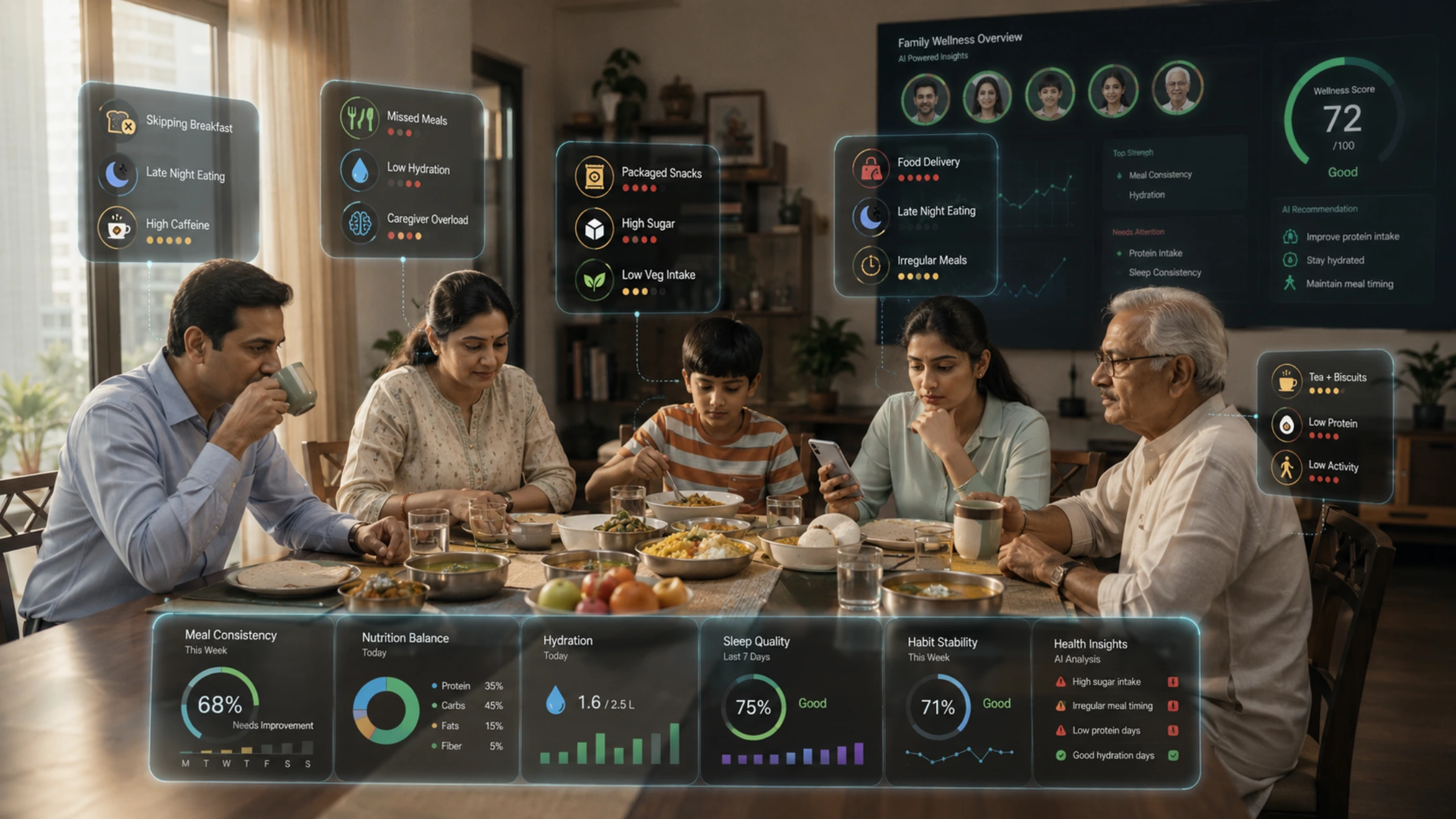
Most Indian families believe they have a reasonably good understanding of what everyone eats.
After all, meals are cooked at home. Parents buy groceries. Children eat at the dining table. Grandparents follow traditional food habits. Working professionals often carry homemade lunches.
Yet when families are asked simple questions such as:
- How many vegetables did everyone consume this week?
- How often did children eat packaged snacks?
- How much protein did parents consume yesterday?
- How frequently did grandparents skip meals?
- How many times did family members order food online last month?
Most people do not know the answers.
This visibility gap is becoming one of the biggest challenges in modern family health management India.
As lifestyle diseases continue rising across the country, many health problems develop quietly through repeated daily behaviors rather than major events. Small food choices accumulate over months and years.
That is why family meal tracking India is increasingly becoming an important component of family preventive health India.
The objective is not calorie obsession.
The objective is awareness.
When families understand what everyone actually eats, they can make better decisions, support each other, and build a more sustainable path toward a healthy lifestyle.
The Visibility Problem at Home
One of the biggest misconceptions in Indian households is:
“If food is prepared at home, it must automatically be healthy.”
While home-cooked meals are often healthier than restaurant food, visibility still matters.
Consider a typical urban family:
- Father frequently skips breakfast because of work meetings.
- Mother tastes food multiple times while cooking but rarely eats a balanced meal herself.
- Child consumes packaged snacks after school.
- Grandparent consumes excess tea and biscuits throughout the day.
- Young professional orders late-night food after office hours.
Individually, these habits may seem minor.
Collectively, they create long-term health risks.
This is why many experts now emphasize household health habits India rather than focusing only on individual diets.
The challenge is that most families operate on assumptions instead of observations.
Without awareness, patterns remain invisible.
This is one reason why why staying healthy is hard for many families despite good intentions.
What Families Usually Track
Most households monitor:
- Grocery spending
- School schedules
- Utility bills
- Medical appointments
But very few monitor:
- Daily nutrition quality
- Protein intake
- Meal consistency
- Snacking frequency
- Eating routines
Ironically, these factors often influence long-term health more than occasional doctor visits.
Why “Home Food” Isn’t Always Enough
Indian households often equate home food with health.
The reality is more nuanced.
Home Food Can Still Be Unbalanced
A meal prepared at home may still be:
- Low in protein
- High in refined carbohydrates
- Low in fiber
- High in sugar
- Missing vegetables
For example:
Breakfast:
Tea + biscuits
Lunch:
Rice + potato sabzi
Evening:
Tea + namkeen
Dinner:
Roti + sabzi
While this may be homemade, it may not provide adequate nutrition.
This becomes especially important for:
- Growing children
- Aging parents
- Working adults
- People with diabetes
- Women managing hormonal health
The Quantity Problem
Even healthy foods can become problematic when portions consistently exceed requirements.
Many families still believe the common myth that rice or roti alone causes weight gain.
The reality behind the roti rice weight gain myth is that overall eating patterns, activity levels, sleep quality, and portion sizes matter far more than a single food item.
This is why understanding Indian food and health requires context rather than food fear.
Awareness Creates Better Decisions
The goal is not restrictive dieting.
The goal is learning:
- What is being consumed
- How often
- By whom
- In what quantity
This approach supports an Indian diet without dieting, making healthy changes more sustainable.
Patterns Families Miss
Health problems rarely appear overnight.
Most begin as repeated patterns.
The Protein Gap
One common issue across Indian households is inadequate protein intake.
Many families consume:
- Roti
- Rice
- Snacks
- Tea
Far more frequently than:
- Eggs
- Dal
- Paneer
- Fish
- Lean meats
- Protein-rich foods
Without visibility, this pattern goes unnoticed.
The Hidden Snacking Problem
Children and adults often consume calories outside main meals.
Examples include:
- Chips
- Cookies
- Namkeen
- Sugary beverages
- Bakery items
Families remember lunch and dinner.
They often forget everything consumed between meals.
Weekend Nutrition Drift
Many people follow good routines Monday through Friday.
Then weekends introduce:
- Restaurant meals
- Social gatherings
- Excess desserts
- Alcohol
- Irregular meal timings
Without tracking, these patterns appear insignificant.
Over months, they become major contributors to weight gain and metabolic issues.
Caregiver Blind Spots
In many households, one person manages everyone’s food.
This contributes to caregiver burnout India because responsibility becomes concentrated on a single family member.
Meanwhile, other members remain disconnected from their own nutrition habits.
Kids, Parents, Working Adults
Every family member faces different nutritional challenges.
Children
Common concerns include:
- Excess sugar
- Low protein intake
- Packaged snacks
- Inconsistent meal timing
Developing healthy Indian eating habits early often influences lifelong health outcomes.
Parents
As parents age, nutritional awareness becomes more important.
Many adult children worry about:
- Diabetes
- Hypertension
- Weight gain
- Medication compliance
This has increased interest in parents health tracking and health tracking for parents.
Working Adults
Modern professionals face:
- Long work hours
- Travel
- Stress eating
- Skipped meals
This makes Indian diet for busy professionals increasingly relevant.
Many people searching for a healthy lifestyle for busy Indians discover that consistency matters more than perfection.
Simple habits often outperform complicated plans.
Women and Family Nutrition
In many households, women remain primary health coordinators.
This makes Indian moms health management an important but often overlooked area.
Mothers frequently prioritize everyone else’s health before their own.
As a result, their own nutrition may suffer.
Building Food Awareness Without Obsession
One reason people resist tracking is fear.
Many assume tracking means:
- Counting every calorie
- Logging every ingredient
- Following strict diets
That is not necessary.
Awareness vs Obsession
Healthy awareness asks:
- What am I eating?
- How consistent am I?
- Are my habits improving?
Obsession asks:
- Did I exceed my calories by 17 calories today?
The first approach supports sustainability.
The second often creates burnout.
Food Tracking Without Calorie Counting
Many families benefit from simple observation-based approaches.
Examples:
- Photograph meals
- Record meal timing
- Track vegetable intake
- Monitor protein frequency
This type of food tracking without calorie counting is often easier to maintain.
Consistency Beats Perfection
Many people fail because they chase perfect diets.
This explains why diets fail long term.
A more effective strategy focuses on:
- Repeating good habits
- Improving gradually
- Building awareness
These are examples of sustainable health habits for Indians.
Practical Family Tracking
The easiest systems are often the most effective.
Step 1: Create Visibility
Ask each family member to record meals for one week.
No judgment.
No restrictions.
Just observation.
Step 2: Identify Patterns
Look for:
- Frequent snacking
- Missed meals
- Low protein intake
- Excess sugar
- Weekend overeating
Step 3: Focus on One Change
Avoid changing everything simultaneously.
Examples:
- Add protein to breakfast
- Increase vegetables
- Reduce sugary beverages
Step 4: Share Responsibility
A true family nutrition planning India approach involves everyone.
Health should not be managed by one person alone.
Step 5: Use Simple Tools
Technology can simplify awareness.
Many families now prefer WhatsApp-based approaches because they fit naturally into daily life.
Instead of complex apps, simple meal visibility encourages consistency.
This is where Nutrimate’s AI-powered approach becomes relevant.
Built around Indian food habits and daily routines, it focuses on practical awareness rather than perfection.
Its India’s #1 whatsapp meal logging feature and Unique Caregiver feature help families understand food patterns across generations without creating unnecessary complexity.
For families seeking a modern family health tracking app, visibility often becomes the first step toward better outcomes.
Content Direction
Pain:
“Families assume home food = healthy”
This assumption creates one of the biggest blind spots in family wellness.
Most health challenges do not begin because families intentionally make poor decisions.
They begin because nobody notices small daily patterns.
Repeated for years, these patterns influence:
- Weight
- Energy
- Blood sugar
- Heart health
- Long-term wellbeing
Awareness is not about control.
It is about understanding reality before problems become larger.
Product Integration
“Simple meal awareness can reveal patterns most families overlook…”
Families rarely need stricter diets.
They usually need better visibility.
Simple meal awareness, combined with practical tracking, can help identify trends related to eating habits, consistency, and long-term wellness.
Nutrimate’s Indian-first, AI-powered approach supports this through WhatsApp-first meal logging, family visibility tools, and caregiver-focused features designed around real Indian households.
Instead of focusing on perfection, the goal is to make meal tracking, family health, and daily nutrition awareness easier for everyone involved.
References
- National Institute of Nutrition (ICMR-NIN) – Indian Food Composition Tables (IFCT) 2017
- National Family Health Survey (NFHS-5), Ministry of Health & Family Welfare, Government of India
FAQs
Yes. Meal tracking creates awareness about eating patterns, nutritional gaps, meal consistency, and lifestyle habits. The goal is not restriction but better understanding of daily food behaviors.
Not necessarily. Home-cooked meals are often healthier than restaurant food, but they can still be low in protein, high in refined carbohydrates, lacking vegetables, or consumed in excessive portions. Awareness helps identify these gaps.