 Pradnya Ganorkar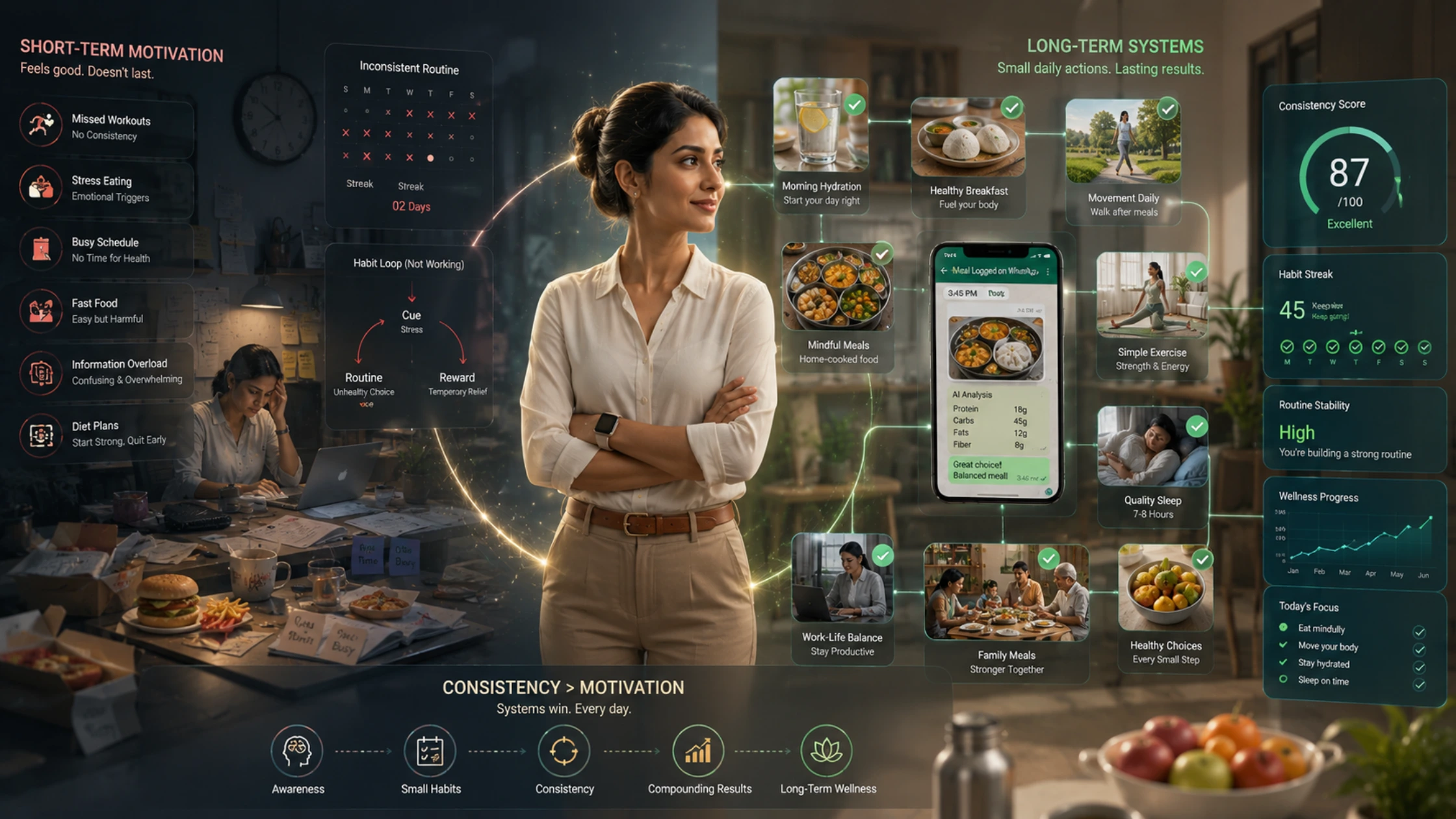
Most people do not struggle because they lack information.
They struggle because information rarely changes behavior.
India has never had more access to fitness advice, nutrition content, health influencers, workout apps, and wellness programs. Yet obesity, diabetes, hypertension, stress-related disorders, and lifestyle diseases continue to rise.
The challenge is not knowledge.
The challenge is making lifestyle change India sustainable in everyday life.
Many people start a new diet every Monday, join a gym every January, or promise themselves they will finally focus on their health after a festival, vacation, or busy work season. Yet within weeks, most routines disappear.
This is why understanding real behavior change matters more than finding another diet plan.
Whether you are a working professional, parent, gym member, or someone trying to improve your health, long-term success usually comes from systems, not motivation.
For people following an Indian diet for busy professionals, maintaining consistency often feels difficult because modern life constantly disrupts routines. Meetings run late, family commitments increase, travel becomes frequent, and social eating is unavoidable.
The good news is that sustainable change is possible.
Why Advice Alone Doesn’t Work
Most health advice sounds reasonable.
Eat more vegetables.
Walk daily.
Sleep earlier.
Reduce sugar.
Drink more water.
Yet most people already know these things.
The problem is that knowing and doing are completely different.
Information Is Not the Problem
A person may know:
- What healthy foods are
- How much exercise is recommended
- Why sleep matters
- The risks of processed foods
Yet still struggle to follow through.
This explains why many people searching for how to stay healthy without dieting or why staying healthy is hard often feel frustrated.
They are not lacking information.
They are lacking systems that support behavior.
Motivation Is Temporary
Motivation fluctuates.
Some days you feel energetic and committed.
Other days you are exhausted after work, dealing with family responsibilities, commuting through traffic, or managing deadlines.
If health depends entirely on motivation, consistency becomes impossible.
This is one reason why diets fail long term.
Motivation starts the journey.
Systems sustain it.
The Health Restart Cycle
Many Indians experience:
- High motivation
- Strict diet
- Missed routine
- Guilt
- Complete abandonment
- Restart
The cycle repeats for years.
Long-term health improvement requires breaking this pattern.
Indian Lifestyle Obstacles
The reality of Indian life creates unique challenges.
Many wellness recommendations are designed around Western lifestyles and often ignore local realities.
Work Culture Challenges
Many professionals work:
- Long office hours
- Hybrid schedules
- Night shifts
- Frequent travel
This makes maintaining an Indian diet for busy professionals more difficult than many health experts acknowledge.
Social Eating Is Constant
Indian culture revolves around food.
Examples include:
- Family gatherings
- Festivals
- Weddings
- Office celebrations
- Weekend outings
Learning healthy eating outside home India is often more important than perfect weekday eating.
Family Responsibilities
Parents often prioritize everyone else’s health before their own.
Many caregivers experience:
- Limited personal time
- Meal preparation stress
- Fatigue
- Health neglect
This contributes significantly to poor long-term outcomes.
Health Myth vs Reality
Myth: Healthy people never eat roti or rice.
Reality: The roti rice weight gain myth oversimplifies nutrition. Weight gain is influenced by total habits, portions, activity levels, sleep, stress, and overall dietary patterns.
Traditional Indian food and health principles can absolutely support wellness when combined with balanced habits.
Identity vs Temporary Dieting
One of the biggest differences between successful and unsuccessful behavior change is identity.
Temporary Diet Mindset
People often think:
- I am on a diet.
- I am trying to lose weight.
- I am temporarily eating healthy.
This mindset creates an end date.
Identity-Based Mindset
Successful individuals think:
- I am someone who values health.
- I am someone who moves daily.
- I am someone who makes mindful food choices.
The behavior becomes part of who they are.
Practical Example
Person A:
“I need to follow a diet for 30 days.”
Person B:
“I am building healthy Indian eating habits.”
The second mindset creates permanence.
This shift is essential for developing sustainable health habits India and creating lasting results.
Systems That Reduce Friction
The easiest behavior is usually the one people repeat.
This is why friction matters.
What Is Friction?
Friction is anything that makes a healthy action harder.
Examples:
- Complicated calorie counting
- Difficult meal preparation
- Long workout requirements
- Tracking multiple apps
When health feels difficult, people stop.
Reduce Decision Fatigue
Instead of deciding every day:
- Create breakfast defaults
- Maintain simple snack options
- Schedule workouts in advance
This reduces mental effort.
Visibility Creates Consistency
People often underestimate what they eat.
Simple awareness can dramatically improve choices.
This is where meal tracking India becomes valuable.
Not because people need perfect calorie counting.
But because awareness changes behavior.
Many users prefer food tracking without calorie counting because it feels more practical and sustainable.
Modern platforms like Nutrimate focus on simple, WhatsApp-based tracking built around Indian meals, helping users develop awareness without complexity.
Its India’s #1 whatsapp meal logging feature and Unique Caregiver feature support individuals and families who want consistency without feeling overwhelmed.
Product Integration
“Simple systems create behavior change better than motivation…”
Nutrimate’s AI-powered, Indian-first approach focuses on reducing friction rather than increasing complexity. By supporting simple meal awareness, Indian food intelligence, WhatsApp-based tracking, family health visibility, and caregiver support, the platform aligns with how lasting behavior change actually happens.
References
- National Institute of Nutrition (ICMR-NIN)
https://www.nin.res.in - World Health Organization – Healthy Diet
https://www.who.int/news-room/fact-sheets/detail/healthy-diet
FAQs
Lifestyle change is difficult because most people rely on motivation instead of systems. Work schedules, family responsibilities, stress, social eating, and inconsistent routines create barriers that make healthy behaviors hard to maintain. Sustainable change occurs when healthy actions become easy, visible, and repeatable.
Habits stick when they are connected to daily routines, require minimal effort, provide immediate rewards, and align with a person’s identity. Consistency, environment design, simple tracking, and realistic expectations are usually more effective than strict diets or short-term motivation.