 Pradnya Ganorkar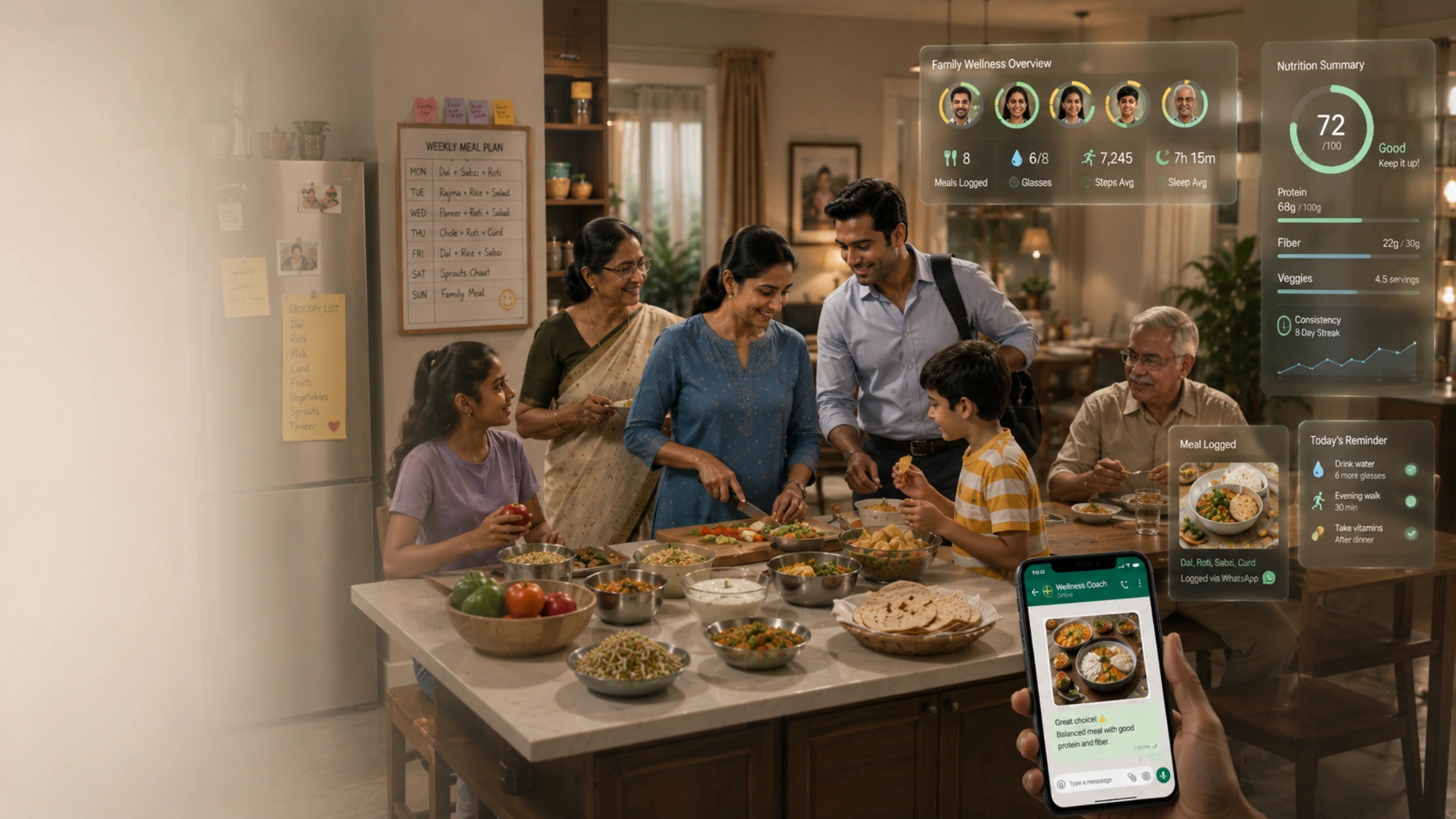
Maintaining your own diet can be difficult.
Maintaining the eating habits of an entire family is a completely different challenge.
Many people successfully follow a nutrition plan when they are single, living independently, or focused on personal fitness goals. However, once children, aging parents, work schedules, school routines, and household responsibilities enter the picture, healthy eating often becomes much more complicated.
This is why healthy eating habits for families are not simply about choosing healthier foods. They are about managing competing schedules, preferences, budgets, health concerns, and daily routines.
Across India, many households are trying to balance modern lifestyles with traditional food habits. Parents want their children to eat better. Adults want to improve their own health. Caregivers want aging family members to maintain good nutrition.
Yet despite good intentions, many families struggle with consistency.
The challenge is not a lack of knowledge.
The challenge is creating systems that work in real life.
Understanding this is the first step toward better family nutrition planning India and stronger long-term family health outcomes.
The Hidden Challenge of Feeding a Family
Most health advice is designed for individuals.
Families do not operate like individuals.
One person may want weight loss.
Another may need higher protein intake.
Children may refuse vegetables.
Grandparents may require dietary restrictions.
A working professional may barely have time to prepare breakfast.
This complexity makes healthy eating habits for families significantly harder than most people realize.
The Daily Decision Overload
Every day families make dozens of food-related decisions:
- What should be cooked?
- Who will eat at home?
- What should children carry to school?
- What snacks are available?
- Is there enough protein in meals?
- What should elderly parents eat?
These constant decisions create mental fatigue.
Eventually convenience begins to win over nutrition.
Busy Lifestyles Make Nutrition Reactive
Many Indian households operate under intense time pressure.
Between:
- Office work
- School schedules
- Commuting
- Household responsibilities
- Elder care
food decisions often become reactive rather than intentional.
This is one reason why busy lifestyles in india make long-term health goals difficult to maintain.
Why Family Nutrition Is Different From Personal Nutrition
Personal nutrition focuses on individual goals.
Family nutrition focuses on collective wellbeing.
That difference changes everything.
Different People Need Different Nutrition
A typical Indian family may include:
- School-going children
- Working adults
- Elderly parents
Each group has different nutritional requirements.
For example:
A growing teenager may need more protein.
An older parent may need controlled carbohydrate intake.
A working professional may require higher protein and fiber to manage energy levels throughout the day.
This is why effective family nutrition planning India requires flexibility rather than strict dieting.
Family Health Is Connected
Research consistently shows that family eating patterns influence individual behavior.
When one family member develops healthier routines, others often follow.
Similarly, unhealthy habits spread easily throughout households.
This makes nutrition a shared responsibility rather than an individual one.
Strong family health management starts with understanding how everyday food choices affect everyone under the same roof.
Multiple Preferences, One Kitchen
One of the biggest challenges Indian families face is managing multiple preferences.
Common Household Scenarios
Consider a typical weekday:
- Children want pasta or noodles
- Grandparents prefer traditional meals
- One parent wants weight loss
- Another wants muscle gain
The kitchen becomes a negotiation zone.
To simplify cooking, families often choose the easiest option rather than the healthiest one.
The Protein Problem
Many households assume that traditional meals automatically provide enough protein.
Unfortunately, this is not always true.
A meal containing:
- Rice
- Roti
- Sabzi
may provide adequate calories but limited protein.
This is especially important for protein for indian vegetarians, who often underestimate their daily protein intake.
The Snack Trap
Many families focus on main meals while overlooking snacks.
Consider common options:
- Namkeen
- Biscuits
- Packaged snacks
Many people are surprised to discover how quickly calories accumulate.
For example, 100 gm namkeen calories can range from 500 to 600 calories depending on the product.
Even 1 katori namkeen calories may contribute significantly to daily energy intake without providing meaningful nutrition.
Understanding calories in namkeen helps families make more informed decisions without eliminating foods they enjoy.
Common Nutrition Compromises Families Make
Families rarely make unhealthy decisions intentionally.
Most compromises happen gradually.
Prioritizing Convenience
When schedules become busy, convenience foods become attractive.
Examples include:
- Frequent ordering
- Packaged snacks
- Sugary beverages
- Ready-to-eat foods
Occasional use is not the problem.
The issue is frequency.
Assuming Home Food Is Automatically Healthy
One of the biggest misconceptions about Indian food and health is that home-cooked food is always healthy.
Home food is generally better than highly processed alternatives.
However, nutrition quality still matters.
Excessive:
- Oil
- Sugar
- Refined carbohydrates
can affect health even in homemade meals.
Falling Into Diet Cycles
Many adults repeatedly start and stop diets.
This contributes to why diets fail long term.
Instead of creating sustainable systems, people rely on short-term motivation.
The result:
- Initial enthusiasm
- Loss of consistency
- Frustration
- Restarting again
This cycle is extremely common among families trying to improve their eating habits.
Building Better Food Awareness
Awareness is often more powerful than restriction.
Most families are not eating poorly because they want to.
They simply lack visibility.
What Does Food Awareness Mean?
Food awareness involves understanding:
- What is being eaten
- How often
- Portion sizes
- Protein intake
- Snack frequency
Many households are surprised when they begin tracking meals.
Patterns become obvious.
Common Discoveries
Families often realize:
- Protein intake is lower than expected
- Snacking is more frequent than assumed
- Weekend eating differs dramatically from weekdays
- Children consume more packaged foods than parents realize
Visibility Creates Better Decisions
People rarely change what they cannot see.
This is why easy way to track meals has become increasingly important.
Many families do not need strict calorie counting.
They simply need better awareness.
Tools that support food tracking without calorie counting often improve consistency because they reduce friction.
Rather than obsessing over numbers, families can focus on patterns.
Small Changes That Make a Big Difference
Healthy family nutrition does not require perfection.
Small improvements often produce meaningful long-term results.
Focus on Protein First
One practical strategy is increasing protein at each meal.
Examples include:
- Paneer
- Greek yogurt
- Milk
- Eggs
- Soy products
- Dal combinations
This helps address common gaps in protein in average indian meal patterns.
Improve Breakfast Quality
Many traditional breakfasts are carbohydrate-heavy.
Adding protein can improve satiety and energy levels.
Examples:
- Poha with sprouts
- Idli with sambar
- Besan chilla
- Egg-based breakfasts
Create Better Snack Defaults
Instead of removing favorite snacks entirely:
Try:
- Roasted chana
- Fruit
- Nuts
- Yogurt
This creates healthier alternatives without feeling restrictive.
Plan Weekly, Not Daily
Daily decision-making creates stress.
Weekly planning reduces friction.
Simple family meal planning India practices can significantly improve consistency.
Examples:
- Plan proteins for the week
- Create snack options in advance
- Batch-prep vegetables
- Schedule grocery shopping
Use Technology to Reduce Complexity
Many families struggle because tracking feels difficult.
Nutrimate simplifies this process through AI-powered, Indian-first nutrition tracking built around everyday habits.
Its WhatsApp-first approach allows families to log meals easily while gaining visibility into eating patterns without creating additional work.
Combined with India’s #1 whatsapp meal logging feature and Unique Caregiver feature, this approach helps support both personal nutrition goals and broader household wellness.
Family Nutrition Checklist
Use this practical checklist to strengthen healthy eating habits for families.
Awareness
✔ Know what family members actually eat daily
✔ Track protein intake periodically
✔ Identify high-calorie snacks
✔ Monitor meal frequency
Meal Structure
✔ Include protein in every meal
✔ Increase vegetables gradually
✔ Improve breakfast quality
✔ Reduce highly processed snacks
Family Systems
✔ Create a weekly meal plan
✔ Shop with a list
✔ Prepare healthy snacks in advance
✔ Encourage shared family meals
Long-Term Sustainability
✔ Avoid extreme diets
✔ Focus on consistency
✔ Support gradual changes
✔ Build sustainable health habits for Indians
Technology Support
✔ Use a meal tracker app
✔ Explore a best food tracking app designed for Indian meals
✔ Consider a family health tracking app for better household visibility
✔ Improve health tracking for parents through simple monitoring systems
One of the biggest obstacles to better family nutrition is visibility.
Most families simply do not know what everyone is actually eating throughout the day.
Children eat at school.
Working adults eat at the office.
Parents snack between meals.
Grandparents follow separate routines.
Without visibility, improving nutrition becomes guesswork.
Simple meal awareness systems can reveal patterns most families overlook.
Nutrimate helps simplify this process through Indian-first meal intelligence, WhatsApp-based food logging, and caregiver-friendly tracking designed around real household routines rather than strict dieting.
The goal is not perfection.
The goal is awareness, consistency, and better long-term family preventive health India outcomes.
References
- World Health Organization Healthy Diet Fact Sheet
https://www.who.int/news-room/fact-sheets/detail/healthy-diet
FAQs
Families eat healthy together by focusing on consistency rather than perfection. Shared meal planning, balanced protein intake, healthier snack choices, and improved food awareness help create sustainable routines that work for everyone in the household.
Family nutrition is difficult because households must balance different age groups, preferences, schedules, health goals, and responsibilities. What works for one person may not work for another, making nutrition decisions more complex than individual dieting.
Start with small changes. Improve breakfast quality, increase protein intake, reduce reliance on processed snacks, create a weekly meal plan, and build awareness around what family members actually eat each day. Sustainable improvements are usually more effective than drastic dietary changes.