 Pradnya Ganorkar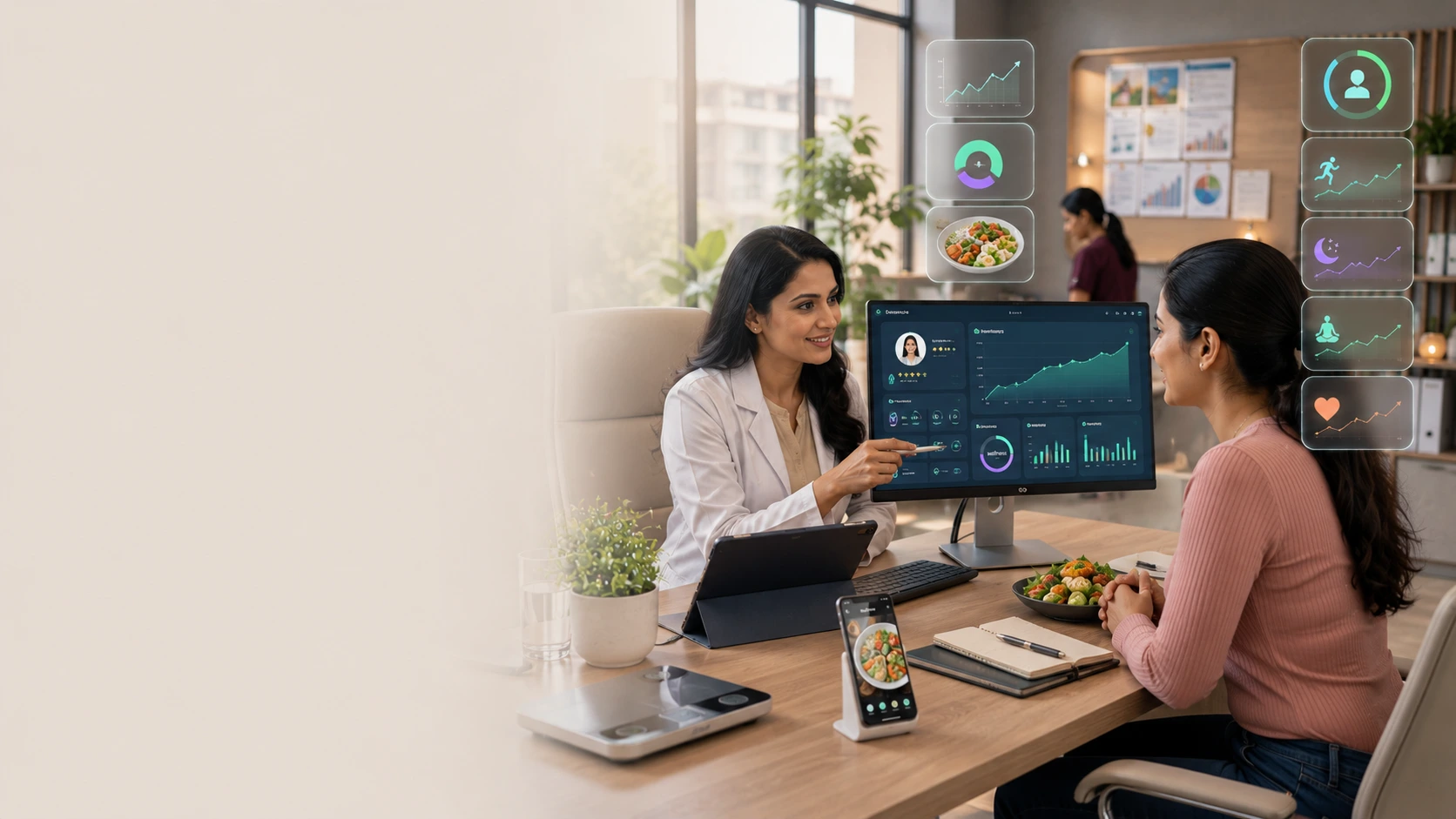
The weight loss industry has evolved significantly.
Patients today expect more than consultations, meal plans, and periodic check-ins. They want accountability, personalized guidance, progress visibility, and support that fits into their everyday lives.
At the same time, clinics face a growing challenge.
Patients often start with enthusiasm, attend one or two consultations, and then disappear.
This is why selecting the right CRM software for weight loss clinics has become increasingly important.
The best systems are no longer just appointment schedulers.
They help clinics improve patient adherence, strengthen engagement, monitor progress, and create meaningful relationships beyond the consultation room.
As obesity, diabetes, metabolic disorders, and lifestyle-related health concerns continue to rise across India, clinics require technology that supports long-term behavior change rather than simply storing patient records.
The future belongs to platforms that combine patient nutrition tracking, communication, engagement, and outcome measurement into a single workflow.
Why Weight Loss Clinics Need More Than Appointment Software
Many clinics begin with basic software.
Typically, these systems manage:
- Appointments
- Billing
- Contact records
- Scheduling
While these functions are necessary, they do not solve the biggest challenge in weight management.
The real challenge is patient compliance.
The Weight Loss Reality
Most patients do not fail because they lack information.
They fail because:
- Life gets busy
- Motivation drops
- Habits become inconsistent
- Tracking feels difficult
- Follow-up becomes irregular
This is where traditional appointment software falls short.
A modern clinic client management software solution should provide continuous visibility into patient behavior between consultations.
Why Visibility Matters
Consider two patients:
Patient A attends monthly consultations.
Patient B attends monthly consultations and logs meals, habits, activity levels, and adherence throughout the month.
Which patient gives the practitioner better insights?
Patient B.
Without visibility, coaching becomes reactive.
With visibility, coaching becomes proactive.
This is why leading clinics increasingly prioritize patient diet tracking tool capabilities alongside appointment management.
The Patient Compliance Problem
Most weight loss programs do not fail because of poor nutrition advice.
They fail because adherence gradually declines.
Common Compliance Challenges
Patients frequently struggle with:
- Weekend overeating
- Missed meals
- Emotional eating
- Low protein intake
- Inconsistent activity
- Lack of accountability
These challenges are difficult to identify during a single monthly consultation.
The Gap Between Appointments
A patient may attend:
- One consultation every 30 days
- One nutrition review every few weeks
But their health behaviors happen daily.
That means practitioners have visibility into only a tiny fraction of the patient journey.
A good weight loss clinic software platform closes this gap.
Why Traditional Follow-Ups Are Inefficient
Many clinics rely on:
- Phone calls
- Manual WhatsApp messages
- Excel sheets
- Paper records
This creates significant workload while still providing limited visibility.
The best nutrition tracking for clinics solutions automate much of this process while improving patient engagement.
Features That Improve Outcomes
Not all software features contribute equally to patient success.
The most valuable features improve adherence and visibility.
1. Nutrition Tracking
Nutrition remains the foundation of most weight loss programs.
A modern platform should include:
- Meal logging
- Dietary adherence monitoring
- Macronutrient visibility
- Progress analysis
Strong patient nutrition tracking capabilities help practitioners identify issues before they become setbacks.
2. Indian Food Intelligence
Many international platforms struggle with Indian eating patterns.
Patients regularly consume:
- Dal
- Roti
- Idli
- Poha
- Khichdi
- Regional dishes
Accurate tracking requires software designed for Indian diets.
This is one reason many clinics seek a dedicated nutrition app india solution rather than generic global tools.
3. Compliance Monitoring
The most successful clinics track more than weight.
They monitor:
- Meal consistency
- Water intake
- Activity
- Sleep
- Program adherence
This creates a stronger foundation for sustainable results.
4. Progress Dashboards
Patients need visible progress.
Practitioners need actionable data.
A robust health analytics dashboard can help visualize:
- Weight trends
- Adherence scores
- Nutrition compliance
- Activity levels
- Habit consistency
This transforms raw information into meaningful insights.
5. Engagement Tools
Long-term success depends heavily on engagement.
Useful features include:
- Notifications
- Habit reminders
- Goal tracking
- Progress summaries
These improve accountability without increasing practitioner workload.
Follow-Up Automation
One of the most overlooked capabilities in modern clinic software is automation.
Why Automation Matters
Many clinics spend hours every week:
- Sending reminders
- Requesting updates
- Scheduling reviews
- Following up with inactive patients
Automation reduces this burden.
Automated Follow-Up Workflows
Examples include:
- Missed meal log reminders
- Weekly progress summaries
- Consultation reminders
- Habit tracking prompts
- Compliance alerts
These systems ensure patients stay connected even when practitioners are unavailable.
WhatsApp-Based Engagement
In India, WhatsApp remains one of the most accessible communication channels.
Patients are far more likely to respond to familiar platforms than to download multiple applications.
This is where low-friction systems become valuable.
Nutrimate simplifies engagement through AI-powered health tracking, Indian meal intelligence, and India’s #1 whatsapp meal logging feature and Unique Caregiver feature.
The goal is to make adherence easier rather than adding more complexity.
Tracking Beyond Consultations
The most successful clinics no longer evaluate patients solely during appointments.
They monitor health behaviors continuously.
What Should Be Tracked?
Key indicators include:
| Metric | Why It Matters |
| Meal consistency | Predicts adherence |
| Protein intake | Supports satiety and muscle preservation |
| Activity levels | Indicates engagement |
| Sleep quality | Influences recovery and hunger |
| Weight trends | Measures outcomes |
| Habit completion | Reflects behavior change |
From Data to Action
Collecting data alone is not enough.
The system should help practitioners answer questions such as:
- Why is progress slowing?
- Where is adherence breaking down?
- Which patients need intervention?
This is where advanced wellness practice software becomes valuable.
Learning From Fitness Industry Platforms
Interestingly, many innovations in weight management technology have emerged from fitness ecosystems.
Platforms like FitVia demonstrate how engagement improves when professionals gain ongoing visibility into client behavior.
For example, dietitians using FitVia can:
- Track nutrition in real time
- Monitor protein, calcium, and iron intake
- Access a database of 1 lakh+ Indian foods
- Manage multiple clients through centralized dashboards
- Review adherence trends between consultations
While FitVia serves gyms, trainers, and dietitians, the underlying principle applies equally to weight loss clinics.
Better visibility leads to better interventions.
Better interventions lead to better outcomes.
CRM Evaluation Checklist
Choosing the right software requires evaluating functionality beyond basic administration.
Patient Management Checklist
Can the software:
- Store complete patient records?
- Manage consultations?
- Track progress history?
- Support multiple practitioners?
Engagement Checklist
Can it:
- Improve clinic patient engagement?
- Support reminders?
- Encourage adherence?
- Increase retention?
Nutrition Checklist
Can it:
- Provide patient nutrition tracking?
- Support Indian foods?
- Track compliance?
- Generate progress reports?
Analytics Checklist
Can it:
- Provide a health analytics dashboard?
- Visualize trends?
- Highlight risks?
- Support decision-making?
Automation Checklist
Can it:
- Automate follow-ups?
- Reduce manual communication?
- Improve consistency?
- Save practitioner time?
Scalability Checklist
As the clinic grows, can the platform support:
- Additional practitioners?
- Multiple programs?
- More patients?
- Better reporting?
The Most Important Question
Before selecting any CRM software for weight loss clinics, ask:
“Will this help patients stay engaged between visits?”
If the answer is no, even the most advanced software may fail to improve outcomes.
The most effective systems focus not only on managing appointments but also on improving patient accountability, adherence, and long-term behavior change.
Reference
- World Health Organization. Obesity and overweight factsheet:
https://www.who.int/news-room/fact-sheets/detail/obesity-and-overweight - National Institute of Nutrition (ICMR-NIN):
https://www.nin.res.in/
FAQ
Weight loss clinics need software that combines appointment management, patient records, nutrition tracking, compliance monitoring, progress reporting, communication tools, and follow-up automation. The most effective platforms help practitioners stay connected with patients between consultations.
A clinic CRM should include patient management, nutrition tracking, progress dashboards, automated follow-ups, engagement tools, reporting capabilities, and communication features. It should also provide visibility into patient behavior and adherence to improve outcomes.