 Pradnya Ganorkar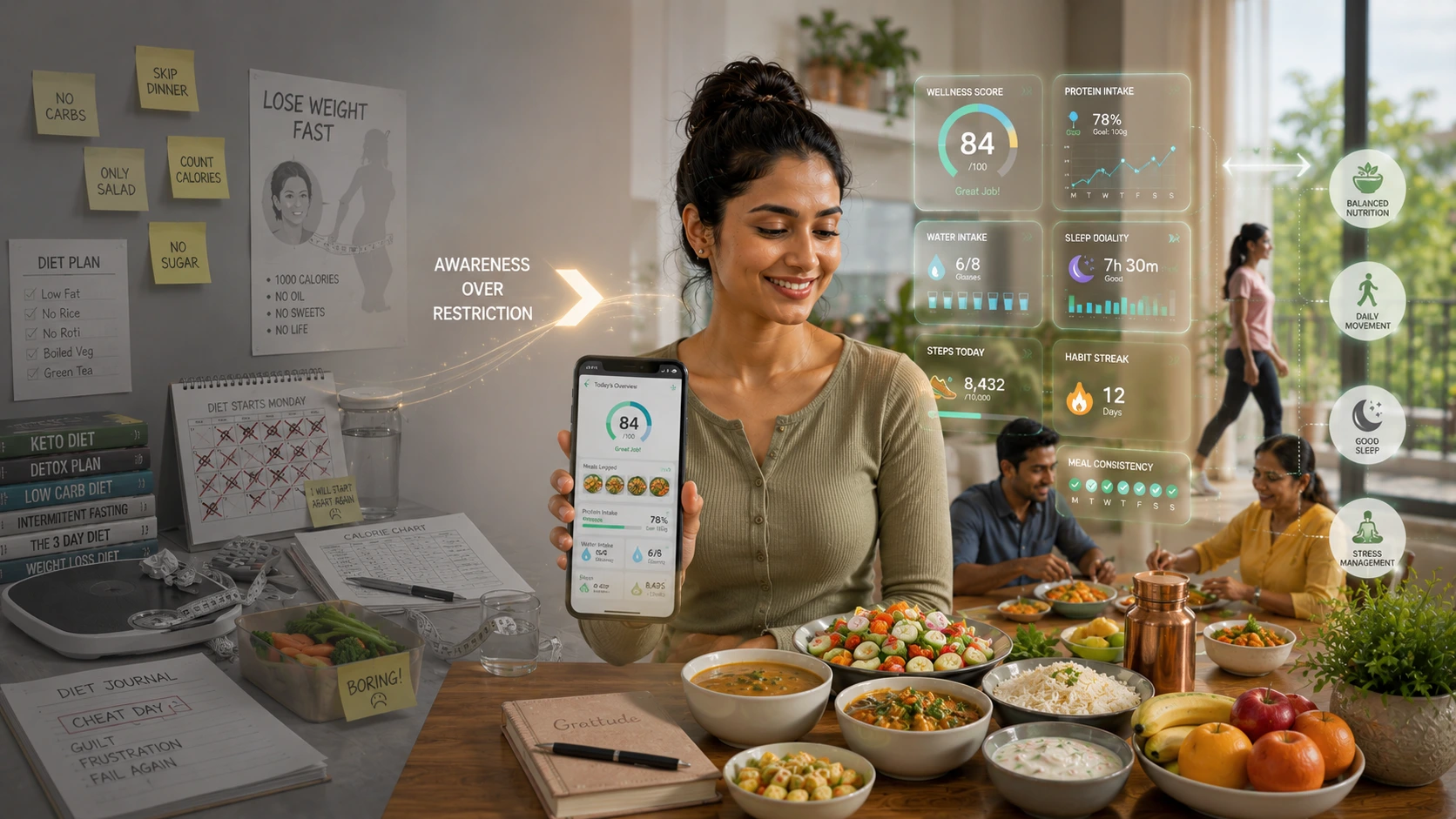
If you’ve ever started a strict diet on Monday and abandoned it by Friday, you’re not alone.
Many people searching for how to stay healthy without dieting are not lacking motivation. They’re struggling with a system that was never designed for real life.
Between work deadlines, family responsibilities, social events, travel, and busy lifestyles in india, maintaining a restrictive eating plan becomes difficult. This is one of the biggest reasons why diets fail long term.
The good news is that health does not require extreme restrictions.
You do not need to eliminate rotis, avoid family dinners, skip festivals, or follow complicated meal plans forever.
In reality, the most successful people build sustainable health habits, focus on awareness, and make small improvements consistently.
For most Indians, lasting health comes from understanding their eating patterns, improving daily choices, and building routines that fit naturally into everyday life.
Why Dieting Feels Unsustainable
The appeal of dieting is simple.
It promises quick results.
Lose weight in 30 days.
Drop inches in a month.
Transform your body before a wedding.
These promises are attractive because they offer certainty.
Unfortunately, real life is rarely that predictable.
Diets Often Create Temporary Compliance
Most diets work initially because they create a calorie deficit.
People:
- Eat less
- Remove certain foods
- Follow strict rules
- Pay more attention to meals
As a result, weight often decreases.
The problem starts when normal life returns.
Business travel.
Family functions.
Festivals.
Late-night work calls.
Social gatherings.
The stricter the plan, the harder it becomes to maintain.
Health Is Not a 30-Day Project
Long-term wellness is not about perfection.
It is about consistency.
Someone who follows balanced eating habits for years will usually achieve better outcomes than someone who follows extreme diets repeatedly.
This is why experts increasingly emphasize sustainable health habits for Indians rather than temporary diet plans.
The Indian Reality
Many diets are built around Western eating patterns.
Indian households are different.
Meals often include:
- Roti
- Rice
- Dal
- Sabzi
- Curd
- Regional foods
Trying to completely eliminate these foods often creates frustration and poor adherence.
A practical approach should work with your lifestyle, not against it.
The Problem With Food Rules
Most diet plans rely heavily on rules.
Examples include:
- No carbs after 6 PM
- No rice
- No sugar ever
- No eating outside
- Cheat meals only once a week
While simple rules may seem helpful, they often create an unhealthy relationship with food.
Food Becomes Emotional
Once foods are labelled “good” or “bad,” people often experience guilt when they eat something outside their plan.
This can create a cycle of:
Restriction → Cravings → Overeating → Guilt → More Restriction
Over time, this cycle becomes exhausting.
The Roti and Rice Myth
One common question in India is whether roti or rice causes weight gain.
The reality behind the roti rice weight gain myth is much simpler.
Weight gain is usually influenced by:
- Overall calorie intake
- Physical activity
- Sleep quality
- Stress levels
- Portion sizes
Neither roti nor rice is inherently unhealthy.
Understanding portion sizes and meal balance is more important than avoiding traditional foods.
Indian Food Is Not the Problem
Many people ask:
is Indian food healthy?
In most cases, yes.
Traditional Indian meals often contain:
- Lentils
- Vegetables
- Whole grains
- Fermented foods
- Diverse spices
The challenge is usually not the food itself.
The challenge is modern eating behaviors such as:
- Frequent snacking
- Ultra-processed foods
- Sugary beverages
- Sedentary lifestyles
What Healthy Eating Actually Looks Like
Healthy eating is often much simpler than social media makes it appear.
You do not need expensive ingredients.
You do not need imported superfoods.
You do not need to eat chicken and broccoli every day.
Focus on Meal Balance
A balanced Indian meal might include:
- Dal or protein source
- Vegetables
- Roti or rice
- Curd
- Fruit later in the day
This approach supports both satisfaction and nutrition.
Prioritize Protein
One major challenge in India is protein intake.
Many people underestimate the protein in average indian meal.
For vegetarians, protein awareness becomes even more important.
Good options include:
- Dal
- Rajma
- Chana
- Paneer
- Curd
- Soya products
- Milk
- Sattu
Improving protein for indian vegetarians is often one of the most impactful dietary changes people can make.
Understand Hidden Calories
Many people focus on meals but overlook snacks.
For example, questions like:
- calories in namkeen
- 100 gm namkeen calories
- 100 gram namkeen calories
- 1 katori namkeen calories
- calories in 100 gm namkeen
highlight how easy it is to underestimate calorie intake.
A small bowl of namkeen can contain significantly more calories than people expect.
Awareness often matters more than restriction.
Building Awareness Instead of Restriction
The biggest shift people can make is moving from restriction to awareness.
Awareness creates information.
Restriction creates resistance.
Why Awareness Works Better
When people understand:
- What they eat
- When they eat
- Why they eat
They naturally begin making better decisions.
This approach is particularly useful for Indian diet without dieting strategies.
Food Tracking Without Obsession
Many people assume tracking means counting every calorie.
It doesn’t have to.
Modern approaches emphasize food tracking without calorie counting.
Instead of focusing on exact numbers, people can observe:
- Meal consistency
- Protein intake
- Vegetable intake
- Snacking habits
- Water consumption
This creates valuable insight without unnecessary stress.
Simple Visibility Creates Better Choices
One reason Nutrimate focuses on simple health awareness is that visibility often drives behavior change.
Instead of demanding perfection, users gain a clearer picture of their daily habits through simple tracking.
Nutrimate’s AI-powered, Indian-first approach is designed around consistency and practical decision-making, including India’s #1 whatsapp meal logging feature and Unique Caregiver feature that makes habit awareness easier for both individuals and families.
Real Indian Meal Examples
Many people believe healthy eating means giving up favorite foods.
That is rarely necessary.
Example 1: Office Professional
Breakfast:
- Poha with peanuts
- Tea without excessive sugar
Lunch:
- 2 rotis
- Dal
- Sabzi
- Salad
Snack:
- Fruit
Dinner:
- Rice
- Vegetable curry
- Curd
This supports a healthy lifestyle for busy Indians without extreme restrictions.
Example 2: Vegetarian Gym-Goer
Breakfast:
- Besan chilla
- Curd
Lunch:
- Rajma rice
- Salad
Snack:
- Roasted chana
Dinner:
- Paneer sabzi
- Rotis
This improves protein for indian vegetarians while remaining practical.
Example 3: Working Parent
Breakfast:
- Idli
- Sambar
Lunch:
- Home-cooked meal
Snack:
- Fruit or nuts
Dinner:
- Family meal
The goal is not perfection.
The goal is consistency.
Daily Health Framework
People often ask how to stay consistent with health.
The answer usually has less to do with motivation and more to do with systems.
1. Build Repeatable Habits
Focus on:
- Regular meals
- Daily movement
- Consistent sleep
- Hydration
Simple habits outperform complex plans.
2. Track Behaviors, Not Just Outcomes
Many people only monitor weight.
Track:
- Activity
- Sleep
- Meals
- Energy levels
This provides better insight into long-term progress.
3. Make Healthy Choices Convenient
Keep:
- Fruits visible
- Water accessible
- Protein-rich foods available
Convenience influences behavior.
4. Reduce Decision Fatigue
Planning meals in advance reduces unhealthy choices during busy days.
This is especially useful for Indian diet for busy professionals.
5. Focus on Progress
Health is not about one perfect meal.
It is about hundreds of small decisions over time.
People searching for how to stay healthy without dieting often discover that success comes from consistency, not restriction.
This is why many experts now recommend simple awareness systems, easy way to track meals, and simple meal tracking for Indian food rather than aggressive dieting.
Nutrimate supports this philosophy through Indian meal intelligence, WhatsApp-first convenience, and practical tracking designed for real Indian lifestyles.
FAQs
Yes. Weight loss can occur through sustainable behavior changes such as improving meal quality, increasing physical activity, managing portions, improving sleep, and building consistent habits. Extreme dieting is not required for most people.
Yes. Traditional Indian meals often include vegetables, legumes, whole grains, fermented foods, and diverse nutrients. The focus should be on balance, portions, and consistency rather than eliminating Indian foods.
Not always. Many people benefit more from awareness, habit building, meal consistency, and gradual improvements than from rigid diet plans. Sustainable routines are often easier to maintain long term.
References
- National Institute of Nutrition (ICMR-NIN) Dietary Guidelines for Indians
https://www.nin.res.in/downloads/DietaryGuidelinesforNINwebsite.pdf - World Health Organization – Healthy Diet Fact Sheet
https://www.who.int/news-room/fact-sheets/detail/healthy-diet