 Pradnya Ganorkar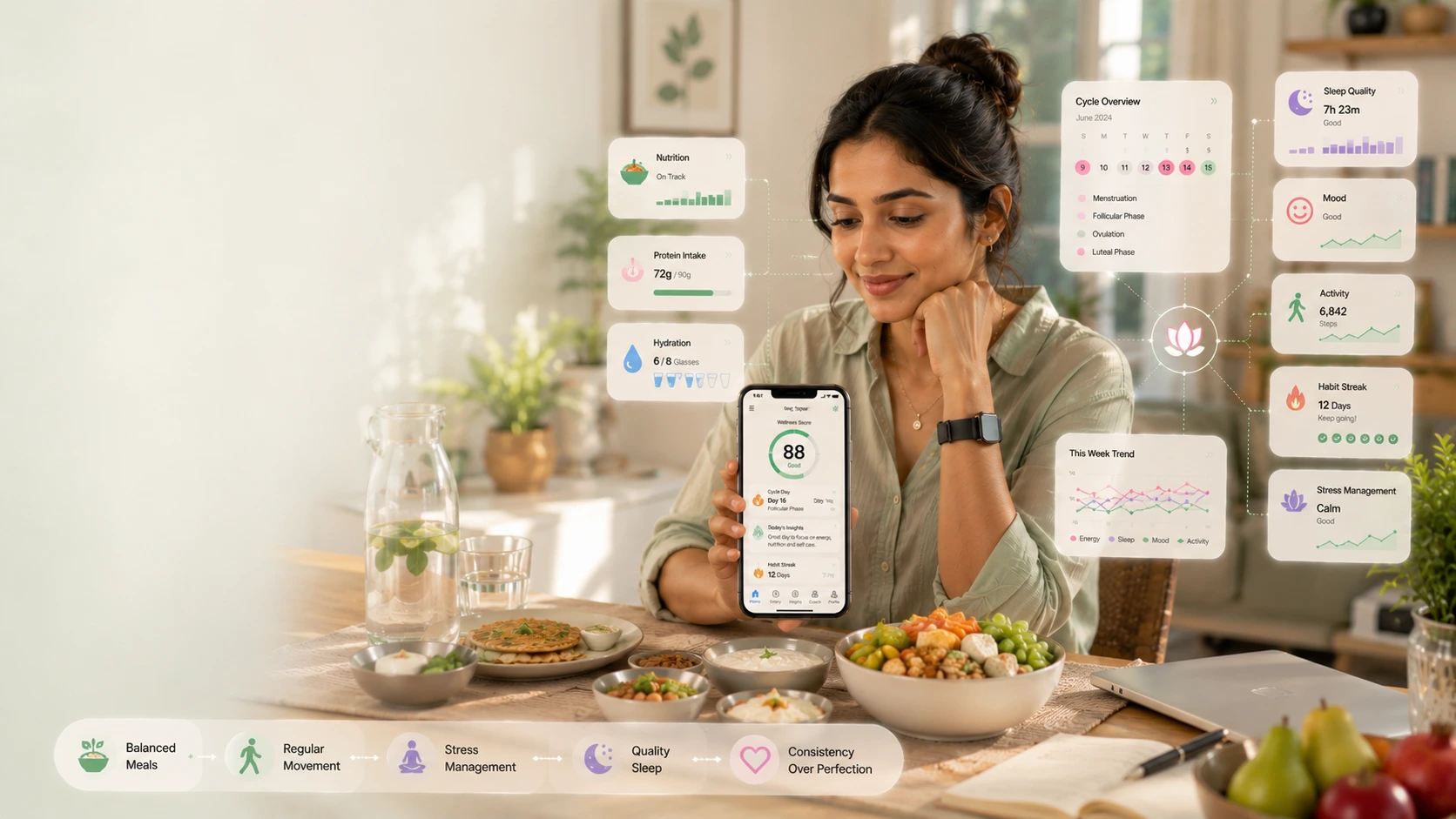
Living with PCOS can feel overwhelming. One day you’re told to eliminate carbohydrates, the next you’re advised to follow an expensive supplement routine or an extremely restrictive diet. For many women, this constant stream of conflicting advice creates frustration instead of progress.
The truth is that managing PCOS is rarely about finding the “perfect” diet. Building healthy habits for PCOS through sustainable routines often has a greater long-term impact than following strict plans that are difficult to maintain. This is especially relevant for Indian women balancing work, family responsibilities, social commitments, and busy lifestyles in india.
Whether your goal is improving energy levels, supporting hormonal health for women, managing weight, or creating a healthier daily routine, consistency matters far more than perfection.
Why Extreme Approaches Fail
Many women diagnosed with PCOS immediately search for quick solutions.
Common advice often includes:
- Completely avoiding rice or roti.
- Following extremely low-carbohydrate diets.
- Exercising intensely every day.
- Eliminating favourite foods permanently.
- Tracking every calorie obsessively.
While these approaches may produce short-term changes for some people, they are often difficult to sustain.
This is one of the biggest reasons why diets fail long term.
A routine that creates stress or guilt rarely becomes part of everyday life.
PCOS Requires Long-Term Lifestyle Support
PCOS is a long-term condition that responds well to gradual and consistent lifestyle improvements.
Instead of focusing only on rapid weight loss, think about building a PCOS routine that supports:
- Better sleep
- Balanced nutrition
- Regular movement
- Stress management
- Sustainable eating patterns
These PCOS lifestyle changes are easier to maintain than temporary diet plans and are more likely to become lifelong habits.
Indian Food Is Not the Problem
Many women believe they need to stop eating traditional meals to manage PCOS.
This is not necessarily true.
Questions such as is Indian food healthy or concerns around the roti rice weight gain myth often arise because many online diet plans are based on Western eating patterns.
A balanced Indian diet for PCOS can include:
- Dal and legumes
- Whole grains such as roti and brown rice
- Millets like ragi and bajra
- Seasonal vegetables
- Paneer, curd, and yoghurt
- Fruits in appropriate portions
- Nuts and seeds
The goal is not to avoid familiar foods but to improve meal quality, balance, and consistency.
Healthy eating should fit naturally into your family’s lifestyle instead of becoming a separate routine.
Restriction Often Leads to Overeating
Strict dieting frequently creates an all-or-nothing mindset.
After following restrictive rules for several days, many people eventually overeat during social gatherings, festivals, or stressful periods.
This cycle often creates guilt and discouragement.
Instead, focus on sustainable health habits that allow flexibility while supporting long-term progress.
Healthy living should reduce stress, not increase it.
The Role of Consistency
If there is one principle that makes the biggest difference in PCOS management, it is consistency.
Small actions repeated every day usually produce better outcomes than dramatic lifestyle changes followed for only a few weeks.
Build Systems Instead of Chasing Motivation
Motivation naturally changes from day to day.
Good systems continue working even when motivation is low.
Examples include:
- Planning balanced meals before the work week begins.
- Walking after dinner most evenings.
- Sleeping at a consistent time.
- Including protein in every meal.
- Recording meals regularly.
These routines gradually become automatic and support long-term healthy lifestyle improvements.
Track Habits Instead of Chasing Perfection
Many women stop monitoring their progress because traditional calorie counting feels exhausting.
A simpler approach is to monitor behaviours instead of aiming for perfect numbers.
Questions such as:
- Did I eat enough vegetables today?
- Did I include protein?
- Did I move my body?
- Did I sleep well?
are often more helpful than obsessing over calories.
This approach encourages food tracking without calorie counting and supports better nutrition awareness women without creating unnecessary pressure.
For women searching for the best food tracking app or a practical meal tracker app, simplicity should be the priority. The easier a routine is to follow, the more likely it is to become part of everyday life.
Awareness Creates Better Decisions
Many women are surprised when they begin observing their eating habits.
For example, they may realise that breakfast is frequently skipped or that afternoon hunger leads to high-calorie snacks.
Some people spend more time searching for 100 gm namkeen calories, calories in namkeen, 100 gram namkeen calories, 1 katori namkeen calories, or calories in 100 gm namkeen than understanding the overall quality of their daily eating pattern.
While nutritional information can be useful, lasting improvements usually come from recognising consistent behaviours rather than focusing on individual foods.
Developing awareness helps women make gradual changes that fit naturally into their everyday lives instead of following unrealistic diet rules.
Nutrition Habits That Matter
Nutrition plays an important role in managing PCOS, but it does not have to be complicated. Many women believe they need to eliminate entire food groups or follow restrictive meal plans to improve their symptoms. In reality, sustainable nutrition habits often produce better long-term results than extreme diets.
The goal of a PCOS diet India should be to improve meal quality, support stable energy levels, and create eating patterns that can realistically fit into everyday life.
Build Balanced Meals Instead of Perfect Meals
Every meal does not need to be perfect.
Instead, aim for a balanced plate that includes:
- A quality protein source
- Whole grains or millets
- Seasonal vegetables
- Healthy fats
- Fibre-rich foods
For example, a simple Indian meal of dal, roti, sabzi, and curd can provide a balanced combination of nutrients when eaten in appropriate portions.
This approach supports both healthy Indian eating habits and a sustainable Indian diet for PCOS without requiring expensive specialty foods.
Prioritise Protein Throughout the Day
One of the most common nutritional gaps among Indian women is insufficient protein intake.
The protein in average indian meal is often lower than recommended, particularly when meals rely heavily on cereals while containing limited pulses, dairy, or other protein-rich foods.
Increasing protein intake may help improve satiety and support overall metabolic health.
Good options include:
- Moong dal
- Chana
- Rajma
- Soy products
- Paneer
- Greek yogurt
- Eggs
- Fish
- Chicken
Understanding protein for indian vegetarians is especially important for women following vegetarian diets, as combining different plant protein sources throughout the day can improve overall protein quality.
Focus on Meal Timing
Skipping meals because of work or household responsibilities is common among women with busy lifestyles in india.
Unfortunately, long gaps between meals may increase cravings and make it harder to maintain balanced eating patterns.
Simple strategies include:
- Eating breakfast within a reasonable time after waking up.
- Planning healthy snacks for busy afternoons.
- Avoiding long periods without food.
- Staying hydrated throughout the day.
These small changes are often more sustainable than following rigid eating schedules.
Stop Chasing “Perfect” Foods
Many women spend hours searching online to determine whether one food is “allowed.”
Questions about the roti rice weight gain myth, whether Indian food and health can coexist, or whether they should avoid all carbohydrates are extremely common.
The reality is that no single food causes or cures PCOS.
What matters most is your overall eating pattern.
A balanced PCOS meal plan India should include familiar home-cooked foods that you enjoy eating and can continue for months or years.
Make Nutrition Awareness Easy
Many women abandon nutrition tracking because traditional calorie-counting apps feel overwhelming.
An easier approach is to focus on awareness rather than perfection.
Instead of counting every calorie, notice patterns such as:
- Skipping breakfast
- Low vegetable intake
- Limited protein
- Frequent sugary beverages
- Weekend overeating
This type of women’s nutrition tracking helps identify practical improvements without turning every meal into a mathematical exercise.
For women looking for an easy way to track meals or simple meal tracking for Indian food, reducing complexity often improves long-term consistency.
Sleep and Stress Management
Nutrition and exercise receive most of the attention in PCOS discussions, but sleep and stress are equally important.
Poor sleep and chronic stress can make it more difficult to maintain healthy routines, increase food cravings, and reduce motivation to stay active.
Supporting hormonal balance naturally requires looking beyond food alone.
Sleep Is Part of Your Treatment Plan
Many women underestimate how strongly sleep influences overall wellbeing.
A consistent sleep routine can support:
- Better energy levels
- Improved recovery
- More consistent eating habits
- Reduced daytime fatigue
- Better workout performance
Aim for a regular bedtime whenever possible, even on weekends.
Improving sleep quality is one of the simplest lifestyle habits for women that often receives too little attention.
Stress Influences Everyday Choices
Stress does not directly cause PCOS, but it can make healthy habits more difficult to maintain.
During stressful periods, people are more likely to:
- Skip meals
- Eat convenience foods
- Reduce physical activity
- Sleep less
- Stop following healthy routines
This is one reason why staying healthy is hard for many working professionals.
Rather than trying to eliminate stress completely, focus on managing it through practical habits.
Examples include:
- Walking outdoors
- Deep breathing
- Yoga
- Journaling
- Meditation
- Talking with supportive family members or friends
These activities contribute to stress free living and improve the likelihood of maintaining healthy behaviours over time.
Consistency Is More Powerful Than Intensity
You do not need to follow a perfect wellness routine every day.
Missing one workout or enjoying dessert at a family celebration does not undo your progress.
What matters is returning to your routine.
This is where Nutrimate supports a practical approach to health. Instead of encouraging restrictive dieting, its AI-powered, Indian-first platform focuses on awareness and consistency through India’s #1 whatsapp meal logging feature and Unique Caregiver feature. By simplifying meal tracking for everyday Indian meals, it helps women build sustainable routines without making nutrition feel overwhelming.
Whether you are managing PCOS yourself or supporting the family health of someone you care about, consistent awareness often delivers better long-term outcomes than short periods of extreme discipline.
Developing realistic routines that fit your work schedule, family life, and eating habits is the foundation of lasting PCOS lifestyle changes.
Physical Activity for PCOS
Regular movement is one of the most effective healthy habits for PCOS, but it does not have to involve long hours in the gym or intense workout programmes.
The best exercise is the one you can continue consistently.
Many women stop exercising because they choose routines that are too demanding for their schedule. Instead of aiming for perfection, focus on building a realistic PCOS routine that supports long-term health.
Choose Activities You Enjoy
Consistency becomes easier when physical activity feels enjoyable rather than like a punishment.
Examples include:
- Brisk walking
- Strength training
- Cycling
- Yoga
- Dancing
- Swimming
Walking is particularly suitable for women with busy lifestyles in india because it requires no special equipment and can easily fit into daily life.
Strength Training Matters
Many women focus only on cardio for weight management.
However, strength training also plays an important role in supporting overall metabolic health and maintaining muscle mass.
You do not need advanced equipment to begin.
Simple bodyweight exercises or resistance bands can provide an effective starting point.
Combining strength training with regular walking creates a balanced fitness diet and exercise routine that supports long-term healthy lifestyle goals.
Progress Is Better Than Perfection
Some weeks you may exercise five times.
Other weeks you may only manage two sessions.
That does not mean you have failed.
The goal is to build sustainable health habits for Indians that continue despite work deadlines, travel, festivals, or family commitments.
Learning how to stay consistent with health is far more valuable than following an unsustainable programme for a short period.
Habit Stacking for Long-Term Success
One of the easiest ways to make PCOS lifestyle changes last is through habit stacking.
Habit stacking means attaching a new healthy behaviour to an existing daily routine.
Instead of relying on memory or motivation, the existing habit becomes your reminder.
Examples include:
| Existing Habit | New Healthy Habit |
| Morning tea | Drink a glass of water first |
| After breakfast | Take a 10-minute walk |
| Lunch break | Eat one serving of vegetables before other foods |
| Evening commute | Walk for 15 minutes before entering the house |
| Dinner | Complete meal tracking for the day |
| Before bed | Prepare breakfast for tomorrow |
These small actions gradually become automatic and support long-term lifestyle change.
Keep Your Routine Simple
Many women feel they need complicated health plans to manage PCOS.
In reality, a simple routine followed consistently usually produces better outcomes.
A practical daily checklist could include:
- Eat balanced home-cooked meals.
- Include protein with each meal.
- Stay hydrated.
- Walk every day.
- Sleep at a consistent time.
- Manage stress.
- Track meals without guilt.
This approach supports how to stay healthy without dieting while encouraging sustainable progress.
Use Awareness Instead of Restriction
Awareness creates better decisions than strict rules.
Instead of avoiding every favourite food, learn to recognise patterns.
Simple meal tracking helps identify habits such as:
- Skipping breakfast
- Low protein intake
- Frequent processed snacks
- Irregular meal timings
- Weekend overeating
Many women discover that improving these patterns has a greater impact than following highly restrictive diets.
This is why Nutrimate focuses on AI-powered, Indian-first health tracking rather than encouraging perfection. Its India’s #1 whatsapp meal logging feature and Unique Caregiver feature make it easier to develop awareness around everyday eating habits while fitting naturally into busy routines.
The objective is to make healthier choices easier to repeat, not to create another complicated system.
FAQs
The most effective healthy habits for PCOS include eating balanced meals, increasing protein intake, staying physically active, sleeping consistently, managing stress, and maintaining realistic daily routines.
Rather than following restrictive diets, focus on gradual PCOS lifestyle changes that fit naturally into your everyday life. Small improvements maintained over time are generally more sustainable than extreme short-term interventions.
Yes. Walking is one of the simplest and most sustainable forms of physical activity for women with PCOS.
Regular walking supports overall fitness, encourages consistent movement, reduces sedentary time, and is easy to include in a busy schedule. Combined with balanced nutrition and other healthy habits, it can become an important part of a long-term PCOS routine.
Sleep is an essential part of overall health and should not be overlooked when managing PCOS.
Poor sleep may make it harder to maintain healthy eating patterns, stay physically active, and manage stress effectively.
A regular sleep schedule, combined with balanced nutrition, movement, and healthy habits for PCOS, supports better long-term wellbeing and helps create sustainable lifestyle routines.
References
- International Evidence-based Guideline for the Assessment and Management of Polycystic Ovary Syndrome (2023)
https://www.monash.edu/medicine/mchri/pcos/guideline - Indian Council of Medical Research (ICMR). Dietary Guidelines for Indians, 2024