 Pradnya Ganorkar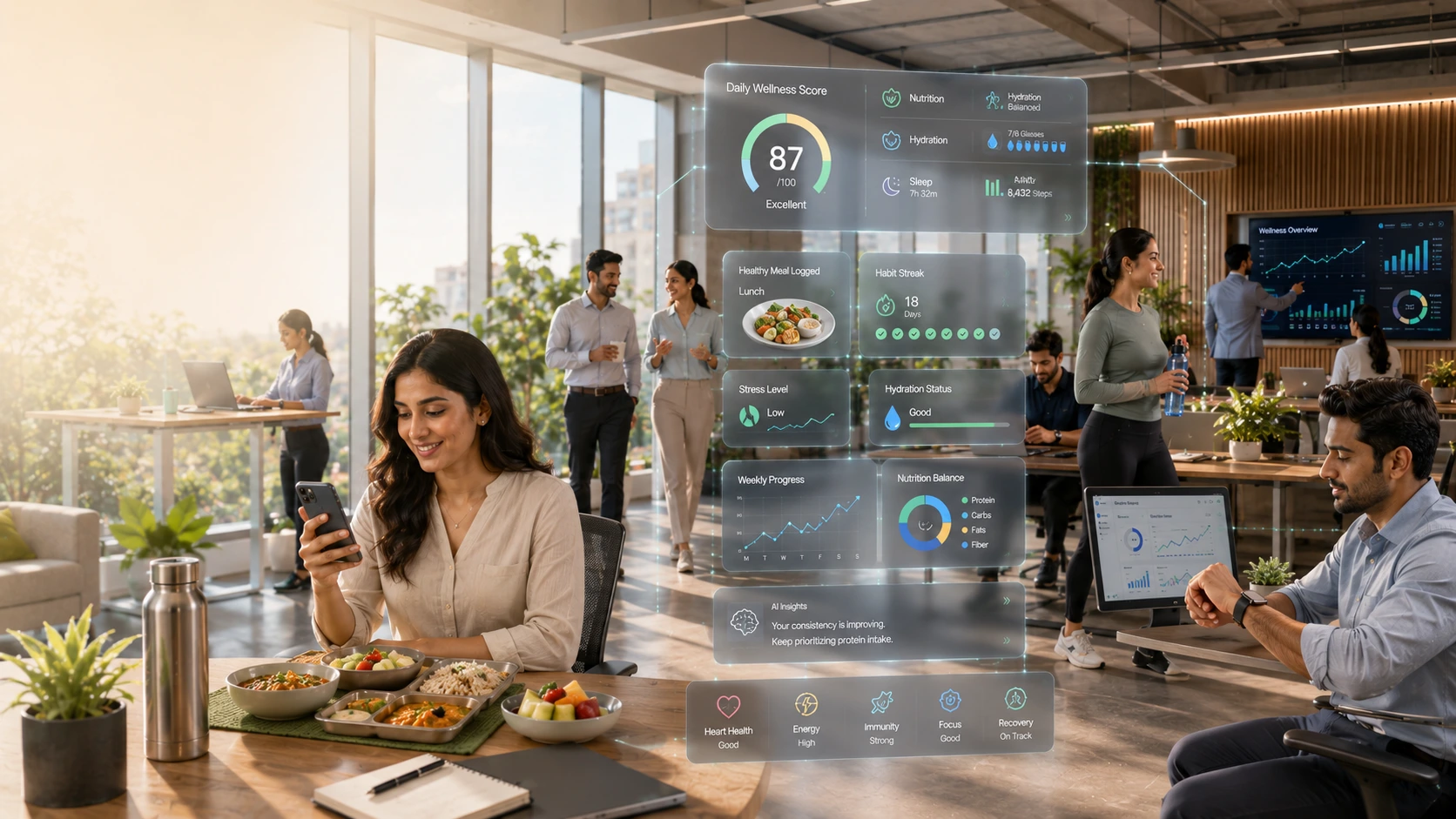
For decades, employee wellness in India has largely revolved around annual medical checkups, health insurance benefits, and occasional wellness campaigns. While these initiatives have value, they often identify health issues only after they have already developed. The future of workplace health requires a more proactive approach built on continuous visibility rather than yearly snapshots.
This shift is driving organizations to adopt corporate wellness software and employee health tracking solutions that encourage healthier daily behaviours instead of reacting to illness. As businesses increasingly focus on productivity, employee retention, and healthcare costs, investing in preventive health monitoring tools and a digital wellness platform India is becoming a strategic business decision rather than simply an employee benefit.
For organizations looking to improve corporate health engagement, the question is no longer whether to invest in employee wellness. The real question is how to create an ecosystem that supports healthier decisions every day through awareness, consistency, and simple technology.
Why Annual Checkups Aren’t Enough
Annual health checkups play an important role in identifying conditions such as diabetes, hypertension, high cholesterol, and obesity. However, they provide only one snapshot of an employee’s health across an entire year.
Between one health checkup and the next, employees may experience:
- Reduced physical activity
- Poor sleep habits
- Increased workplace stress
- Weight gain
- Irregular eating patterns
- Rising blood sugar levels
- Burnout
By the time these changes appear during the next annual assessment, unhealthy habits may already be deeply established.
Health changes every day, not once a year
Health is dynamic.
Every meal, every night’s sleep, every workout, every stressful deadline, and every sedentary workday influences long-term wellbeing.
An employee who receives excellent health results in January may develop unhealthy eating habits by April because of increased travel, project deadlines, or changing work responsibilities.
Without continuous awareness, neither the employee nor the employer recognizes these gradual shifts until they become visible through declining health or reduced productivity.
Reactive wellness is expensive
Many organizations unknowingly spend more money treating health problems than preventing them.
Reactive wellness often includes:
- Higher insurance claims
- Increased sick leave
- Reduced workplace productivity
- Higher absenteeism
- Presenteeism, where employees are physically present but perform below their potential
- Greater long-term healthcare costs
Modern corporate wellness software aims to reduce these risks by encouraging healthier daily behaviours before chronic conditions develop.
Prevention delivers stronger business outcomes
Forward-thinking organizations increasingly recognize that prevention creates measurable value.
Benefits include:
- Better employee engagement
- Improved workforce productivity
- Lower healthcare risks
- Stronger retention
- Higher employee satisfaction
- Better wellness ROI
Instead of asking employees to become healthy once every year, successful organizations create environments that make healthy choices easier every day.
The Shift Toward Continuous Health Monitoring
The future of workplace wellness is moving from annual reporting toward continuous health awareness.
This does not mean constant medical testing.
Instead, it means helping employees understand their everyday behaviours before those behaviours become health risks.
Continuous monitoring focuses on practical lifestyle indicators such as:
- Daily movement
- Meal quality
- Sleep consistency
- Hydration
- Physical activity
- Stress management
- Nutrition awareness
These behaviours influence long-term health far more than a single yearly health assessment.
Visibility creates better decisions
People generally improve what they can see.
When employees become aware of their daily habits, they are more likely to make healthier choices without feeling forced.
For example, someone may realise they:
- Skip breakfast four days each week.
- Eat outside almost every afternoon.
- Consume very little protein.
- Sit continuously for eight hours.
- Rarely drink enough water.
This type of visibility creates opportunities for gradual improvement instead of sudden lifestyle overhauls.
Employee expectations are changing
Today’s workforce expects wellness programs to be simple, personalised, and easy to access.
Lengthy wellness portals, complicated forms, and occasional seminars rarely maintain participation.
Modern employee wellbeing programs increasingly focus on:
- Simple habit building
- Daily engagement
- Personalized insights
- Easy food logging
- Practical nutrition education
- Regular feedback
This is why many organizations are exploring workplace wellness engagement tools that integrate naturally into employees’ daily routines rather than requiring additional effort.
Continuous engagement builds healthier cultures
Successful wellness cultures are created through frequent small interactions rather than occasional large campaigns.
Examples include:
- Daily hydration reminders.
- Weekly movement challenges.
- Nutrition awareness sessions.
- Walking meetings.
- Healthy cafeteria initiatives.
- Habit-building programs.
- Regular health education.
These initiatives encourage lasting behaviour change while supporting broader corporate health management goals.
For organizations investing in digital health, technology should reduce friction rather than increase it. Nutrimate follows this philosophy by providing AI-powered, WhatsApp-first health tracking designed around Indian lifestyles. With India’s #1 WhatsApp meal logging feature and Unique Caregiver feature, employees can build awareness around everyday eating habits without complicated calorie counting or manual food searches. This simplicity encourages higher participation while helping organizations strengthen employee health tracking solutions through consistent daily engagement.
Technology’s Role in Workplace Health
Technology is changing corporate wellness, but not because it replaces healthcare professionals. Its real value lies in making healthy decisions easier, more consistent, and measurable.
Modern corporate wellness software does much more than store employee health records. It helps organizations build a culture where wellbeing becomes part of everyday work instead of a once-a-year initiative.
The most effective solutions simplify activities such as:
- Workplace health tracking
- Nutrition awareness
- Daily movement
- Habit building
- Wellness challenges
- Progress reporting
- Team engagement
When employees can participate without disrupting their workday, adoption naturally improves.
From health reports to health insights
Traditional wellness programs often generate reports after an event has already occurred.
Modern preventive health monitoring tools focus on identifying patterns before they become problems.
For example, organizations can understand trends such as:
- Low participation in wellness activities
- Declining physical activity
- Poor nutrition habits
- Increasing health risks across departments
- Changes in employee engagement
Instead of relying only on annual reports, HR teams can use an employee health dashboard or corporate health dashboard to monitor participation and overall wellbeing throughout the year.
This shift allows companies to move from reactive healthcare to proactive preventive healthcare India strategies.
Simplicity drives participation
Many workplace wellness initiatives fail because they demand too much effort.
Employees rarely want to:
- Fill lengthy wellness forms.
- Search complex food databases.
- Install multiple apps.
- Spend 20 minutes logging meals.
The easier the experience, the more likely employees are to participate consistently.
For this reason, many businesses are adopting digital wellness platform India solutions that integrate into existing communication channels and daily routines.
Simple tools often produce better long-term engagement than feature-heavy platforms that employees stop using after a few weeks.
Data should empower, not overwhelm
Collecting health information has little value unless it leads to meaningful action.
Useful workplace health analytics should answer practical questions such as:
- Are employees becoming more active?
- Is participation increasing?
- Which wellness initiatives perform best?
- Where are the highest health risks?
- Which teams need additional support?
This allows organizations to make better decisions while demonstrating measurable wellness ROI.
What Employees Actually Need
Many companies assume employees want more wellness seminars or occasional fitness events.
In reality, employees are looking for practical support that fits into their daily lives.
Today’s workforce values convenience, flexibility, and personalization.
Rather than adding another task to an already busy schedule, successful wellness programs remove friction.
Employees generally benefit most from:
- Easy nutrition guidance.
- Practical movement reminders.
- Personalized health insights.
- Flexible participation.
- Continuous encouragement instead of occasional campaigns.
Wellness should fit real Indian lifestyles
Employees across India face unique challenges.
These include:
- Long commuting hours.
- Hybrid work schedules.
- Frequent business travel.
- Irregular meal timings.
- Workplace stress.
- Family responsibilities.
A successful employee wellness program India must acknowledge these realities.
For example, encouraging healthier choices in office cafeterias, promoting walking meetings, or making nutrition logging simple can have a greater long-term impact than one-time health awareness events.
Awareness creates accountability
People are more likely to improve habits they can actually see.
When employees gain visibility into daily behaviours such as eating patterns, movement, hydration, and sleep, they become active participants in their own wellbeing.
This is where Nutrimate supports modern workplace wellness.
Its AI-powered, WhatsApp-first approach simplifies food awareness without requiring manual calorie counting. Employees can log everyday Indian meals naturally, making healthy behaviour easier to maintain through visibility rather than restriction. Features like India’s #1 WhatsApp meal logging feature and Unique Caregiver feature help organizations encourage consistent participation while supporting a culture of prevention instead of reaction.
For businesses working closely with gyms, corporate fitness partners, or wellness coaches, the broader Nutrimate ecosystem also includes FitVia. Designed for gym owners, fitness trainers, and dietitians, FitVia enables structured coaching, nutrition tracking, trainer dashboards, and member engagement, allowing organizations to extend workplace wellness initiatives beyond the office and into long-term employee fitness journeys.
Ultimately, employees do not need more complicated wellness programs.
They need simple systems that help them make healthier decisions every single day.
Building a Modern Wellness Ecosystem
Organizations that achieve lasting improvements in employee wellbeing do not rely on isolated wellness events. They build connected systems that encourage healthy behaviour every day.
A modern wellness ecosystem combines education, technology, leadership support, and continuous engagement into one experience. Instead of asking employees to become healthier once a year, organizations make wellbeing part of everyday work.
An effective ecosystem includes:
- Employee health tracking solutions that are simple to use.
- Regular health education instead of occasional awareness campaigns.
- Nutrition guidance built around Indian food and everyday habits.
- Movement challenges that encourage participation rather than competition.
- Easy access to preventive health monitoring tools.
- Leadership involvement that demonstrates wellness is a business priority.
This approach strengthens corporate health engagement while creating a healthier workplace culture.
Prevention works better than correction
Organizations often invest heavily after health problems become visible.
A stronger strategy is preventing those problems from developing in the first place.
Examples include:
- Encouraging balanced meals rather than responding to rising diabetes rates.
- Supporting movement throughout the workday instead of addressing chronic back pain later.
- Promoting healthy sleep and stress management before burnout affects productivity.
- Building nutrition awareness before employees develop long-term metabolic conditions.
These proactive initiatives improve both employee wellbeing and overall corporate health management.
Future Readiness Framework
The future of workplace wellness belongs to organizations that create continuous visibility instead of annual intervention.
Use this framework to evaluate your current wellness strategy.
1. Shift from annual events to daily engagement
Replace one-time wellness activities with consistent, practical interactions.
Examples include:
- Weekly health challenges.
- Daily movement reminders.
- Nutrition awareness campaigns.
- Monthly wellness education sessions.
2. Make participation effortless
The best wellness initiatives require very little effort from employees.
Choose solutions that simplify:
- Nutrition logging.
- Habit tracking.
- Progress monitoring.
- Wellness communication.
Higher simplicity usually leads to higher participation.
3. Measure meaningful outcomes
Look beyond attendance numbers.
Track indicators such as:
- Employee participation rates.
- Engagement consistency.
- Lifestyle improvements.
- Program adoption.
- Health awareness.
- Long-term wellness ROI.
Meaningful measurement helps HR teams continuously improve their wellness strategy.
4. Build an ecosystem, not isolated tools
Technology works best when it supports people rather than replacing them.
An integrated approach combines:
- Leadership support.
- Wellness education.
- Corporate wellness software.
- Nutrition awareness.
- Employee engagement.
- Data-driven decision making.
When these elements work together, organizations create healthier, more resilient workforces.
FAQs
The future of corporate wellness focuses on continuous health awareness rather than annual health checkups. Organizations are increasingly adopting corporate wellness software, employee health tracking solutions, and personalized wellness programs that encourage healthier daily habits through consistent engagement and preventive care.
No. Annual health checkups are valuable for identifying existing health conditions, but they cannot capture the daily lifestyle habits that influence long-term wellbeing. Continuous awareness around nutrition, movement, sleep, and stress provides a more complete picture of employee health.
Companies can improve employee health by investing in employee wellbeing programs that emphasize prevention, simple daily habit building, nutrition awareness, regular engagement, and easy-to-use digital wellness tools. Programs that fit naturally into employees’ daily routines typically achieve better participation and stronger long-term outcomes.
References
- World Health Organization. Healthy workplaces: A model for action.
https://www.who.int/publications/i/item/healthy-workplaces-a-model-for-action - International Labour Organization. Safety and health at the heart of the future of work.
https://www.ilo.org/global/topics/safety-and-health-at-work