 Pradnya Ganorkar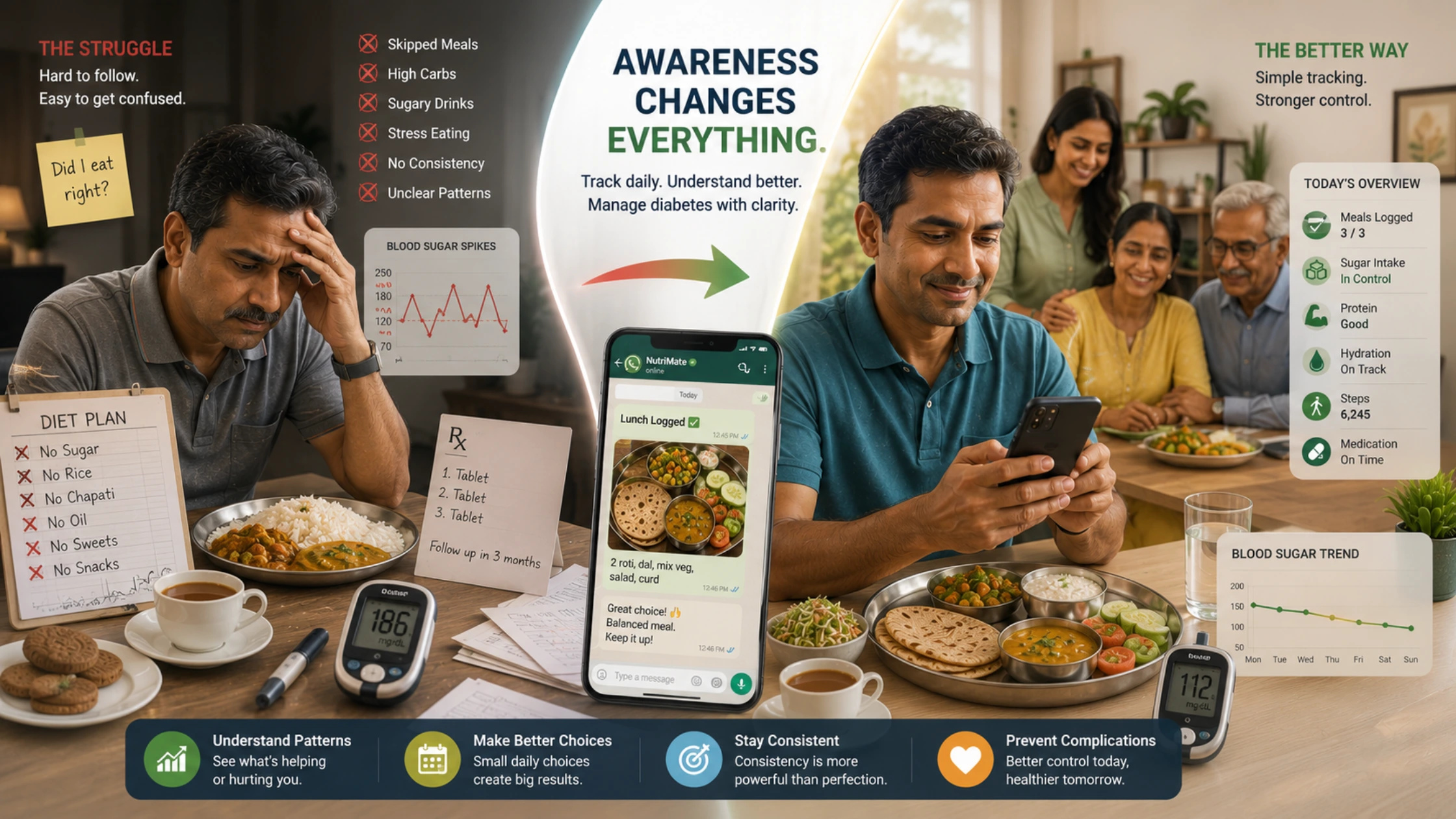
India is facing a growing diabetes crisis.
From metro cities to smaller towns, millions of Indians are living with Type 2 diabetes, prediabetes, insulin resistance, or blood sugar instability. Yet one major pattern remains surprisingly common:
Patients often know what they should eat.
But struggle to follow it consistently.
This is where diabetes diet tracking India becomes increasingly important.
For many families, doctors, and healthcare providers, diabetes management is not failing because of poor awareness alone. It often breaks down because daily execution becomes difficult.
A doctor may recommend:
- Reduce sugar
- Control portions
- Avoid frequent refined carbs
- Improve meal timing
But real life in India includes:
- Family meals
- Tea with sugar
- Rice-heavy lunches
- Festival foods
- Work stress
- Eating outside
This is why nutrition tracking for clinics, patient diet tracking tool systems, and preventive health monitoring tools are becoming more relevant in modern diabetes management India.
Because diabetes is rarely shaped by one clinic consultation.
It is shaped by daily food behavior.
For patients, families, and healthcare systems, simple awareness can often outperform extreme plans.
This is also why practical solutions like India’s #1 whatsapp meal logging feature and Unique Caregiver feature are gaining relevance, helping Indian users track habits with less friction and more consistency.
When it comes to diabetes, advice matters.
But daily visibility often matters more.
The Diabetes Challenge in India: diabetes diet tracking India, diabetes management India, preventive health monitoring tools, and nutrition tracking for clinics
India’s diabetes burden is uniquely complex because it combines:
- Genetic predisposition
- High-carb food environments
- Sedentary work lifestyles
- Stress
- Poor meal timing
- Low consistency
Why This Is a Bigger Problem Than Many Realize:
Many Indians do not develop blood sugar issues because of occasional sweets alone.
More often, the challenge is:
Repeated patterns.
Common Daily Patterns:
- Skipping breakfast
- Sugary chai multiple times daily
- Large rice or roti portions
- Long sitting hours
- Evening snacks
- Late dinners
Core Problem:
People often think:
“I mostly eat okay.”
But diabetes often responds to cumulative behavior, not assumptions.
Myth vs Reality
Myth: Diabetes control is mostly about avoiding sugar
Reality: Blood sugar management often depends on total meal patterns, frequency, portions, fiber, protein, and consistency
Why This Matters:
This is why diabetes diet tracking India is increasingly shifting from generic diet charts to practical daily monitoring.
Why Diet Advice Alone Fails: patient diet tracking tool, nutrition tracking for clinics, health tracking tools, and diabetes management India
One of the biggest frustrations in Indian healthcare is this:
Doctor gives diet plan.
Patient agrees.
Patient returns later with inconsistent control.
Why?
Because information is not always behavior.
Major Reasons Diet Advice Breaks:
1. Indian Food Complexity
Patients ask:
- Can I eat roti?
- Is rice banned?
- What about poha?
- Can I eat fruit?
2. Overly Generic Instructions
“Eat healthy” is too vague.
3. Recall Problems
Many patients underestimate:
- Snacks
- Tea sugar
- Fried foods
- Weekend eating
4. Emotional Burnout
Strict plans can feel unsustainable.
Real Clinical Insight:
Without visibility, both patients and doctors often rely on memory.
Memory is often inaccurate.
Better Framework:
This is where patient diet tracking tool systems improve outcomes.
Strategic Benefit:
Tracking creates:
- Awareness
- Accountability
- Pattern recognition
- Better follow-up conversations
Bottom Line:
Diet advice without daily structure often creates confusion.
The Importance of Daily Tracking: diabetes diet tracking India, preventive health monitoring tools, employee health tracking solutions, and nutrition tracking
Direct Answer:
Daily tracking helps diabetes management by improving awareness of food choices, portion patterns, meal timing, and repeated triggers.
What Daily Tracking Actually Does:
It helps answer:
- When are sugar spikes likely?
- Are meals balanced?
- Is snacking increasing?
- Are portions drifting?
- Is consistency improving?
Why This Matters More in India:
Indian meals are diverse and highly contextual.
For example:
Two people may both eat “roti sabzi.”
But:
- One eats 2 rotis + protein + vegetables
- Another eats 5 rotis + fried sabzi + sweets
Same label. Very different metabolic impact.
Tracking Solves Assumption Bias:
Instead of:
“I think I ate fine.”
It becomes:
“Here’s what I actually repeated.”
Practical Advantage:
Simple daily logging often supports:
- Better diabetes awareness
- Improved clinic outcomes
- Stronger nutrition tracking for clinics
- More actionable preventive health
Product Relevance:
Nutrimate’s AI-powered, Indian-first, WhatsApp-first model reflects this simplicity by making tracking more practical for real Indian eating habits.
What Patients Should Track: patient diet tracking tool, diabetes diet tracking India, nutrition tracking for clinics, and preventive health monitoring tools
Tracking does not need to mean obsessive calorie counting.
Focus on High-Impact Variables:
1. Meal Timing
Long gaps + overeating can destabilize energy.
2. Portion Awareness
Rice, roti, snacks, sweets
3. Sugar Frequency
Tea, biscuits, desserts, juices
4. Protein Inclusion
Dal, paneer, curd, eggs, sprouts
5. Eating Context
Stress eating? Social eating? Travel?
Simple Daily Questions:
- Did I skip meals?
- Did I over-snack?
- Did I eat balanced?
- How often did I consume sugar?
- Was dinner too late?
Key Insight:
For many patients, awareness itself improves behavior.
Strategic Shift:
The goal is not perfection.
It is pattern visibility.
Example Daily Routine: diabetes management India, diabetes diet tracking India, patient diet tracking tool, and nutrition tracking for clinics
Scenario:
48-year-old office worker in Mumbai with Type 2 diabetes
Old Pattern:
- Morning chai + sugar
- No breakfast
- Heavy lunch
- Evening samosa
- Late rice-heavy dinner
Outcome:
- Energy crashes
- Sugar fluctuations
- Poor HbA1c control
New Tracking-Based Pattern:
Morning:
- Protein breakfast
- Reduced sugar chai
Lunch:
- Balanced roti + dal + sabzi
Evening:
- Nuts / fruit / planned snack
Dinner:
- Earlier timing
- Better portions
Result:
- More awareness
- Better consistency
- Easier doctor conversations
Key Lesson:
The issue was not knowledge.
It was invisible inconsistency.
Mistakes to Avoid: diabetes diet tracking India, patient diet tracking tool, nutrition tracking for clinics, and health tracking tools
Mistake 1: Going Extreme
“No carbs ever”
Better:
Controlled portions + consistency
Mistake 2: Tracking Only Sugar
Diabetes is broader than sweets alone.
Mistake 3: Ignoring Daily Patterns
Weekends matter too.
Mistake 4: Overcomplicated Apps
If tracking feels exhausting, adherence drops.
Simplicity Often Wins:
This is why India’s #1 whatsapp meal logging feature and Unique Caregiver feature can feel more practical for Indian users than systems requiring high-effort manual entry.
Mistake 5: Waiting for Follow-Ups
Reactive management delays course correction.
Strategic Shift: From Advice to Daily Behavior
Diabetes care in India increasingly requires:
Awareness + Simplicity + Consistency
Better Diabetes Systems Focus On:
- Real food
- Real routines
- Real patterns
- Sustainable visibility
Important:
Technology should reduce friction, not increase burden.
Modern Healthcare Insight:
Simple daily logging helps patients stay consistent with diet recommendations while giving families, clinics, and caregivers clearer behavioral context.
This is especially relevant for:
- nutrition tracking for clinics
- patient diet tracking tool
- preventive health monitoring tools
- Long-term diabetes management India
Because better diabetes control is rarely built through occasional motivation.
It is usually built through repeatable daily awareness.
Frequently Asked Questions
Track meal timing, portion size, sugar frequency, protein balance, and daily eating patterns consistently. Simple tracking systems often improve awareness more effectively than memory alone.
Yes. Daily tracking can improve diabetes control by increasing food awareness, identifying behavior patterns, supporting consistency, and helping patients make more informed nutrition decisions over time.