 Pradnya Ganorkar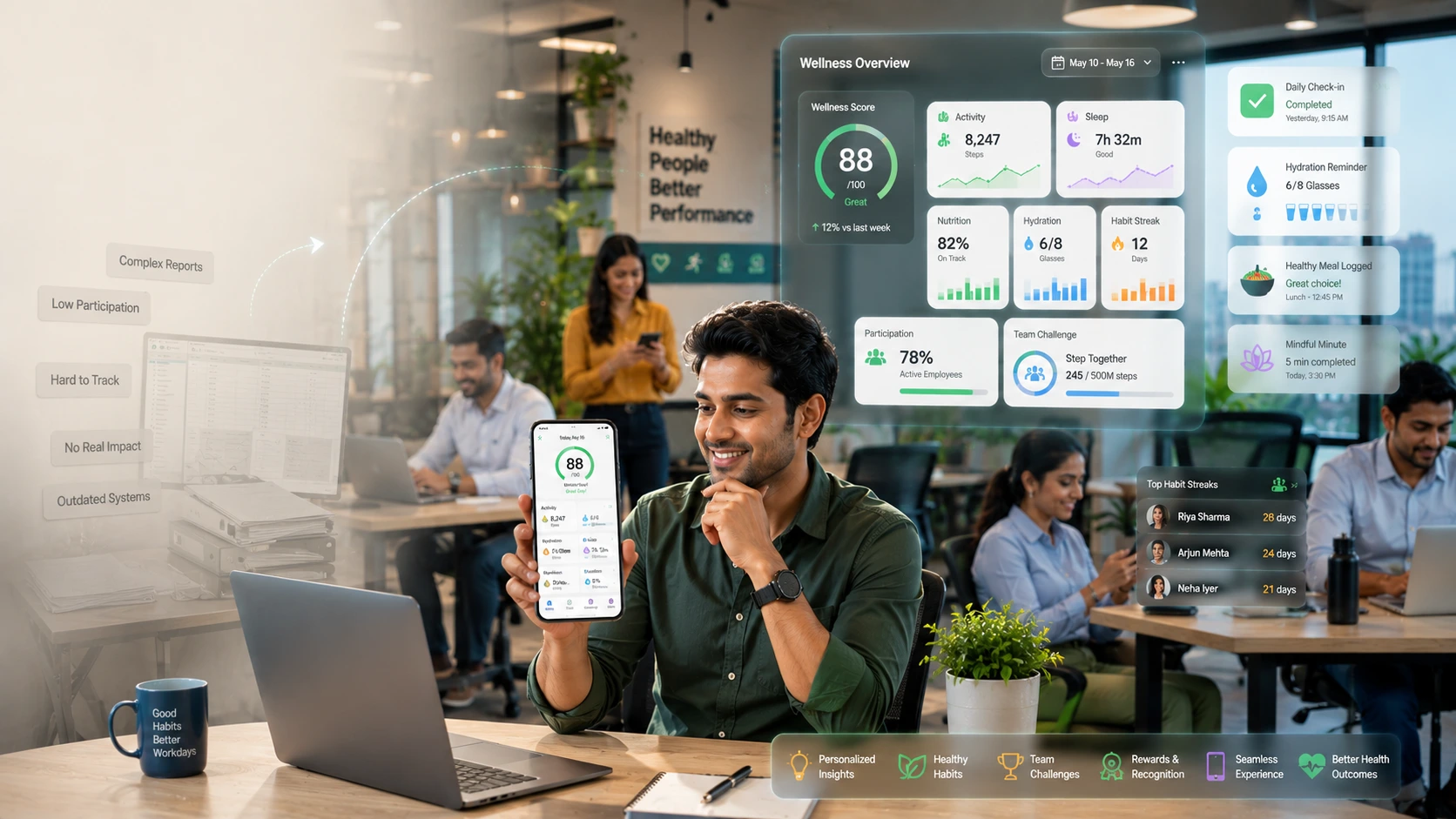
Organizations across India are investing heavily in employee wellbeing initiatives.
From wellness webinars and fitness challenges to mobile applications and health campaigns, companies are spending more than ever on workplace health.
Yet many programs struggle with the same problem.
Employees sign up initially but stop participating within weeks.
This raises an important question.
What separates a successful digital wellness platform India from one that gets ignored after launch?
The answer is not more features.
It is better engagement.
The most effective platforms simplify participation, create visibility, and support everyday health behaviors rather than overwhelming employees with information.
Modern organizations are increasingly adopting corporate wellness software, employee health tracking solutions, and workplace wellness engagement tools because they recognize that long-term health improvements come from daily actions, not occasional events.
Why Employees Ignore Wellness Apps
Many organizations assume that launching a wellness platform automatically creates engagement.
Unfortunately, that rarely happens.
Employees Already Feel Overloaded
Today’s workforce manages:
- Meetings
- Deadlines
- Emails
- Family responsibilities
- Commutes
- Financial stress
Adding another complicated app often feels like additional work rather than support.
This is particularly true in Indian workplaces where long working hours and hybrid work environments continue to increase pressure.
Awareness Alone Does Not Drive Action
Most employees already know they should:
- Exercise more
- Sleep better
- Eat healthier
- Manage stress
Knowledge is rarely the problem.
Behavior change is.
Many wellness initiatives focus on education while neglecting execution.
Low-Friction Wins
The best wellness programs reduce effort.
Employees are far more likely to engage when actions take seconds instead of minutes.
This is why simple logging systems, habit tracking, and conversational interfaces consistently outperform complex dashboards.
Features That Increase Participation
A successful employee engagement platform should focus on participation first.
Simple Health Logging
Complicated data entry destroys engagement.
Whether tracking meals, hydration, activity, or wellbeing, simplicity is critical.
Platforms that support quick logging often see significantly higher participation than systems requiring extensive manual input.
Habit-Based Tracking
Employees benefit from monitoring behaviors rather than chasing perfection.
Examples include:
- Daily movement
- Sleep consistency
- Water intake
- Meal quality
- Stress levels
These small indicators often provide more value than occasional health screenings.
Personalized Insights
Generic recommendations rarely create action.
Effective corporate wellness software provides personalized insights based on individual behaviors and goals.
When recommendations feel relevant, participation improves.
Social Engagement
Healthy competition can increase engagement when implemented carefully.
Examples include:
- Team challenges
- Step competitions
- Wellness streaks
- Leaderboards
These features create accountability without becoming punitive.
Simplicity vs Complexity
One of the biggest mistakes wellness vendors make is assuming more functionality creates more value.
In reality, complexity often reduces usage.
What Employees Actually Want
Employees generally want:
- Fast access
- Clear insights
- Minimal effort
- Useful feedback
They do not want lengthy onboarding processes or complex reporting systems.
The WhatsApp Effect
People naturally engage with tools already integrated into their daily lives.
This explains why conversational experiences often outperform standalone applications.
For example, Nutrimate’s approach focuses on simple health visibility through AI-powered nutrition tracking and India’s #1 whatsapp meal logging feature and Unique Caregiver feature, reducing friction that typically causes drop-offs.
Visibility Beats Volume
Providing a few meaningful insights consistently is often more effective than overwhelming users with hundreds of metrics.
Personalization and Habit Tracking
Successful wellness programs recognize that every employee is different.
Different Employees Need Different Goals
Consider these examples:
A sales professional may need:
- Stress management
- Better sleep
- Travel nutrition support
A software engineer may need:
- Activity reminders
- Ergonomic habits
- Energy management
A working parent may need:
- Family wellness support
- Meal planning assistance
- Time-efficient health strategies
Personalization improves relevance and engagement.
Preventive Health Monitoring
Organizations are increasingly investing in preventive health monitoring tools because prevention is significantly less expensive than treatment.
Useful preventive indicators include:
- Activity levels
- Nutrition quality
- Sleep consistency
- Stress patterns
- Wellness participation
These metrics support better long-term outcomes and align with growing interest in preventive healthcare India initiatives.
Building Health Awareness
The goal is not surveillance.
The goal is awareness.
Employees who understand their habits are more likely to improve them.
This is where workplace health analytics become valuable when presented appropriately.
Engagement Framework
Organizations evaluating a digital wellness platform India should focus on five engagement drivers.
1. Simplicity
Can employees participate within seconds?
2. Relevance
Are recommendations personalized?
3. Visibility
Can users easily see progress?
4. Consistency
Does the platform encourage daily engagement?
5. Outcomes
Can the organization measure meaningful changes?
When these elements work together, corporate health engagement increases significantly.
Learning From Adjacent Industries
Interestingly, similar engagement principles apply outside corporate wellness.
Platforms serving gyms, trainers, and dietitians often achieve stronger participation because they focus heavily on behavior tracking and retention.
For example, FitVia helps gym owners, fitness influencers, and nutrition professionals improve engagement through:
- White-label member apps
- Trainer dashboards
- Client progress tracking
- Nutrition logging
- Health score visibility
- Member leaderboards
The same engagement principles used to improve gym retention can be applied successfully within workplace wellness environments.
Platform Evaluation Checklist
Before investing in a wellness platform, organizations should ask:
Does It Support Daily Engagement?
The platform should encourage small daily actions rather than occasional participation.
Does It Provide Actionable Insights?
Data without action creates little value.
Does It Offer Meaningful Tracking?
Look for:
- employee health dashboard
- corporate health dashboard
- workplace health tracking
- wellness participation metrics
Can It Demonstrate Wellness ROI?
Executives increasingly want measurable outcomes.
Effective platforms should support visibility into:
- Participation rates
- Health behavior improvements
- Employee satisfaction
- Productivity indicators
- Wellness engagement trends
Does It Integrate Into Existing Behaviors?
The best wellness tools fit naturally into employee routines.
The easier participation becomes, the higher engagement tends to be.
Organizations seeking stronger wellness ROI should prioritize engagement architecture over feature quantity.
A platform succeeds when employees actually use it.
FAQs
A digital wellness platform is a technology solution that helps individuals or organizations monitor, improve, and engage with health-related behaviors such as nutrition, activity, sleep, stress management, and preventive wellness.
Wellness apps improve engagement by simplifying health tracking, providing personalized insights, encouraging habit formation, supporting accountability, and making participation easy enough to become part of everyday routines.
References
- World Health Organization – Healthy Workplace Framework
- World Economic Forum – Workplace Wellbeing and Productivity