 Pradnya Ganorkar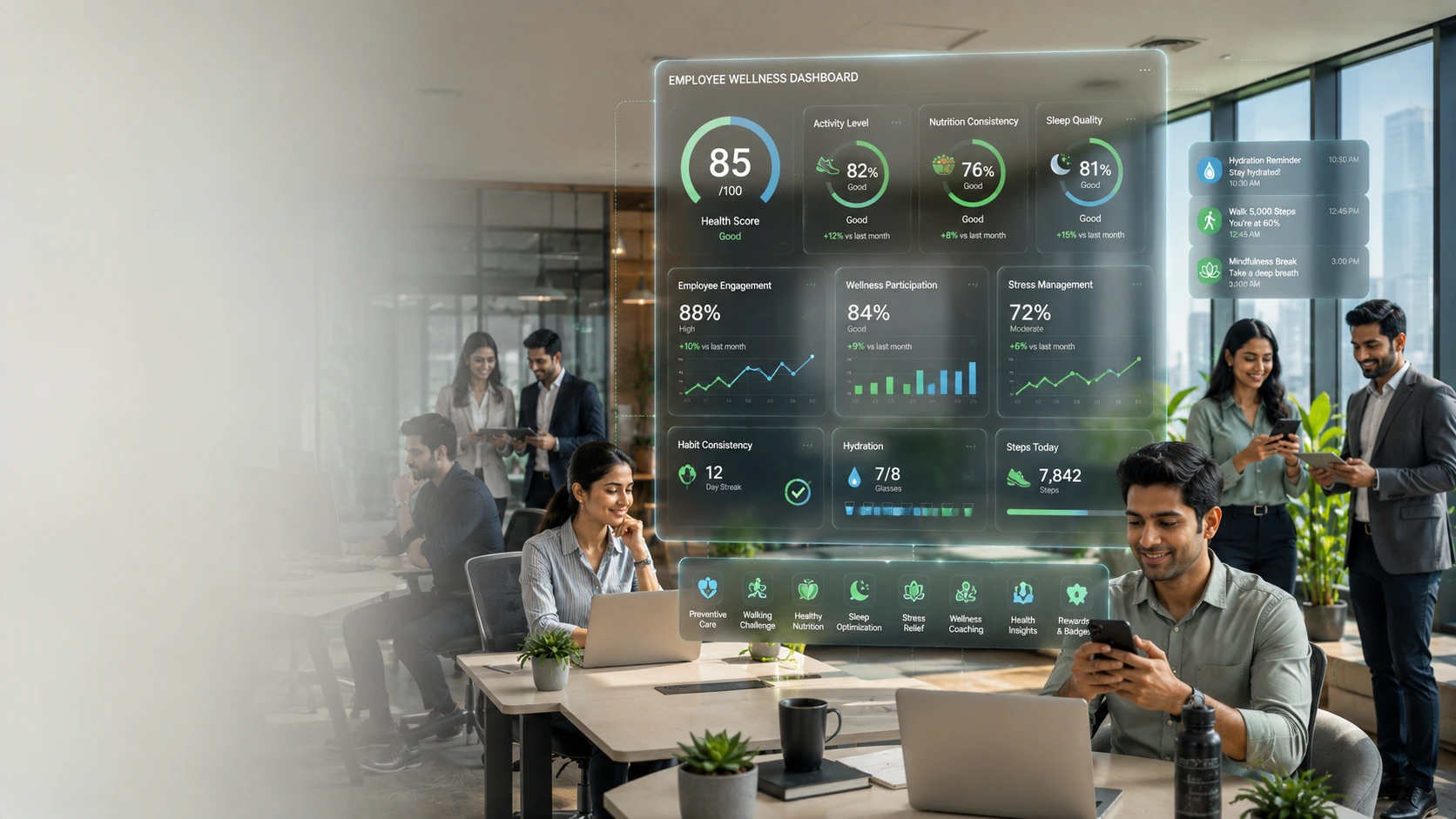
Corporate wellness has evolved significantly over the last decade.
Organizations across India are investing in health initiatives, wellness campaigns, fitness challenges, nutrition programs, and employee support systems. Yet despite these investments, many companies still struggle to create meaningful health improvements.
One of the biggest reasons is that organizations often collect the wrong data.
Effective employee health tracking solutions are not about monitoring employees. They are about creating visibility, awareness, and opportunities for healthier decisions.
The goal is not surveillance.
The goal is better health outcomes.
The most successful organizations use preventive health monitoring tools to identify trends, encourage engagement, and support healthier lifestyles before problems become costly.
As healthcare costs rise and lifestyle diseases continue increasing across India, businesses are realizing that preventive wellness is becoming a strategic business priority rather than an employee benefit.
Why Tracking Matters
Many organizations launch wellness initiatives without defining what success actually looks like.
They conduct:
- Annual health camps
- Wellness webinars
- Fitness competitions
- Nutrition awareness sessions
Yet six months later, leadership teams often ask:
“What changed?”
Without measurement, it becomes impossible to answer.
Visibility Creates Awareness
Most employees already know that health matters.
The challenge is not awareness.
The challenge is consistency.
People often struggle with:
- Sedentary workdays
- Irregular eating habits
- Poor sleep
- Stress
- Lack of movement
Tracking creates visibility around these behaviors.
When individuals can see patterns, they become more likely to change them.
Prevention Is More Effective Than Treatment
Organizations increasingly recognize the value of preventive healthcare India initiatives.
Instead of waiting for chronic conditions to develop, companies can encourage healthier behaviors earlier.
This creates benefits for:
- Employees
- Employers
- Healthcare costs
- Productivity
- Workplace culture
Wellness Data Should Drive Action
Good data should answer practical questions:
- Are employees becoming more active?
- Are engagement levels improving?
- Are wellness initiatives being used?
- Are healthy habits becoming more consistent?
If metrics do not support decision-making, they provide little value.
Metrics That Matter Most
Many companies focus on vanity metrics.
Examples include:
- Webinar attendance
- Program registrations
- App downloads
While useful, these do not necessarily indicate health improvement.
Engagement Metrics
Strong employee wellbeing programs focus on participation quality rather than participation volume.
Useful engagement indicators include:
- Weekly activity participation
- Habit completion rates
- Nutrition logging consistency
- Challenge participation
- Goal completion
These metrics provide better insight into behavior change.
Health Awareness Metrics
Organizations should evaluate whether employees are becoming more aware of their health.
Examples include:
- Nutrition knowledge
- Physical activity awareness
- Stress management engagement
- Sleep improvement initiatives
Awareness often precedes behavior change.
Wellness Adoption Metrics
The best corporate wellness software platforms help organizations understand:
- Which features employees use
- Which programs drive engagement
- Which departments participate most actively
These insights support better wellness planning.
Health Score Visibility
Many modern wellness platforms utilize a health score to simplify complex information.
A health score can combine:
- Activity
- Nutrition
- Sleep
- Consistency
- Engagement
Into one easily understandable metric.
Employees often respond better to simple indicators than complicated reports.
Nutrition, Sleep, Activity & Stress
When evaluating employee health tracking solutions, four categories consistently provide the most valuable insights.
Nutrition
Nutrition influences:
- Energy
- Focus
- Productivity
- Long-term health
Yet many workplace wellness programs overlook nutrition completely.
A quality nutrition tracking app can help employees become more aware of:
- Meal quality
- Protein intake
- Eating consistency
- Hydration
In India, nutrition awareness remains especially important because eating habits vary significantly across regions and lifestyles.
Sleep
Sleep affects:
- Cognitive performance
- Mood
- Recovery
- Decision-making
Many employees underestimate its impact.
Tracking sleep trends often reveals important patterns related to stress and work demands.
Physical Activity
Movement remains one of the strongest indicators of overall wellness.
Organizations can encourage:
- Walking challenges
- Activity goals
- Fitness engagement programs
Through structured wellness initiatives.
Stress Management
Stress has become a major workplace concern.
Tracking stress-related behaviors can help organizations identify opportunities for support before burnout becomes widespread.
This is where workplace health analytics can provide meaningful organizational insights.
Leading vs Lagging Health Indicators
One of the most important concepts in wellness measurement is understanding the difference between leading and lagging indicators.
Lagging Indicators
These measure outcomes that have already occurred.
Examples include:
- Medical claims
- Sick leave
- Health screenings
- Chronic disease diagnosis
Useful?
Absolutely.
Actionable?
Often too late.
Leading Indicators
Leading indicators focus on daily behaviors.
Examples include:
- Activity levels
- Meal tracking consistency
- Sleep quality
- Wellness participation
- Goal completion
These indicators help organizations influence outcomes before problems develop.
Why Leading Indicators Matter More
The strongest employee health tracking solutions focus on daily habits.
Small behaviors repeated consistently often create larger health outcomes over time.
This approach aligns closely with modern corporate health management strategies.
Building a Practical Monitoring System
Many wellness initiatives fail because they attempt to track everything.
More data does not always create better results.
Focus on Simplicity
A practical system should monitor:
- Activity
- Nutrition
- Sleep
- Engagement
- Consistency
These categories provide meaningful insight without overwhelming employees.
Use Dashboards Wisely
A well-designed employee health dashboard should provide:
- Clear trends
- Participation insights
- Engagement metrics
- Wellness progress
Leadership teams should be able to understand key patterns quickly.
Encourage Voluntary Participation
Employees should feel supported rather than monitored.
Trust is essential.
Programs should focus on empowerment and education.
Integrate Wellness Into Daily Life
The most successful organizations make wellness convenient.
This is where modern digital wellness platform India solutions provide value.
Instead of requiring employees to remember multiple systems, wellness can become part of everyday routines.
Nutrimate follows this philosophy through simple health awareness tools, Indian-first nutrition intelligence, and India’s #1 whatsapp meal logging feature and Unique Caregiver feature that reduce friction while encouraging healthier habits.
Common Tracking Mistakes
Tracking Too Many Metrics
More metrics often create confusion.
Focus on meaningful indicators.
Measuring Participation Instead of Behavior
Attendance does not equal engagement.
Behavior change should remain the primary goal.
Ignoring Employee Experience
Complex systems reduce adoption.
Simplicity improves participation.
Collecting Data Without Action
Insights should drive interventions.
Otherwise, reporting becomes an administrative exercise.
Focusing Only on Physical Health
Modern wellness includes:
- Nutrition
- Activity
- Sleep
- Stress
- Emotional wellbeing
Organizations should adopt a holistic perspective.
Treating Wellness as an Event
One-time campaigns rarely create lasting results.
Continuous engagement creates sustainable outcomes.
This is why many organizations are moving toward ongoing workplace wellness engagement tools and behavior-focused wellness ecosystems rather than isolated initiatives.
While FitVia is primarily designed for gyms, trainers, and dietitians, its focus on member engagement, habit tracking, nutrition visibility, dashboards, and progress monitoring reflects the same principle corporate wellness programs need: consistent visibility drives better outcomes than occasional interventions.
FAQs
Companies should focus on meaningful wellness indicators such as activity levels, nutrition awareness, sleep patterns, engagement rates, participation consistency, and overall wellness trends rather than simply tracking attendance or program registrations.
The most effective approach is through voluntary wellness participation, aggregated wellness data, habit tracking, activity metrics, and preventive health initiatives. The goal should be awareness and support rather than surveillance.
Yes. Wellness metrics help organizations understand engagement levels, identify health trends, improve program effectiveness, measure wellness ROI, and support long-term employee wellbeing when used responsibly.
References
- World Health Organization – Healthy Workplace Framework
- Harvard T.H. Chan School of Public Health – Workplace Wellness Programs
https://www.hsph.harvard.edu/news/hsph-in-the-news/workplace-wellness-programs-can-generate-savings/