 Pradnya Ganorkar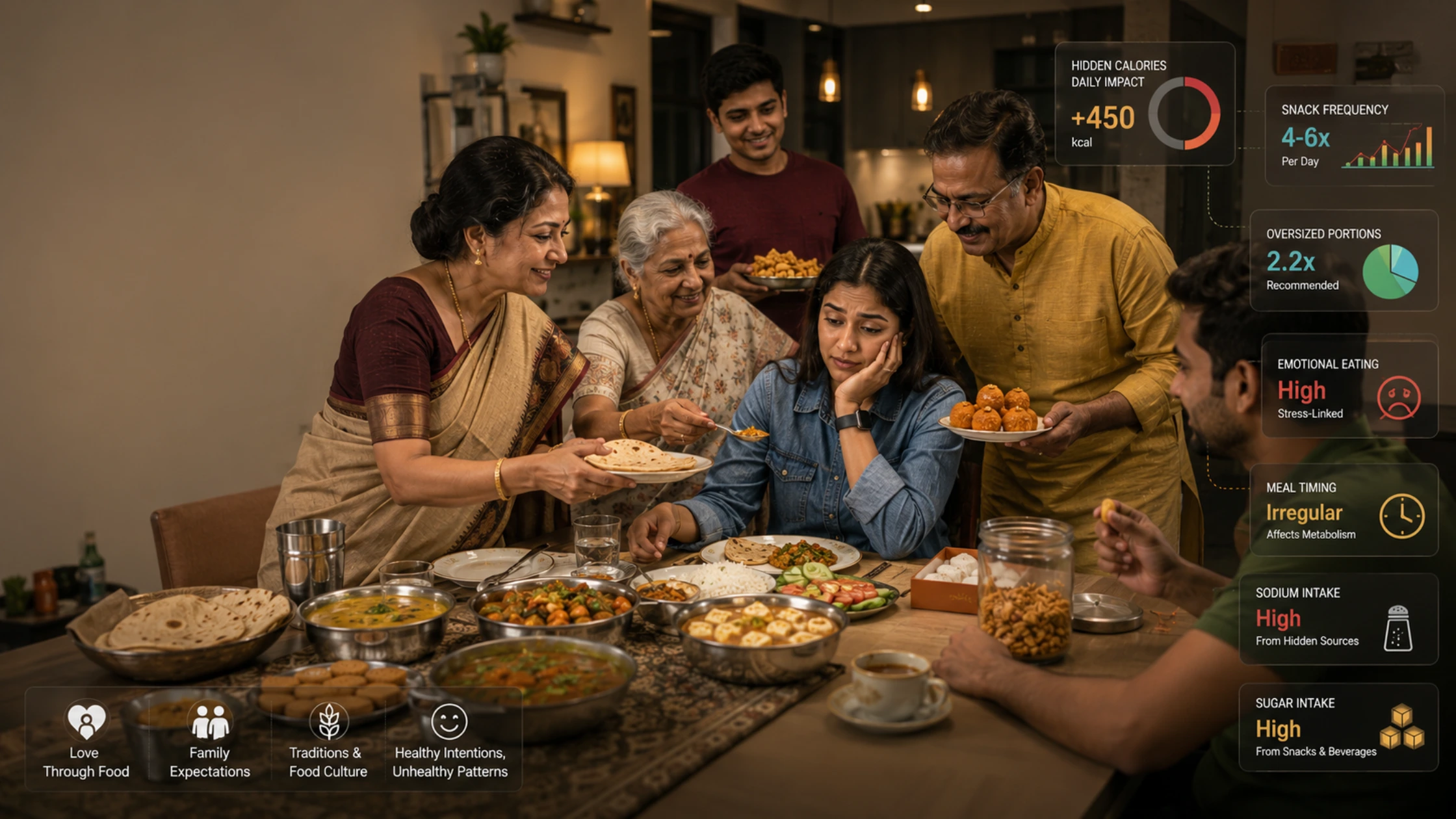
In many Indian homes, food is not just food.
It is:
- love
- hospitality
- celebration
- care
- emotional connection
- family bonding
This is one reason family eating habits India are deeply emotional and culturally powerful.
A grandmother offering extra ghee.
A mother insisting on another roti.
A relative asking why you are “dieting.”
Late-night chai with snacks after dinner.
Festival sweets that continue for weeks.
None of these habits come from bad intentions.
But together, they quietly make healthy eating India far more difficult than most people realize.
Many Indians trying to improve their healthy lifestyle often believe the problem is:
- lack of discipline
- low motivation
- weak willpower
In reality, the environment around them constantly shapes eating behavior.
This explains why:
- why staying healthy is hard becomes a common frustration
- many people struggle with how to stay consistent with health
- most crash diets fail in family environments
- many attempts at lifestyle change feel temporary
For working professionals, parents, and gym members, the challenge becomes even harder because daily routines already include:
- work stress
- long commutes
- social eating
- family expectations
- emotional food pressure
This is especially true for people trying to maintain:
- a sustainable Indian diet
- better healthy Indian eating habits
- improved meal tracking India routines
- more balanced Indian food and health choices
Nutrimate addresses this through simplified, Indian-first health tracking designed around real family behavior. Its India’s #1 whatsapp meal logging feature and Unique Caregiver feature help families create visibility around meals and habits without making health feel restrictive or confrontational.
Because in India, healthy eating is rarely an individual challenge alone.
It is often a family system challenge.
Love Through Food: The Indian Family Dynamic
Food is one of the strongest expressions of love in Indian households.
This emotional connection is beautiful.
But it also creates hidden health pressure.
Food Equals Care in Indian Culture
In many homes:
- feeding more means caring more
- refusing food feels disrespectful
- eating less creates concern
- guests are encouraged to overeat
This makes moderation emotionally difficult.
“Healthy Eating” Can Feel Socially Awkward
A person trying to improve their health habits may hear:
- “One day won’t matter.”
- “You already look fine.”
- “Why are you avoiding rice?”
- “Homemade food can’t be unhealthy.”
These comments often come from affection, not criticism.
But repeated social pressure affects consistency.
Indian Families Prioritize Satisfaction Over Awareness
Traditional Indian eating patterns often focus on:
- fullness
- hospitality
- taste
- abundance
rather than:
- portion awareness
- meal balance
- protein intake
- eating frequency
This becomes especially challenging for:
- office workers
- gym-goers
- people managing weight
- individuals trying to maintain a healthy lifestyle for busy Indians
The Environment Shapes Behavior
Research consistently shows eating behavior is strongly influenced by:
- surroundings
- social behavior
- family patterns
- emotional cues
A person living in a home where:
- snacks are constantly visible
- sweets are normalized daily
- overeating is encouraged
will naturally find consistency harder.
This is one reason many people struggle with:
- why diets fail long term
- maintaining a sustainable health habits for Indians approach
- following an Indian diet without dieting mindset
Homemade Food Is Not Automatically Balanced
Many Indians assume homemade meals are always healthy.
But:
- excess oil
- oversized portions
- repeated carb-heavy meals
- lack of protein
- low vegetable intake
can still affect health outcomes.
The problem is usually not a single food.
It is cumulative patterns.
Myth vs Reality
| Myth | Reality |
| Homemade food is always healthy | Portion size and balance still matter |
| One extra serving doesn’t matter | Repeated overeating accumulates over time |
| Refusing food is disrespectful | Boundaries can coexist with respect |
| Indian food causes weight gain | Excess quantity and imbalance matter more |
Social Pressure and Overeating
Most unhealthy eating in India does not happen because people lack information.
It happens because social environments override intentions.
Eating Is Often Collective
Indian eating culture is highly social:
- family dinners
- office treats
- weddings
- festivals
- tea breaks
- weekend outings
Food becomes part of participation.
This makes individual consistency difficult.
“Just Eat Today” Adds Up
A common pattern looks like this:
- office samosa Monday
- birthday cake Tuesday
- dinner outing Wednesday
- family sweets Thursday
- weekend restaurant meals
Individually, each event feels harmless.
Collectively, it creates constant calorie surplus.
Emotional Eating Gets Normalized
Stress eating is deeply embedded into many family routines.
Examples include:
- chai with biscuits during stress
- sweets after emotional situations
- snacks during TV time
- food as comfort after work
This affects:
- healthy eating India consistency
- emotional regulation
- long-term family health outcomes
Children Learn These Behaviors Early
Kids observe:
- overeating patterns
- emotional food associations
- reward-based eating
This shapes future eating habits.
Building better family eating habits India therefore impacts multiple generations.
Social Pressure Is Stronger for Women
Women often experience additional pressure around:
- cooking expectations
- serving others first
- emotional labor
- finishing leftovers
This contributes to:
- inconsistent self-care
- fatigue
- poor meal timing
- hidden overeating
especially among mothers balancing work and caregiving.
Quick Insight
Most people do not overeat because they are hungry. They overeat because food is socially and emotionally normalized.
“Just One More Roti” Problem
Few phrases capture Indian food culture better than:
“Just one more roti.”
It sounds harmless.
But psychologically, it matters.
Portion Pressure Is Deeply Cultural
Many Indians are raised believing:
- eating more means eating well
- thinness signals weakness
- refusing food appears rude
This creates difficulty recognizing fullness signals.
Fullness Is Often Ignored
Many people continue eating because:
- food remains on the table
- family insists
- others are eating
- stopping feels awkward
Over time, this disconnects people from natural hunger awareness.
Carb Quantity Quietly Escalates
Indian meals often include:
- rice
- roti
- potatoes
- fried snacks
- sweets
None are inherently unhealthy.
But quantity escalates quickly when portion awareness disappears.
This fuels confusion around:
- roti rice weight gain myth
- “healthy” homemade overeating
- hidden calorie accumulation
Protein Intake Usually Stays Low
Many Indian meals prioritize carbohydrates while under-consuming:
- protein
- fiber
- micronutrients
As a result:
- hunger returns quickly
- cravings increase
- snacking rises
This creates repetitive eating cycles.
Awareness Matters More Than Restriction
Extreme dieting rarely works in Indian family environments.
A more realistic approach involves:
- balanced portions
- improved awareness
- slow habit changes
- sustainable meal structures
This supports a more practical Indian diet for busy professionals and families alike.
Practical Example
Instead of:
- 5 rotis + minimal protein
A better balanced dinner may include:
- 2 rotis
- dal
- paneer or eggs
- sabzi
- salad
without removing traditional foods entirely.
Festivals, Guests, Emotional Eating
Indian culture celebrates through food.
The challenge is not celebration itself.
The challenge is frequency and recovery.
Festivals No Longer Last One Day
Modern celebrations often extend across:
- offices
- housing societies
- schools
- family visits
- social gatherings
This creates continuous overeating periods.
Guests Trigger Excess Consumption
Many Indian households prepare:
- oversized portions
- multiple desserts
- fried snacks
- sugary beverages
because abundance symbolizes hospitality.
But repeated social eating affects long-term healthy eating outside home India behavior.
Emotional Eating Becomes Invisible
People often eat because they are:
- stressed
- tired
- emotionally drained
- socially obligated
not because they are physically hungry.
Work Stress Intensifies the Cycle
For professionals managing:
- deadlines
- commutes
- family responsibilities
food becomes a quick emotional reward.
This contributes to:
- late-night snacking
- ordering food frequently
- binge eating weekends
and inconsistent healthy habits for office workers.
The “Cheat Meal” Mentality Creates Extremes
Many Indians alternate between:
- strict dieting
- emotional overeating
This cycle damages sustainability.
A healthier approach focuses on:
- consistency
- moderation
- awareness
instead of perfection.
Myth vs Reality
| Myth | Reality |
| Festivals ruin fitness | Repeated uncontrolled eating patterns matter more |
| Healthy eating means avoiding celebrations | Balance and portion awareness work better |
| Emotional eating is harmless | Chronic stress eating affects long-term health |
| Cheat meals motivate discipline | Extreme restriction often triggers overeating |
Building Health Without Conflict
One of the biggest mistakes people make is trying to “fight” family culture.
That usually fails.
Long-term change works better through gradual environmental shifts.
Avoid Moralizing Food
Do not label foods as:
- “bad”
- “toxic”
- “forbidden”
This creates resistance inside families.
Focus on Small Household Shifts
Examples include:
- increasing protein at breakfast
- reducing visible snack storage
- improving vegetable quantity
- using smaller serving bowls
- reducing sugary beverages
These changes feel less confrontational.
Create Shared Awareness
When families understand:
- eating patterns
- snack frequency
- meal timing
behavior naturally improves.
This is where simple visibility matters.
Nutrimate’s WhatsApp-first meal visibility system helps families observe habits without complicated calorie counting. The platform focuses on practical Indian meal awareness rather than rigid dieting systems.
Build Flexible Routines
Healthy family systems are:
- realistic
- adaptable
- sustainable
not overly restrictive.
Examples:
- weekday consistency
- mindful festival eating
- realistic restaurant choices
- protein-focused snacks
work better long term than aggressive diets.
Make Health Collaborative
Health improves faster when:
- responsibilities are shared
- meal planning becomes collective
- everyone participates
instead of one person carrying all the burden.
This reduces:
- frustration
- guilt
- hidden resentment
especially among caregivers.
Track Patterns, Not Perfection
Simple tracking helps identify:
- overeating triggers
- late-night habits
- emotional eating patterns
- snack frequency
without creating obsession.
This supports:
- easy way to track meals
- food tracking without calorie counting
- more realistic simple meal tracking for Indian food systems
Practical Family Framework
A healthier Indian household often focuses on:
- Better portions
- Higher protein intake
- Less emotional pressure
- Sustainable routines
- Consistent awareness
- Flexible eating instead of restriction
Do vs Don’t
| Do | Don’t |
| Build gradual habit changes | Force aggressive dieting |
| Improve meal balance | Eliminate traditional foods entirely |
| Respect cultural eating | Shame family members |
| Use awareness tools | Depend only on motivation |
| Focus on consistency | Chase perfection |
| Encourage shared responsibility | Leave one person managing all health |
| Practice moderation during festivals | Treat celebrations as “all or nothing” eating |
Content Direction
“Your environment keeps breaking your routine.”
This is one of the biggest realities behind inconsistent health behavior in India.
Most people already know:
- vegetables matter
- protein matters
- sleep matters
- movement matters
The challenge is not information.
The challenge is environment.
Indian families unintentionally create health friction through:
- emotional food pressure
- overeating normalization
- social expectations
- celebration culture
- constant food exposure
This is why sustainable change must focus on:
- awareness
- realistic systems
- gradual family shifts
- emotional balance
instead of extreme dieting.
Modern wellness systems increasingly recognize that behavior change works best when it fits real Indian life.
Nutrimate supports this approach through:
- AI-powered Indian meal intelligence
- WhatsApp-first meal logging
- practical consistency tracking
- simplified family wellness visibility
Its India’s #1 whatsapp meal logging feature and Unique Caregiver feature are designed around the reality that Indian health is often managed collectively, not individually.
Awareness tools can reduce friction without confrontation because sustainable health works better when families evolve together instead of fighting each other’s habits.
FAQs
Focus on moderation instead of restriction. Improve portion balance, increase protein intake, reduce emotional eating triggers, and make gradual household habit changes without creating conflict around food.
Food in Indian culture is strongly connected to love, hospitality, emotions, and social bonding. This creates pressure to overeat, participate in unhealthy eating patterns, or ignore personal health goals for social comfort.