 Pradnya Ganorkar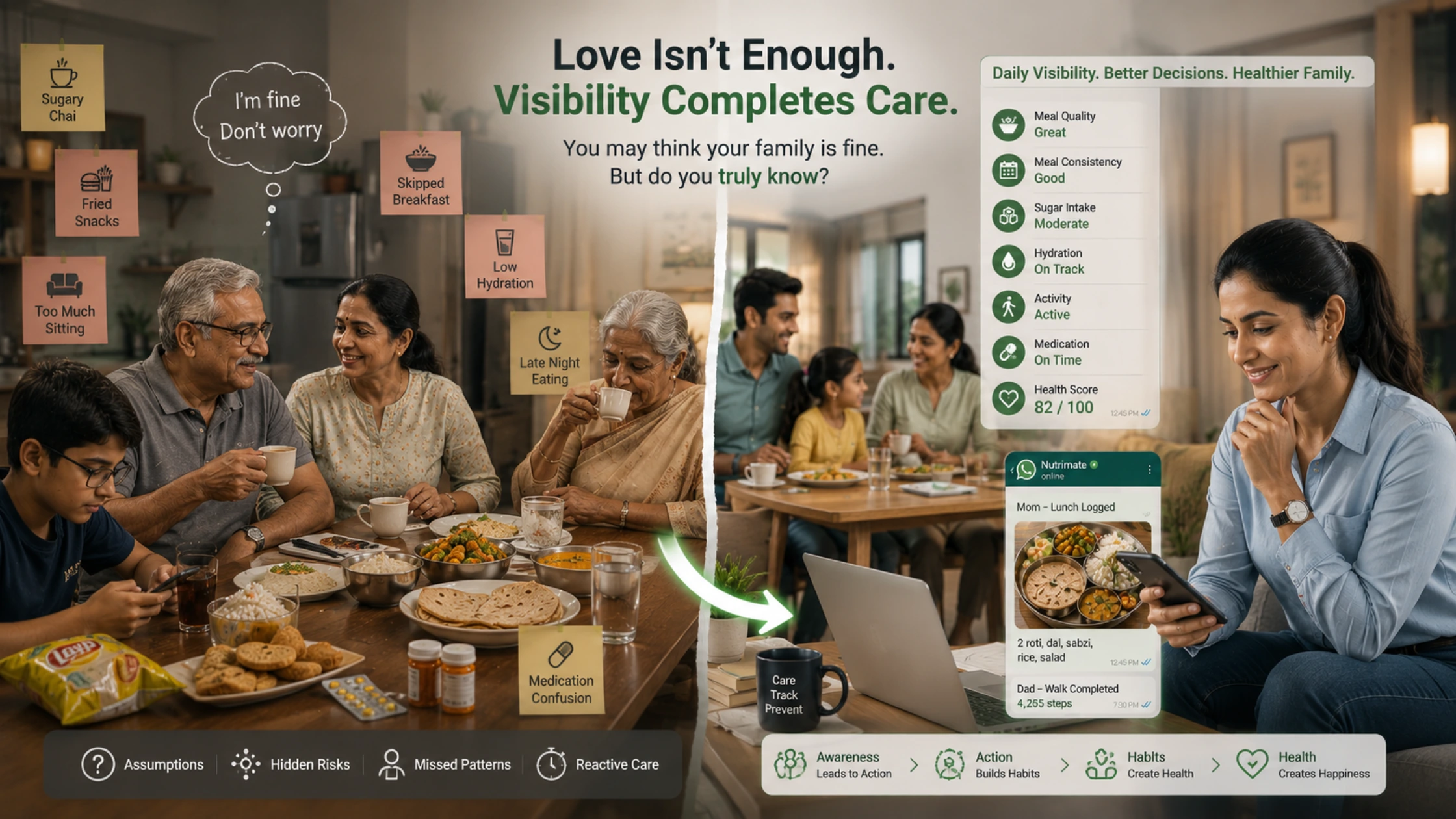
Most Indian families assume health is “fine” until something visibly goes wrong.
If parents are eating daily, children seem active, and no one is currently hospitalized, it often feels like everything is under control.
But this assumption is exactly where many hidden health problems begin.
Across households in India, one major challenge is not always lack of care.
It is lack of visibility.
This is why a family health tracking app is becoming increasingly relevant in modern Indian life.
Many families deeply care about each other’s wellbeing. But between work, school, caregiving, travel, and daily responsibilities, most people do not actually know:
- Are parents eating balanced meals?
- Is sugar intake increasing?
- Are stress levels affecting routines?
- Are medications being followed?
- Are unhealthy habits building slowly?
This gap in awareness is especially important because many lifestyle diseases develop gradually.
Blood sugar issues, weight gain, fatigue, hypertension, poor nutrition, and metabolic decline often appear after months or years of invisible patterns.
This is why health tracking India, health tracking for parents, and family wellness India are shifting from reactive care toward daily awareness.
Families no longer just need occasional checkups.
They need practical systems that support real health awareness.
This is where tools like India’s #1 whatsapp meal logging feature and Unique Caregiver feature become strategically useful, helping families simplify daily monitoring without constant questioning or overwhelming complexity.
Because in family health, what you cannot see often becomes what you cannot fix early.
The Illusion of “Everything Is Fine”: family health tracking app, family health, health awareness, and Indian family health habits
One of the biggest misconceptions in Indian households is this:
“No symptoms means no problem.”
Why This Is Dangerous:
Many chronic health issues build quietly.
Common Examples:
- Rising blood sugar
- Poor protein intake
- Weight gain
- Increasing fatigue
- Stress eating
- Low movement
- High sugar tea habits
Real Indian Family Pattern:
A parent may say:
“I eat normal food.”
But “normal” may include:
- Sugary chai 3 times daily
- Low protein
- Heavy rice portions
- Frequent fried snacks
- Irregular hydration
Emotional Reality:
Family members often assume:
“They seem okay.”
But appearance alone does not equal metabolic health.
Myth vs Reality
Myth: If someone is functioning, they are healthy
Reality: Many health declines begin before obvious symptoms
Strategic Insight:
This illusion delays preventive action.
Better Question:
Instead of asking:
“Is something wrong?”
Ask:
“What daily patterns are shaping health?”
This shift is foundational for stronger family nutrition habits India.
Why Symptoms Come Late: health tracking India, health tracking for parents, preventive awareness, and family wellness India
Most lifestyle-related conditions do not begin with emergencies.
They begin with subtle patterns.
Examples:
- Slightly higher sugar
- Reduced stamina
- Poor sleep
- Portion drift
- Weight creep
- Low activity
Why Families Miss It:
Because these shifts feel gradual.
Indian Lifestyle Reality:
Family members often prioritize:
- Work
- Education
- Responsibilities
Health gets delayed.
“We’ll fix it later” mindset:
This is one of the biggest drivers of preventable decline.
Important:
By the time visible symptoms appear, patterns may already be deeply rooted.
This is why family health tracking app systems matter:
They support visibility before escalation.
Practical Benefit:
Daily monitoring can highlight:
- Meal trends
- Sugar patterns
- Routine disruption
- Inactivity
- Caregiver blind spots
Strategic Truth:
Prevention often depends less on medical panic and more on pattern recognition.
The Visibility Problem: family health tracking app, caregiver health tools, health tracking for parents, and family nutrition habits India
Direct Answer:
Most families do not struggle because they do not care.
They struggle because they cannot consistently see what is happening.
Common Family Pain Points:
1. Parents Underreport
“I ate fine.”
2. Children Hide Habits
Snacking, sugar, meal skipping
3. Busy Professionals Assume
“I’ll check later.”
4. Caregivers Feel Overwhelmed
Managing everyone manually becomes exhausting.
Result:
Family health becomes guesswork.
Why Manual Awareness Fails:
Phone calls and occasional reminders are not systems.
Example:
Asking “Did you eat?” daily may not reveal:
- Portion quality
- Meal balance
- Sugar frequency
- Pattern drift
Better Alternative:
Simple dashboards help families track health in one place.
Product Insight:
Nutrimate’s AI-powered, Indian-first, WhatsApp-first structure reflects this by reducing friction and improving daily family visibility.
Core Lesson:
Visibility reduces uncertainty.
What Should Be Tracked Daily: family health tracking app, track parents diet, simple meal tracking for Indian food, and healthy Indian eating habits
Tracking does not mean obsessive control.
It means focusing on meaningful daily indicators.
Key Variables:
1. Meal Frequency
Are meals skipped?
2. Portion Patterns
Too much rice? Too many snacks?
3. Sugar Intake
Tea, biscuits, desserts
4. Protein Quality
Dal, curd, paneer, eggs
5. Hydration
Often ignored
6. Routine Consistency
Late dinners? Emotional eating?
Family-Level Awareness Questions:
- Are parents eating balanced meals?
- Is someone over-snacking?
- Are routines worsening?
- Are medications aligned with habits?
- Is fatigue increasing?
Important:
The goal is not pressure.
It is awareness.
Better Framework:
Food tracking without calorie counting often works better for families than overly technical systems.
Strategic Shift:
Simple visibility creates earlier intervention.
Example: Family Health Dashboard: family health tracking app, health tracking India, health tracking for parents, and family wellness India
Scenario:
Working daughter in Bengaluru, parents in Nagpur
Old System:
- Calls parents daily
- “Did you eat?”
- “Yes”
- Still uncertain
Hidden Problems:
- Father skipping breakfast
- Mother low on protein
- Tea sugar increasing
- Medication timing inconsistent
New Dashboard-Based Awareness:
Daily:
- Meals logged
- Sugar frequency visible
- Routine patterns clearer
- Caregiver visibility improved
Result:
- Better conversations
- Lower stress
- Earlier corrections
- Reduced guilt
Emotional Benefit:
Concern shifts from anxious guessing to informed support.
Why This Matters:
This is where India’s #1 whatsapp meal logging feature and Unique Caregiver feature becomes especially useful for families balancing distance, work, and care.
Implementation: family health tracking app, easy way to track meals, lifestyle change, and family wellness India
Step 1: Start Simple
Do not track everything.
Step 2: Focus on Routine
Meals, sugar, hydration
Step 3: Reduce Friction
Systems should feel easy.
Step 4: Review Weekly
Patterns matter more than one-off mistakes.
Step 5: Build Family Awareness, Not Control
Health systems work better when they empower, not police.
Do:
- Encourage shared visibility
- Focus on trends
- Keep Indian meals realistic
- Prioritize sustainability
Don’t:
- Shame family members
- Demand perfection
- Use fear as motivation
- Overcomplicate tracking
Strategic Shift: From Assumption to Awareness
Indian families often operate on emotional care.
But emotional care without visibility can miss real risks.
Better Family Health Requires:
- Awareness
- Simplicity
- Routine
- Practical systems
- Early intervention
Core Insight:
You do not need stricter family diets first.
You need clearer family awareness first.
This is why family health tracking app solutions are increasingly relevant for modern Indian households.
Because better family health is often built through small daily understanding, not occasional panic.
Frequently Asked Questions
Track daily meal patterns, sugar intake, routine consistency, and lifestyle behaviors instead of relying only on visible symptoms or occasional checkups.
Families should monitor meal quality, portion size, sugar frequency, hydration, medication consistency, and routine changes to improve long-term awareness and preventive care.