 Pradnya Ganorkar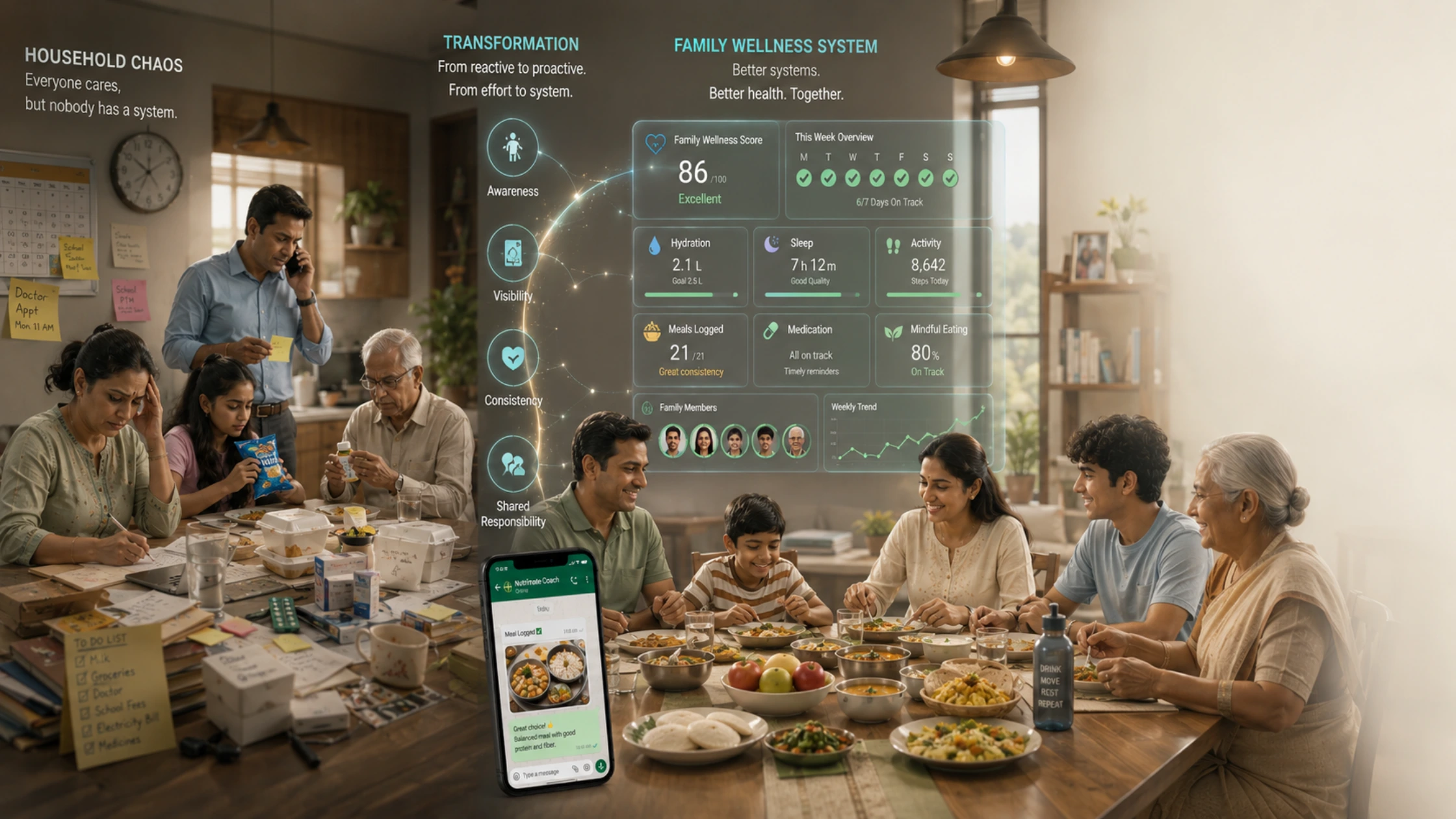
Modern family life is more connected than ever before, yet many households struggle to stay organized when it comes to health.
Parents manage work deadlines, children have school schedules, grandparents may have medical needs, and daily meals often become a last-minute decision rather than part of a larger wellness strategy.
As a result, many families operate reactively instead of proactively.
A forgotten medication, skipped breakfast, rising stress levels, poor sleep, irregular eating, and missed health checkups can slowly create problems that remain invisible until they become serious.
This is why family wellness India is becoming less about individual diets and more about creating systems that support everyone in the household.
The most successful families do not necessarily have more time.
They simply have better structures.
A strong family health management India approach helps families build consistency, reduce stress, and improve long-term health outcomes without turning life into a complicated health project.
The goal is not perfection.
The goal is creating a sustainable framework that supports family health, healthy routines, and better awareness across every age group.
Why Family Health Feels Chaotic
Many families assume health problems happen suddenly.
In reality, most health challenges develop gradually through daily patterns.
Small habits repeated over months or years often create larger health outcomes.
The problem is that most households have no central system for monitoring those habits.
Every Family Member Has Different Needs
A typical Indian household may include:
- Working professionals
- School-going children
- Teenagers
- Elderly parents
- Caregivers
Each group has unique nutrition, activity, sleep, and health requirements.
Without coordination, health becomes fragmented.
One person may be trying to lose weight.
Another may be managing diabetes.
A child may have poor eating habits.
An elderly parent may forget medication.
This complexity often creates stress and confusion.
The Invisible Mental Load
In many households, one person becomes the unofficial health manager.
Usually this responsibility falls on mothers, daughters, or caregivers.
This contributes significantly to caregiver burnout India.
They track appointments, plan meals, remind family members about medications, and worry about everyone’s health.
Over time, this responsibility becomes exhausting.
A family system should distribute awareness instead of concentrating responsibility on one individual.
Why Good Intentions Are Not Enough
Most families care deeply about health.
The challenge is execution.
People often know they should:
- Eat better
- Exercise regularly
- Sleep adequately
- Monitor health indicators
Yet daily life creates friction.
This explains why staying healthy is hard despite widespread awareness.
Multiple People, Multiple Habits, No System
Many households have habits.
Few households have systems.
There is an important difference.
Habits Are Individual
Examples include:
- Morning walks
- Drinking water
- Eating fruit
- Going to the gym
These behaviors help individuals.
Systems Create Consistency
A system ensures healthy actions happen regularly even when motivation decreases.
For example:
Instead of hoping everyone eats healthy meals, a family system might include:
- Weekly meal planning
- Grocery preparation
- Shared visibility of eating patterns
- Scheduled health check-ins
This creates sustainable behavior.
The Family Health Visibility Problem
Many families do not actually know:
- What everyone eats daily
- Whether parents are following nutrition recommendations
- How often children consume packaged foods
- Whether sleep quality is declining
- If stress levels are increasing
Without visibility, health management becomes guesswork.
This is why parents health tracking and practical health tracking for parents solutions are becoming increasingly important.
Home Food Is Not Automatically Healthy
A common assumption is that home-cooked food guarantees good health.
Not necessarily.
Excess portions, irregular meal timing, low protein intake, high sugar consumption, or constant snacking can still create problems.
The conversation should focus on patterns rather than labels.
Understanding Indian food and health requires looking at overall habits instead of judging individual foods.
What a Family Wellness System Looks Like
A family wellness system is not a strict diet plan.
It is a practical structure that improves awareness and consistency.
Core Components
A strong family health management system usually includes:
Nutrition Awareness
Families understand:
- Meal frequency
- Protein intake
- Fruit and vegetable consumption
- Hydration habits
This supports healthier decisions without creating obsession.
Routine Visibility
Monitoring:
- Sleep patterns
- Physical activity
- Stress levels
- Daily energy
helps identify problems early.
Preventive Focus
Strong family preventive health India strategies focus on preventing problems before they become emergencies.
Examples include:
- Annual health screenings
- Diabetes risk monitoring
- Blood pressure awareness
- Nutrition improvement
Shared Responsibility
Health should not be one person’s burden.
Instead:
- Children learn responsibility
- Adults participate actively
- Elderly family members receive support
- Caregivers receive relief
This reduces stress while improving accountability.
Building Sustainable Systems
Families seeking sustainable health habits for Indians often achieve better outcomes by focusing on repeatable routines rather than extreme goals.
Consistency beats intensity.
Simplicity Over Complexity
One of the biggest mistakes families make is overcomplicating health.
Why Complex Plans Fail
Many households attempt:
- Strict diets
- Detailed calorie counting
- Complicated meal plans
- Multiple apps
The result is usually frustration.
Complex systems create resistance.
Simple systems create participation.
Focus on Awareness First
Many people searching for how to stay healthy without dieting are surprised to learn that awareness alone can improve behavior.
When families become aware of patterns, better decisions often follow naturally.
Examples:
- Noticing frequent takeout meals
- Identifying excessive sugar consumption
- Recognizing skipped breakfasts
Simple Meal Visibility
Many users prefer food tracking without calorie counting because it feels realistic.
Similarly, simple meal tracking for Indian food can help families understand eating patterns without creating stress.
This is where technology can support behavior without becoming the center of attention.
Nutrimate takes this approach by simplifying health awareness through AI-powered meal visibility designed around Indian food habits and everyday routines.
Its India’s #1 whatsapp meal logging feature and Unique Caregiver feature help families stay informed without adding unnecessary complexity.
Healthy Does Not Mean Restrictive
A healthy household can still enjoy:
- Roti
- Rice
- Parathas
- Festival foods
- Family celebrations
The focus should be balance.
The popular roti rice weight gain myth often distracts families from more important factors such as overall eating patterns, activity levels, sleep, and consistency.
Weekly Household Health Framework
Families often benefit from a simple weekly system.
Step 1: Sunday Planning
Spend 15 minutes reviewing:
- Upcoming schedules
- Grocery needs
- Meal preparation
- Family commitments
This supports family nutrition planning India.
Step 2: Create Health Minimums
Instead of perfect goals, establish minimum standards.
Examples:
- Daily fruit intake
- Minimum water consumption
- Three walks per week
- Consistent breakfast habits
These support a healthy lifestyle without overwhelming anyone.
Step 3: Monitor Patterns
Track:
- Energy levels
- Sleep quality
- Eating habits
- Physical activity
This creates valuable visibility.
Step 4: Family Check-In
Once per week discuss:
- Challenges
- Wins
- Health concerns
- Areas for improvement
Short conversations often prevent larger problems.
Step 5: Focus on Progress
Families should avoid perfectionism.
Even small improvements in:
- healthy eating
- health habits
- meal tracking
- lifestyle change
can create significant long-term benefits.
Supporting Busy Professionals
For many households, success depends on accommodating working adults.
An effective system supports an Indian diet for busy professionals while remaining realistic about travel, work schedules, and family obligations.
This aligns with creating a truly healthy lifestyle for busy Indians.
Mistakes to Avoid
Mistake #1: Making Health One Person’s Job
This increases stress and contributes to Indian moms health management challenges.
Health should be a shared family responsibility.
Mistake #2: Chasing Perfection
Many families abandon plans after minor setbacks.
Long-term success requires flexibility.
Mistake #3: Ignoring Early Warning Signs
Small issues often become major problems.
Examples include:
- Poor sleep
- Weight gain
- Increased stress
- Reduced activity
Early awareness matters.
Mistake #4: Focusing Only on Weight
Health includes:
- Energy
- Sleep
- Stress
- Nutrition
- Movement
Weight is only one indicator.
Mistake #5: Using Short-Term Diets
This explains why diets fail long term for many families.
Temporary diets rarely create lasting behavior change.
Mistake #6: No Visibility
Without awareness, families struggle to identify patterns.
Simple systems create better decisions.
One simple ecosystem can reduce chaos and improve consistency.
Modern health platforms increasingly focus on visibility rather than complexity. Nutrimate supports this shift through AI-powered meal awareness, Indian food intelligence, family-centered health tracking, and WhatsApp-first convenience designed specifically for Indian households. By helping families build awareness around nutrition, routines, and preventive habits, simple digital systems can transform reactive health management into proactive wellness.
References
1. World Health Organization – Healthy Diet
https://www.who.int/news-room/fact-sheets/detail/healthy-diet
FAQs
The most effective approach is to create a simple family wellness system that includes meal planning, routine visibility, shared responsibility, preventive healthcare, and regular family check-ins. Consistency and awareness are usually more important than strict diet plans.
A family wellness system is a structured approach to managing nutrition, activity, sleep, preventive healthcare, and daily habits across the household. It helps families improve long-term health outcomes through simple, repeatable routines rather than reactive decision-making.