 Pradnya Ganorkar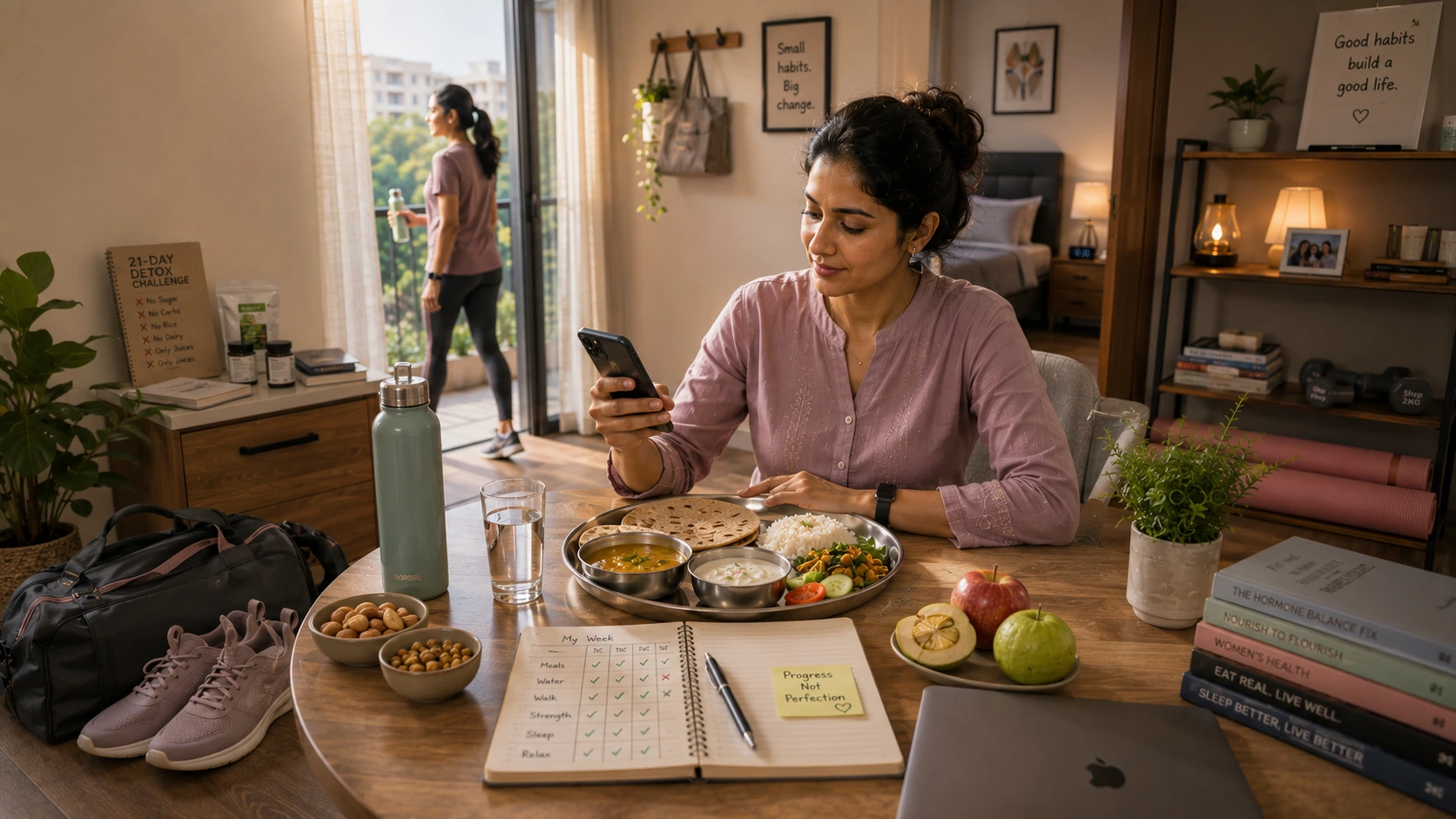
For many Indian women, improving health starts with searching for the perfect diet. But long-term women’s health is rarely determined by one diet plan. It is shaped by everyday routines involving meals, movement, hydration, recovery, and health awareness.
Building healthy habits for women creates the foundation for a more sustainable healthy lifestyle for women. This matters for working professionals managing long office hours, mothers balancing family responsibilities, and students dealing with irregular schedules.
Before focusing on weight loss or restrictive eating, women should build routines that support energy, physical strength, mental wellbeing, and preventive healthcare.
Why Daily Habits Matter More Than Short-Term Diets
Short-term diets often depend on strict rules.
Avoid rice. Stop eating after 7 PM. Eliminate carbohydrates. Follow a complicated meal plan. Exercise every day.
These rules may feel manageable for a few weeks, but normal life eventually returns.
Work deadlines become demanding. Children need attention. Travel disrupts meal schedules. Exams affect sleep. Social occasions change eating patterns.
This is why building a healthy routine is more practical than repeatedly starting restrictive diets.
Daily habits create systems that continue even when motivation changes.
A woman who walks for 30 minutes most days, eats balanced home-cooked meals, drinks enough water, gets adequate sleep, and manages stress may build better long-term health awareness than someone repeatedly following extreme diets.
The goal is not perfection.
The goal is creating a healthy lifestyle that can continue through normal Indian life.
Seven Habits That Support Women’s Health
1. Eat Regular Meals
Busy mornings often lead women to skip breakfast. Office meetings delay lunch. Mothers may prioritize feeding their families before eating themselves.
Irregular meals can make balanced nutrition more difficult and may contribute to excessive hunger later in the day.
Regular meals create structure.
A practical Indian meal may include dal, vegetables, roti or rice, curd, eggs, paneer, fish, chicken, sprouts, or other familiar foods.
The focus should be on healthy eating for women, adequate variety, and sustainable meal patterns rather than following complicated rules.
2. Stay Hydrated Throughout the Day
Hydration is one of the simplest daily health behaviours, yet it is easy to overlook.
Women working in air-conditioned offices, commuting for long periods, attending college lectures, or managing household responsibilities may go several hours without drinking enough water.
Simple strategies can help:
- Keep water visible at your desk or study area.
- Drink water with regular meals.
- Carry a reusable bottle while travelling.
- Increase fluid intake appropriately during exercise and hot weather.
- Use reminders if you frequently forget to drink.
Hydration should become part of the daily routine rather than another short-term challenge.
3. Walk Regularly
Movement does not always require a gym membership.
Walking after meals, using stairs, completing household activities, taking short office movement breaks, and walking during phone calls can increase everyday activity.
For women with busy schedules, starting with a manageable amount of movement is often more sustainable than creating an unrealistic exercise routine.
Regular walking can become one of the easiest healthy habits to maintain because it requires little equipment or preparation.
4. Include Strength Training
Strength training is often overlooked in discussions about women’s wellness.
Women may focus only on walking, yoga, or cardio while avoiding resistance exercises because of misconceptions about becoming bulky or needing expensive equipment.
Strength-focused activity can include resistance bands, bodyweight exercises, supervised gym training, or appropriate home workouts.
The objective is to build a routine that supports physical function and can be maintained consistently.
Women who are new to exercise, pregnant, postpartum, recovering from illness, or managing medical conditions should seek appropriate professional guidance before beginning a new exercise programme.
5. Protect Sleep
Poor sleep is often normalized.
Late-night work, scrolling on phones, childcare responsibilities, household tasks, irregular schedules, and stress can reduce sleep quality.
Consistent sleep routines are an important part of women’s wellbeing.
Practical actions include:
- Maintaining regular sleep and wake timings where possible.
- Reducing unnecessary screen exposure before bedtime.
- Avoiding heavy meals immediately before sleeping.
- Creating a quieter and more comfortable sleep environment.
- Seeking professional evaluation when persistent sleep problems affect everyday functioning.
Better health routines should make recovery a priority rather than treating sleep as optional.
6. Build Simple Stress Management Habits
Stress cannot always be removed from everyday life.
Working women may face deadlines and commuting pressure. Mothers may manage childcare and family responsibilities. Students may experience academic pressure and uncertainty.
The objective of stress management is not to eliminate every stressful situation.
It is to build routines that help women recover.
Walking, physical activity, talking with supportive people, spending time outdoors, breathing exercises, hobbies, adequate rest, and setting realistic boundaries can support everyday wellbeing.
Persistent or overwhelming stress should be discussed with an appropriate healthcare professional.
7. Pay Attention to Health Patterns
Many women focus on health only when something feels seriously wrong.
A better approach is to build ongoing health awareness.
Notice patterns related to:
- Energy and persistent fatigue.
- Sleep quality.
- Menstrual cycles.
- Digestive health.
- Stress.
- Physical activity.
- Eating patterns.
- Unexplained changes in weight or wellbeing.
Simple women’s health tracking can help women notice changes over time and have more informed conversations with healthcare professionals when needed.
Tracking should support awareness, not self-diagnosis.
Morning to Night: A Practical Daily Routine
A sustainable routine should fit into normal life.
Morning
Wake at a reasonably consistent time.
Drink water and begin the day with light movement, stretching, walking, or another manageable activity.
Eat a balanced breakfast when appropriate for your schedule. Examples include vegetable poha with curd, eggs with roti, idli with sambar, paneer paratha with curd, or oats with milk and nuts.
During Work, College, or Household Responsibilities
Keep water accessible.
Avoid sitting continuously for several hours. Short walking or movement breaks can help make activity part of the day.
Plan regular meals instead of depending entirely on packaged snacks or food delivery.
Lunch
Build a practical meal using familiar Indian food.
For example, include vegetables, dal or another protein source, roti or rice, and curd depending on individual preferences and requirements.
The objective is balanced eating, not removing traditional foods unnecessarily.
Evening
Choose a manageable snack if hungry, such as fruit, curd, roasted chana, nuts, eggs, or another appropriate option.
Include walking, exercise, strength training, or recreational activity according to your schedule.
Night
Eat dinner according to your routine without turning meal timing into an extreme rule.
Reduce unnecessary screen exposure before sleeping and create a consistent bedtime routine.
A realistic routine will not look identical every day.
Consistency means returning to supportive habits after interruptions.
Common Lifestyle Mistakes Women Make
One common mistake is changing too many habits at once.
Starting a restrictive diet, joining a gym, waking up at 5 AM, drinking three litres of water, avoiding sugar, tracking every meal, and sleeping early may sound productive.
For many women, it creates unnecessary pressure.
Another mistake is ignoring meals because of busy schedules.
Women often prioritize work, children, household responsibilities, or academic commitments while paying less attention to their own nutrition.
A third mistake is treating health only as a weight-management project.
Body weight is one health indicator, but it should not become the only measure of progress.
Energy, strength, movement consistency, sleep quality, meal regularity, and improved nutrition awareness can also provide useful information.
Finally, women should avoid using social media content as a substitute for qualified healthcare advice.
Symptoms related to menstrual health, persistent fatigue, significant weight changes, or other ongoing health concerns may require professional evaluation.
How to Build Habits That Last
The best health routine is not the most impressive one.
It is the one you can continue.
Start with one or two behaviours.
For example:
Walk for 20 minutes five days per week.
Drink water with every main meal.
Include a protein source at breakfast.
Maintain a consistent bedtime on weekdays.
Record meals for awareness without trying to calculate every calorie.
Once the behaviour becomes easier to maintain, add another habit.
This gradual approach supports behavior change because it reduces complexity and creates visible progress.
Tracking can also help.
A simple record of meals, water, movement, sleep, and routines can make progress easier to notice without creating an obsession with weight.
Nutrimate supports this awareness-first approach by helping users build practical routines around Indian eating habits and everyday health tracking. India’s #1 whatsapp meal logging feature and Unique Caregiver feature are designed around the broader principle that health awareness should fit into normal daily life rather than become another complicated task.
For women supporting parents or family members while also managing their own health, simple family health visibility can make everyday wellness routines easier to understand and maintain.
The purpose of tracking is not to achieve a perfect score.
It is to notice patterns, identify barriers, and improve gradually.
30-Day Healthy Habit Checklist
☐ Choose one or two healthy habits for women to focus on first.
☐ Eat regular meals that fit your daily schedule.
☐ Include familiar Indian foods instead of following unnecessarily restrictive diets.
☐ Add vegetables and suitable protein sources to regular meals.
☐ Keep water easily accessible throughout the day.
☐ Walk or move regularly.
☐ Include appropriate strength-focused activity during the week.
☐ Reduce long periods of uninterrupted sitting.
☐ Maintain a reasonably consistent sleep schedule.
☐ Create a simple bedtime routine.
☐ Identify one realistic method for managing daily stress.
☐ Notice patterns in energy, meals, sleep, activity, and menstrual health.
☐ Use simple meal tracking only when it improves awareness.
☐ Review progress weekly instead of judging yourself daily.
☐ Avoid changing your entire lifestyle at once.
☐ Return to your routine after busy days, travel, illness, or social events.
☐ Seek qualified medical guidance for persistent or concerning symptoms.
☐ Focus on progress that can continue beyond 30 days.
FAQs
The healthiest habits include eating regular balanced meals, staying hydrated, moving daily, including appropriate strength training, getting adequate sleep, managing stress, and maintaining ongoing health awareness. Sustainable healthy habits for women should fit into normal life and support long-term women’s health rather than depend on extreme routines.
Start with one or two behaviours that are easy to repeat. Choose specific actions, such as walking after dinner, carrying water to work, adding protein to breakfast, or maintaining a consistent bedtime. A sustainable healthy routine develops gradually through repetition, review, and realistic adjustments.
The easiest habit depends on your current routine, but walking regularly, drinking water with meals, maintaining consistent sleep timings, or adding one balanced meal each day can be practical starting points. Choose the behaviour with the lowest barrier to repetition and build from there.
There is no universal number of days required to build a habit. Research indicates that the time needed for a behaviour to become more automatic varies considerably depending on the behaviour, the person, and the circumstances. The practical priority should be consistent repetition in a stable context rather than expecting every habit to form within 21 or 30 days.
Reference:
- The World Health Organization provides evidence-based recommendations on physical activity and sedentary behaviour for adults, including aerobic activity, muscle-strengthening activity, and reducing sedentary time.
WHO Guidelines on Physical Activity and Sedentary Behaviour - A peer-reviewed study published in the European Journal of Social Psychology found substantial variation in how long health-related behaviours took to become automatic, supporting the view that habit formation does not follow a universal 21-day or 30-day timeline.
How Are Habits Formed: Modelling Habit Formation in the Real World