 Pradnya Ganorkar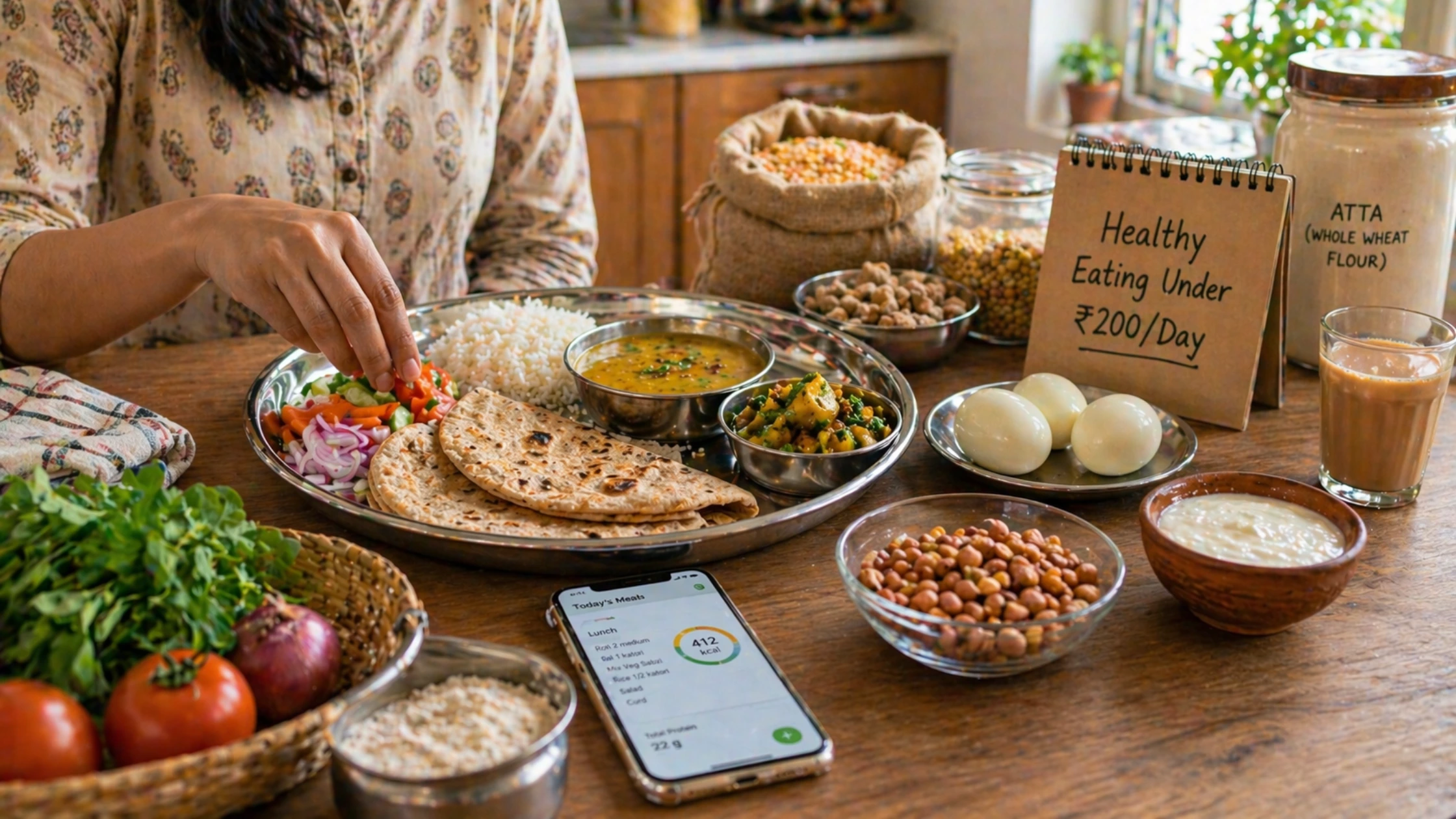
India offers some of the world’s most nutritious foods at extremely low cost. A nutritionally complete daily diet for one person in India costs between Rs 120 and Rs 200 per day using locally available whole foods. The most cost-efficient protein sources in India are eggs at approximately Rs 7 per egg providing 6g protein, toor dal at Rs 90 to 100 per kg providing 22g protein per 100g dry, moong dal at Rs 80 per kg, and groundnuts at Rs 80 per kg providing 26g protein per 100g. The cheapest vegetables with highest nutrition density are methi (fenugreek leaves), spinach, drumstick, and seasonal gourds — all available for Rs 20 to 40 per bunch at local markets. Millets including jowar, bajra, and ragi cost Rs 40 to 60 per kg and have superior nutritional profiles compared to refined wheat flour at similar or lower cost. Nutrimate tracks all these locally sourced whole foods accurately in its Indian food database.
The Myth That Healthy Eating Is Expensive in India
The idea that eating healthy requires protein bars, imported oats, avocados, and expensive supplements is a social media-driven misconception that does not reflect the reality of Indian food systems. India has one of the world’s most nutritious traditional diets, built around foods that cost a fraction of their Western equivalents.
The problem is not that healthy Indian food is expensive — it is that processed, convenient, and branded food has become more socially visible through advertising and urban availability, leading people to perceive it as the standard rather than the exception. A dal-roti-sabzi meal cooked at home provides superior nutrition at lower cost than almost any packaged food or restaurant meal.
The goal of this guide is to demonstrate — with specific foods and approximate prices — that complete, high-quality nutrition in India is entirely achievable on Rs 150 to 200 per day per person using whole, locally available ingredients.
The Cheapest High-Protein Foods in India Per Rupee
Eggs are the single most cost-efficient protein source in India. At approximately Rs 6 to 8 per egg, one egg provides 6 grams of protein and 5 grams of healthy fat. For Rs 20 — the price of three eggs — you get 18 grams of complete protein. No other food at this price point comes close on a per-protein-gram basis.
Toor dal and moong dal cost Rs 80 to 100 per kilogram and provide 22 to 24 grams of protein per 100 grams dry weight. One day’s supply of dal — approximately 80 to 100 grams dry — costs Rs 8 to 10 and provides 18 to 24 grams of protein. Combined with roti or rice, dal provides a complete amino acid profile.
Groundnuts (peanuts) at Rs 60 to 80 per kilogram provide 26 grams of protein per 100 grams — more protein per gram than most dals and at a lower cost. A 50-gram serving of roasted groundnuts costs approximately Rs 3 to 4 and provides 13 grams of protein and 7 grams of healthy fat.
Soya nuggets (textured soy protein) cost Rs 80 to 100 per kilogram and provide 52 grams of protein per 100 grams dry — the highest plant protein density available in Indian grocery stores at this price point.
The Most Nutritious Vegetables for the Lowest Price
Seasonal vegetables are always the most nutritious and cheapest option — they are harvested at peak ripeness and have not travelled long distances. In most Indian markets, seasonal vegetables cost Rs 20 to 40 per kilogram.
Methi leaves (fenugreek) are among the most nutritionally dense vegetables in Indian cooking at one of the lowest prices — often Rs 10 to 20 per bunch sufficient for one meal. Methi provides iron, calcium, Vitamin K, and dietary fibre in concentrations that exceed most expensive vegetables.
Drumstick (moringa) provides exceptional nutrition per rupee. The leaves contain 7 times more Vitamin C than oranges, 4 times more calcium than milk, and 3 times more iron than spinach. Drumstick pods are available in most South and Central Indian markets for Rs 20 to 40 per bunch.
Sweet potato at Rs 20 to 30 per kilogram provides Vitamin A, potassium, and dietary fibre at a caloric density appropriate for active individuals. It is significantly more nutritious than white potato at a similar or lower price.
A Complete Daily Meal Plan on Rs 180
Breakfast (Rs 35): 2 eggs scrambled with onion and tomato (Rs 16), 2 whole wheat rotis (Rs 8), 1 cup chai with milk (Rs 11). Protein: 20g. Calories: 420.
Lunch (Rs 65): 1.5 katori toor dal cooked (Rs 12), 2 jowar rotis (Rs 10), 1 katori seasonal sabzi with oil (Rs 18), small bowl curd (Rs 15), salad (Rs 10). Protein: 22g. Calories: 580.
Evening snack (Rs 20): 40g roasted groundnuts (Rs 4), 1 cup chai (Rs 11), seasonal fruit (Rs 15). Protein: 11g. Calories: 250.
Dinner (Rs 60): 1 katori moong dal (Rs 10), 2 rotis (Rs 8), 1 katori sabzi (Rs 18), rice 100g cooked (Rs 8), salad (Rs 6), seasonal vegetable soup (Rs 10). Protein: 18g. Calories: 550.
Total daily cost: Rs 180. Total protein: 71g. Total calories: 1,800. This plan meets Indian Council of Medical Research guidelines for a moderately active adult.
How Tracking Makes Budget Eating More Effective
The challenge with budget eating is ensuring nutritional completeness — that protein, micronutrients, and fibre targets are met consistently, not just calories. Without tracking, it is easy to meet calorie targets with predominantly carbohydrate-heavy foods while under-consuming protein and micronutrients.
Nutrimate tracks all the foods in a budget Indian diet accurately — dal, roti, seasonal vegetables, eggs, groundnuts, curd — and shows in real time whether protein and micronutrient targets are being met each day. This transforms budget eating from guesswork into a complete nutritional strategy.
Track your budget Indian meals and know exactly where your nutrition stands. Free on Android and iOS — nutrimate.in