 Pradnya Ganorkar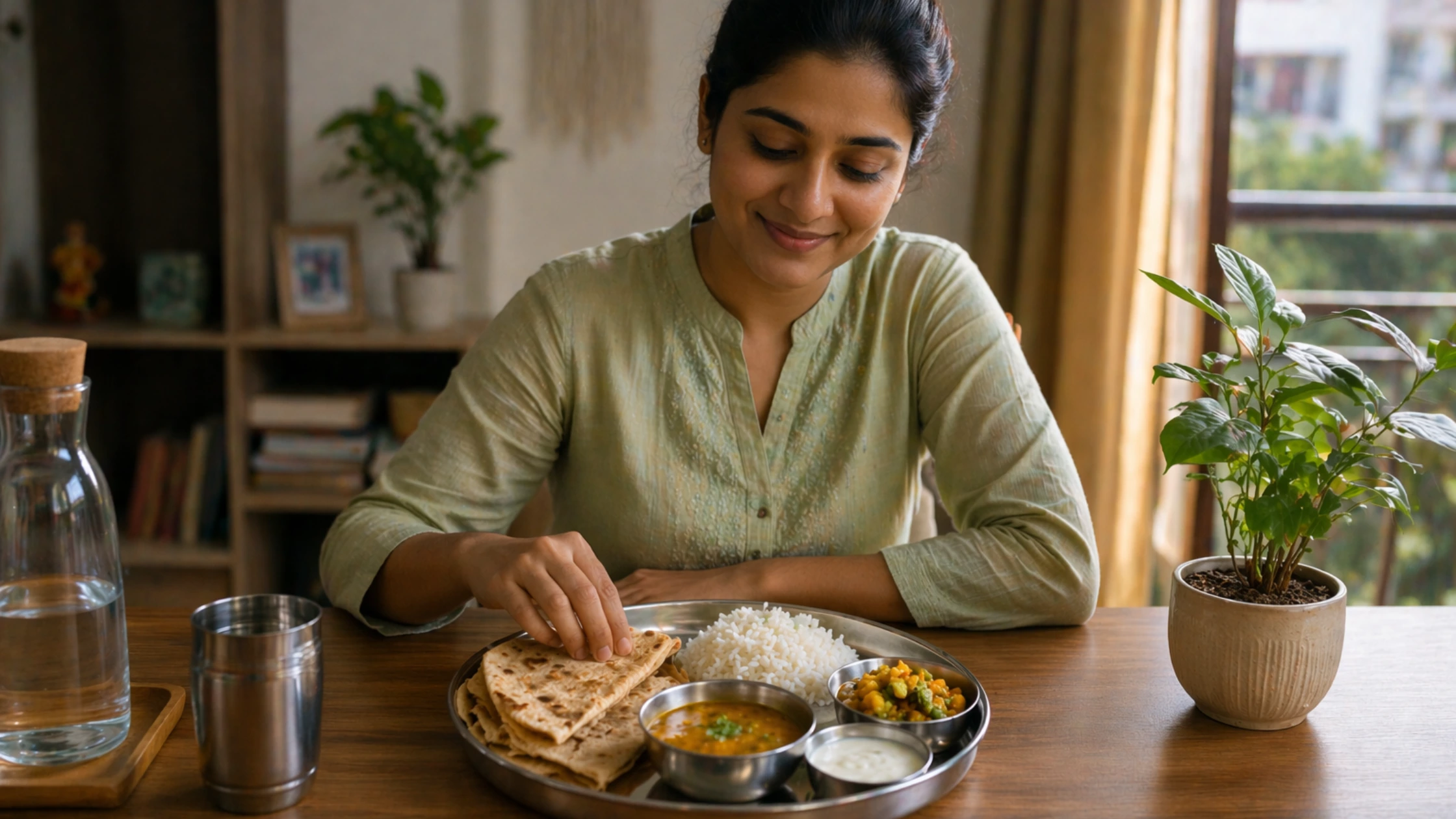
For many people trying to “eat healthy,” the first advice they hear is to cut down on roti or rice.
It sounds logical. Remove the main source of carbohydrates, reduce calories, and health should improve.
But this approach creates more confusion than clarity.
Because for most Indians, roti and rice are not occasional foods. They are daily staples. Removing them entirely is not just difficult—it often feels unnatural, restrictive, and unsustainable.
The truth is simpler.
Healthy Indian eating habits do not require eliminating staple foods. They require understanding how meals are structured, how portions work, and how daily patterns influence health.
Indian food and health are not in conflict. In many ways, traditional eating patterns already contain the foundations of balance.
The challenge today is not the food itself. It’s how modern lifestyles have disrupted the way we eat.
What Traditional Indian Meals Got Right
Before diet trends and calorie tracking became common, Indian meals followed a natural structure.
A typical plate included:
- A grain (roti or rice)
- A protein source (dal, legumes, or curd)
- One or two vegetable dishes
- Sometimes a small amount of fat through oil, ghee, or tempering
This combination created balance.
Grains provided energy.
Dal and legumes added protein.
Vegetables contributed fibre and micronutrients.
Meals were also:
- Home-cooked
- Freshly prepared
- Eaten at relatively consistent times
This structure supported digestion, energy stability, and satiety.
The issue is not that Indian meals are unhealthy.
The issue is that modern habits have changed around those meals:
- Larger portions
- More frequent snacking
- Less physical activity
- Irregular meal timing
When these factors shift, outcomes change—even if the food remains similar.
Balance vs Restriction
Most modern diet advice is built on restriction.
- Cut carbs
- Avoid rice
- Limit roti
- Remove entire food groups
Restriction can work short term. But it rarely lasts.
When people remove foods they are used to eating daily, two things happen:
- The plan feels difficult to maintain
- The desire for those foods increases
Eventually, people return to old habits—often with guilt.
This cycle repeats.
Balance works differently.
Instead of asking:
“What should I remove?”
Ask:
“How do I make my meals more balanced?”
Balance means:
- Keeping roti or rice
- Adding enough protein (dal, paneer, legumes)
- Including vegetables
- Managing portion size
For example:
- 2 rotis + dal + sabzi is balanced
- 2 rotis + heavy paneer curry + dessert may be calorie-dense
The difference is not the roti. It’s the overall meal composition.
This is where Indian food and health come together.
When meals are balanced, there is no need to eliminate staples.
Everyday Eating Patterns That Work
Healthy eating is not about occasional “perfect” meals.
It’s about everyday patterns.
Consistent Meal Timing
Irregular eating is common:
- Skipping breakfast
- Late lunches
- Very late dinners
This pattern often leads to:
- Overeating later in the day
- Low energy
- Digestive discomfort
A simple shift:
- Eat at roughly similar times each day
- Avoid long gaps without food
This improves energy and reduces overeating.
Moderate Portions Without Obsession
Portion awareness matters more than strict counting.
You don’t need to measure every meal.
Instead:
- Notice when you feel comfortably full
- Avoid eating out of habit or stress
- Adjust portions gradually
For example:
- Reducing one extra roti
- Taking slightly less rice
- Adding more vegetables
Small changes create sustainable results.
Keep Meals Simple
Complex meal plans are hard to follow daily.
Simple meals are easier:
- Roti + dal + sabzi
- Rice + sambar + vegetables
- Khichdi with curd
These meals are familiar, balanced, and require less effort.
Avoid Extreme Swings
A common pattern:
- Very strict eating during weekdays
- Overeating on weekends
This creates instability.
Instead, aim for consistency:
- Balanced meals most days
- Flexibility without extremes
This approach aligns with habit-based health, where small, repeatable patterns matter more than occasional strict control.
Why Sustainability Matters
The biggest mistake people make with health is choosing systems they cannot follow long term.
If a diet:
- Feels restrictive
- Requires constant effort
- Doesn’t fit your lifestyle
It will not last.
And if it doesn’t last, results won’t either.
Sustainability means:
- You can follow it on busy days
- You can follow it during travel
- You can follow it without stress
This is especially important in Indian lifestyles where:
- Work schedules are unpredictable
- Social events are frequent
- Family meals are shared
A sustainable system allows flexibility.
For example:
- Eating heavier meals during festivals without guilt
- Returning to normal patterns afterward
- Not needing a “reset” every week
Sustainability also reduces mental pressure.
When food is not constantly labeled as “good” or “bad,” eating becomes calmer.
Some people find it helpful to build awareness of their patterns over time. Tools like Nutrimate are sometimes used for this—not to control food, but to understand habits better. But the core idea is independent of any tool.
Health improves when eating feels natural, not forced.
Common Mistakes to Avoid
Even with good intentions, people often make a few mistakes:
- Eliminating roti or rice completely
- Skipping meals and overeating later
- Following overly strict diets
- Ignoring portion size
- Eating irregularly due to work
Avoiding these mistakes is often more effective than following complex plans.
A More Practical Way to Think About Food
Instead of:
“I need to stop eating carbs.”
Think:
“I need to balance my meals.”
Instead of:
“I need a perfect diet.”
Think:
“I need a routine I can follow daily.”
This shift reduces pressure.
And when pressure reduces, consistency improves.
Frequently Asked Questions
What does healthy Indian eating look like?
Healthy Indian eating includes balanced meals with grains like roti or rice, a protein source such as dal or legumes, vegetables, and moderate fats. Consistency, portion awareness, and regular meal timing are more important than eliminating specific foods.
Can Indian food support weight management?
Yes. Indian food can support weight management when meals are balanced and portions are controlled. Traditional combinations of grains, proteins, and vegetables provide good nutrition, and consistent eating patterns help maintain long-term results.
Healthy eating does not require abandoning your food culture.
It requires understanding it better.
When meals are balanced, portions are reasonable, and patterns are consistent, roti and rice can remain exactly where they have always been—at the center of the plate.