 Pradnya Ganorkar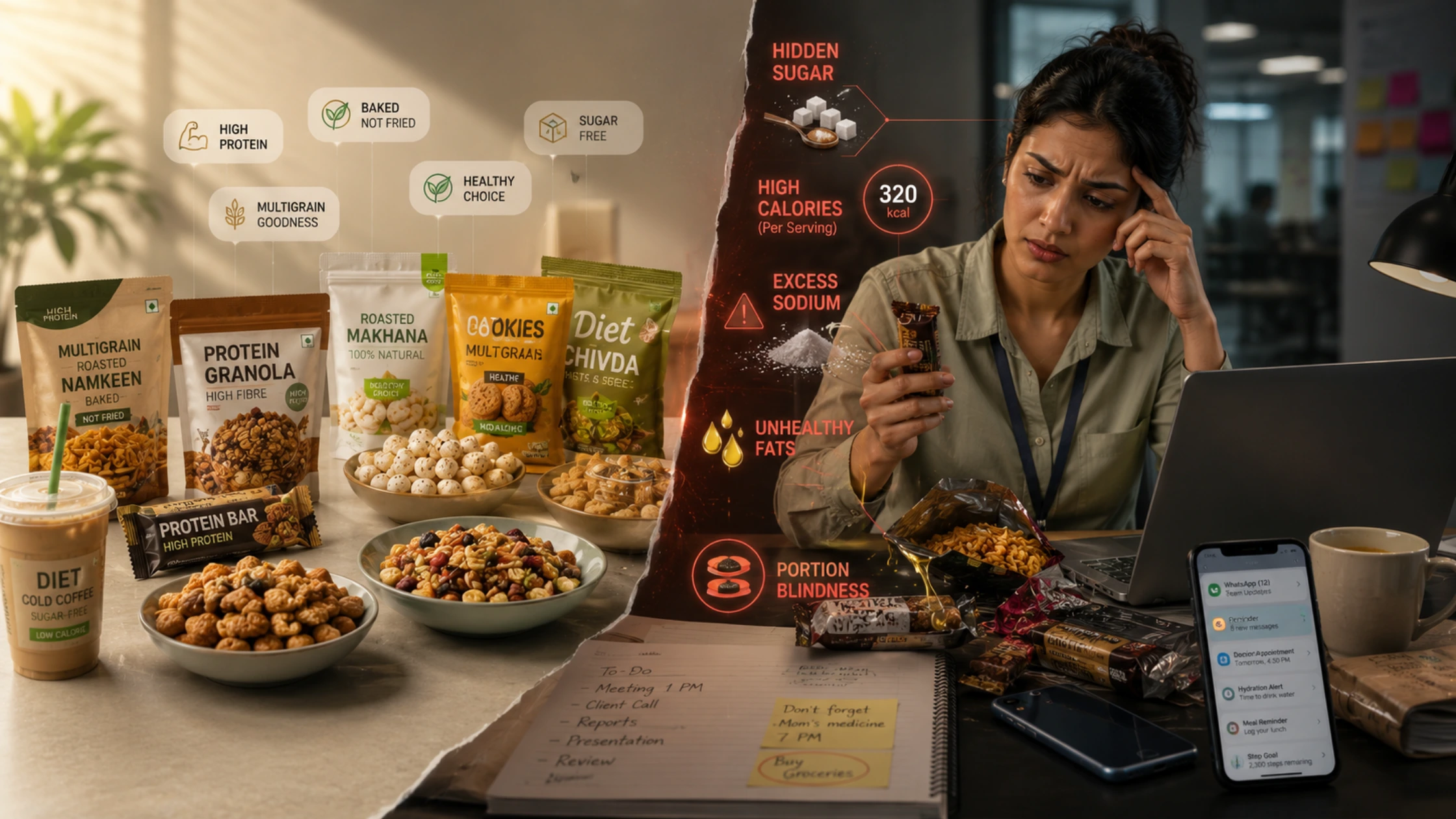
The modern Indian health conversation has changed dramatically over the last few years.
People today are more aware of:
- calories
- protein
- sugar
- packaged foods
- clean eating
- fitness goals
But despite growing awareness, many Indians still struggle with:
- weight gain
- inconsistent eating habits
- hidden snacking calories
- energy crashes
- overeating without realizing it
This is where the healthy Indian snacks truth becomes important.
Many foods marketed as “healthy” are not necessarily unhealthy, but they are often misunderstood.
The issue is not always the snack itself.
The issue is:
- quantity
- frequency
- hidden ingredients
- portion blindness
- emotional eating
- perception versus reality
This becomes even more relevant for:
- office workers
- busy professionals
- gym members
- students
- parents
- people trying to follow a healthy lifestyle for busy Indians
A handful of granola can quietly become 400 calories.
“Healthy” namkeen can become a daily overeating habit.
Protein bars can sometimes contain more sugar than expected.
Many people trying to improve their healthy eating India habits unknowingly consume large amounts of:
- oils
- sodium
- sugar
- refined carbs
- ultra-processed ingredients
through snacks they assume are healthy.
The good news is that this does not mean Indian snacks are bad.
In fact, many traditional Indian food and health combinations can work very well when understood correctly.
The real solution is awareness, not restriction.
This is why modern systems focused on:
- meal tracking India
- food visibility
- practical eating awareness
- sustainable eating behavior
are becoming increasingly important for long-term consistency.
Nutrimate approaches this challenge through simple Indian-first tracking designed around real eating behavior instead of extreme dieting. Its India’s #1 whatsapp meal logging feature and Unique Caregiver feature help reduce food confusion by making meal visibility easier for everyday Indian users.
The “Healthy Snack” Illusion
One of the biggest modern nutrition problems is the “health halo” effect.
When food appears healthy, people often consume more of it.
This happens frequently in India with:
- granola
- trail mixes
- baked snacks
- protein bars
- roasted namkeen
- sugar-free snacks
- diet mixtures
- flavored makhana
The label creates a perception of safety.
But perception is not always nutrition reality.
Why “Healthy-Looking” Foods Get Overeaten
Most people naturally become more cautious around:
- samosas
- chips
- pastries
- fried snacks
But they often become less cautious around:
- granola
- oats cookies
- multigrain mixtures
- “protein snacks”
- baked namkeen
because they feel healthier.
This leads to invisible calorie accumulation.
The Real Issue Is Frequency
A single protein bar occasionally is not a problem.
But:
- daily overeating
- emotional snacking
- multiple snack sessions
- mindless office eating
can significantly affect:
- weight management
- energy levels
- metabolic health
especially for people following sedentary routines.
Indian Snacking Culture Adds Complexity
Indian routines naturally include:
- chai breaks
- office snacks
- evening hunger
- social eating
- travel eating
- late-night munching
This makes snacking more behavioral than nutritional.
Quick Summary
Many “healthy” snacks are not harmful alone. The real issue is portion size, frequency, and invisible calorie accumulation.
Granola, Protein Bars, Namkeen, Chivda
Understanding context matters more than labeling foods as good or bad.
Let’s break down some common examples.
Granola
Granola is often marketed as:
- high fiber
- healthy breakfast
- weight-loss friendly
But many versions contain:
- added sugar
- honey syrups
- oils
- dried fruits
- calorie-dense nuts
A small bowl can easily exceed 350 to 500 calories.
Protein Bars
The Indian fitness market has exploded with protein bars.
Some are useful for:
- convenience
- travel
- post-workout support
But others contain:
- sugar syrups
- chocolate coatings
- artificial sweeteners
- processed ingredients
This is why blindly trusting “high protein” labels can be misleading.
Namkeen and Chivda
Many Indians assume roasted namkeen or chivda is harmless because it feels lighter than chips.
But:
- portion sizes expand quickly
- sodium content is often high
- oils accumulate silently
Especially during:
- chai time
- office work
- TV watching
people consume far more than intended.
The “Diet Snack” Trap
Many packaged snacks marketed as:
- keto
- baked
- millet-based
- gluten-free
still remain calorie-dense.
Health-focused branding does not automatically mean portion-free eating.
Traditional Indian Snacks Can Be Better
Interestingly, many traditional Indian snacks can sometimes work better than packaged “health foods.”
Examples:
- roasted chana
- peanuts in moderation
- homemade poha chivda
- sprouts
- boiled corn
- fruit with nuts
- curd-based snacks
- homemade makhana
The difference is usually:
- ingredient simplicity
- lower processing
- less marketing illusion
Myth vs Reality
| Myth | Reality |
| Protein bars are always healthy | Many are highly processed |
| Roasted namkeen is calorie-free | Portion size still matters |
| Granola is always weight-loss friendly | Sugar and oil can make it calorie dense |
| “Healthy” labels guarantee nutrition | Ingredient quality varies significantly |
Portion vs Perception
One of the biggest problems in healthy eating India is not food alone.
It is perception.
People underestimate calories when foods appear healthy.
Why Portion Awareness Matters
Foods like:
- nuts
- peanut butter
- granola
- dry fruits
- trail mixes
are nutrient-dense.
But they are also energy-dense.
This means small amounts can contain large calories.
Invisible Eating Happens Fast
Many professionals following an Indian diet for busy professionals lifestyle snack while:
- working
- driving
- attending meetings
- watching screens
This reduces awareness of actual intake.
Portion Distortion in India
Large containers and family-style eating often increase snacking automatically.
Examples:
- open namkeen packets
- office snack jars
- festival sweets
- evening mixtures
The brain tracks visibility poorly during distracted eating.
Why Restriction Usually Fails
Extreme restriction creates:
- cravings
- binge eating
- inconsistency
- emotional guilt
A more sustainable strategy is:
- awareness
- moderation
- portion visibility
- practical balance
This aligns better with sustainable health habits for Indians.
Quick Summary
Most people do not fail because of one unhealthy meal. They struggle because small snack decisions accumulate invisibly across the week.
Why Snacking Gets Misunderstood
Snacking itself is not the problem.
Poor snacking systems are.
Indian Work Culture Encourages Random Eating
Modern Indian work routines often involve:
- long commutes
- irregular lunch timings
- stress eating
- late dinners
- frequent chai breaks
This creates unpredictable hunger cycles.
Emotional Eating Is Common
Many people snack because of:
- boredom
- fatigue
- stress
- social situations
- screen time
not true hunger.
“Healthy” Marketing Confuses Consumers
Words like:
- natural
- organic
- baked
- multigrain
- protein-rich
often create false assumptions.
Consumers stop evaluating:
- portions
- sugar
- sodium
- ingredient quality
carefully.
Fitness Culture Sometimes Oversimplifies Food
Online fitness advice frequently promotes:
- unrealistic meal prep
- strict clean eating
- extreme tracking
which becomes difficult for everyday Indian lifestyles.
This is one reason why staying healthy is hard for many working professionals.
The Real Goal Is Consistency
Long-term health depends more on:
- repeatable habits
- sustainable eating
- balanced portions
- awareness
than perfect eating.
Practical Insight
A sustainable snack strategy is more effective than temporary “clean eating” phases.
Better Everyday Alternatives
Healthy snacking becomes easier when the focus shifts from perfection to practicality.
Better Indian Snack Options
Examples include:
- roasted chana
- boiled peanuts
- fruit with curd
- homemade bhel
- makhana with controlled seasoning
- sprouts chaat
- paneer cubes
- coconut pieces
- buttermilk
- boiled eggs
These options often improve:
- satiety
- protein intake
- fiber intake
- portion control
Smart Outside Snacking
For people frequently eating outside:
- choose smaller portions
- combine protein with carbs
- avoid liquid calories
- limit mindless chai snacks
The Chai-Snack Cycle
One of the biggest invisible calorie patterns in India is:
chai + biscuits + namkeen repeated multiple times daily.
Individually, it feels harmless.
Collectively, it significantly affects:
- weight
- blood sugar
- hunger regulation
Practical Rules That Actually Work
Instead of strict dieting:
- eat slower
- use smaller bowls
- avoid eating from packets
- pair snacks with protein
- reduce distracted eating
This supports a more realistic Indian diet without dieting approach.
Food Tracking Without Obsession
Many people struggle with complicated calorie counting.
Simple visibility often works better.
Tools focused on:
- simple meal tracking for Indian food
- food tracking without calorie counting
- low-friction logging
can improve awareness without creating stress.
Nutrimate’s Indian-first approach simplifies this process through WhatsApp-based meal visibility designed for real Indian eating behavior.
Quick Summary
Healthy snacking is not about avoiding snacks. It is about reducing invisible overeating and improving awareness.
Smart Snacking Framework
A sustainable snack framework should feel practical, not restrictive.
1. Ask Why You’re Eating
Before snacking, ask:
- Am I hungry?
- Am I stressed?
- Am I bored?
- Am I tired?
This alone improves awareness significantly.
2. Prioritize Protein + Fiber
Snacks combining:
- protein
- fiber
- moderate carbs
usually improve satiety.
Examples:
- curd + fruit
- roasted chana
- paneer + vegetables
- nuts in moderation
3. Reduce Liquid Calories
Sweetened coffee, tea, cold coffee, packaged juices, and milkshakes often contribute heavily to hidden intake.
4. Avoid Eating Directly From Packets
Portion visibility improves dramatically when snacks are plated.
5. Keep “Healthy” Foods Accountable Too
Even healthy foods require awareness.
This is the core healthy Indian snacks truth many people miss.
6. Focus on Weekly Patterns
One snack rarely causes problems.
Repeated invisible overeating does.
This is why:
- consistency
- awareness
- repeatable systems
matter more than short-term dieting.
7. Build Sustainable Eating Habits
The goal is not perfect eating.
The goal is maintaining:
- energy
- health
- consistency
- realistic balance
for years.
That is the foundation of a true healthy lifestyle.
Content Direction
People think they’re eating healthy, but calories often add up invisibly.
This is one of the biggest modern nutrition problems in India.
The issue is not Indian food itself.
The issue is:
- processed snacking
- hidden portions
- emotional eating
- lack of awareness
- health marketing confusion
Many traditional Indian eating patterns can still support:
- healthy Indian eating habits
- sustainable nutrition
- balanced routines
when approached practically.
Long-term health rarely comes from:
- extreme restriction
- perfect dieting
- temporary clean eating phases
It usually comes from:
- awareness
- moderation
- repeatable routines
- practical visibility
Technology can support this process best when it reduces friction instead of increasing complexity.
That is why simple systems built around:
- Indian meals
- WhatsApp-based logging
- realistic eating behavior
- low-effort awareness
are becoming increasingly relevant for modern Indian lifestyles.
FAQs
Some protein bars can be useful for convenience and protein intake, especially for travel or post-workout nutrition. However, many also contain added sugars, oils, or processed ingredients. Reading labels and managing portion frequency is important.
Namkeen is not automatically unhealthy, but portion size and frequency matter. Many varieties contain high sodium and oils, and mindless eating during chai breaks can increase calorie intake significantly over time.