 Pradnya Ganorkar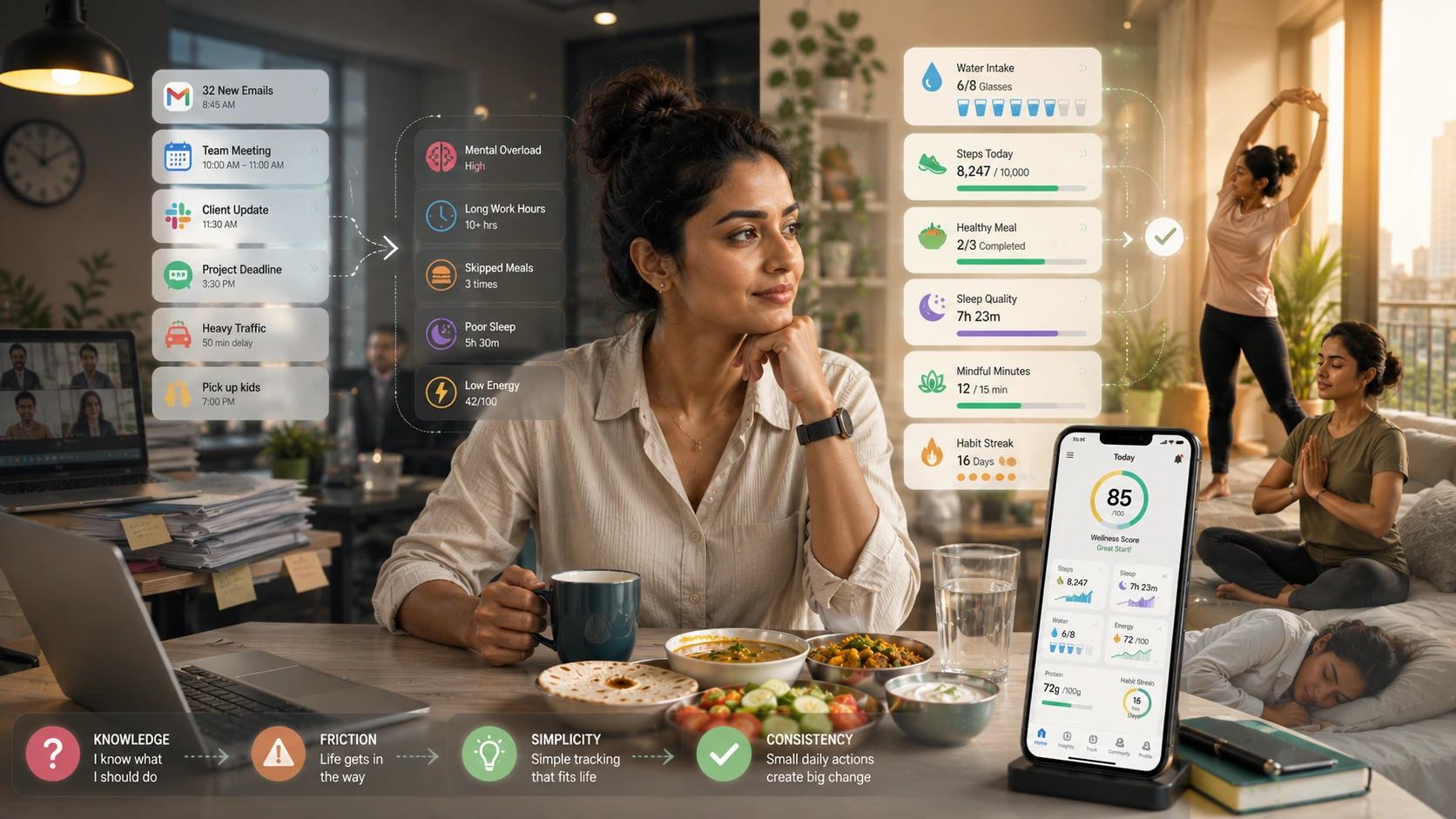
Most people already know the basics of health.
Eat more vegetables. Exercise regularly. Sleep well. Drink enough water. Reduce processed foods.
The problem is not lack of information.
The real challenge is turning knowledge into action.
This is why achieving a healthy lifestyle for busy Indians feels much harder than it sounds.
Across India, working professionals, entrepreneurs, parents, students, and caregivers are surrounded by health advice every day. Yet rising stress, long work hours, irregular schedules, and growing lifestyle disease rates suggest that information alone is not creating healthier lives.
For many people, the challenge is not understanding what healthy living looks like. The challenge is maintaining sustainable health habits within the realities of modern Indian life.
Whether someone works in a corporate office in Mumbai, manages a small business in Pune, commutes through Bengaluru traffic, or balances work and family responsibilities in Delhi, health often becomes something postponed until “things calm down.”
Unfortunately, that moment rarely arrives.
Understanding why this happens is the first step toward building a system that actually works.
The Knowledge-Action Gap
One of the biggest reasons people struggle with health is the gap between knowing and doing.
Most adults understand the importance of:
- Regular movement
- Better sleep
- Balanced nutrition
- Stress management
- Consistent routines
Yet many still struggle to follow through.
Why Knowledge Alone Doesn’t Create Change
Health decisions happen in real-world situations.
A person may understand nutrition perfectly yet order food delivery after a 12-hour workday.
Someone may know exercise improves energy yet skip workouts due to family commitments.
This explains why staying healthy is hard even for highly educated and health-conscious individuals.
The issue is not awareness.
The issue is friction.
Every extra decision creates resistance.
Every complicated plan creates another opportunity to quit.
Why Motivation Is Overrated
Many people believe they need more motivation.
In reality, most people already want better health.
The challenge is creating systems that work when motivation disappears.
This is why experts increasingly focus on sustainable health habits for Indians rather than short-term motivation strategies.
Health becomes easier when healthy actions require less effort than unhealthy alternatives.
Why Time Feels Like the Biggest Obstacle
Ask most working professionals why they struggle with health and the answer is usually the same.
“I don’t have time.”
While time constraints are real, the problem is often more complex.
Modern Work Demands
Today’s busy lifestyles in india involve:
- Long commutes
- Hybrid work schedules
- Extended screen time
- Frequent meetings
- Constant notifications
- Reduced recovery periods
These pressures create mental fatigue.
When mental energy decreases, health decisions become harder.
Decision Fatigue
Health requires choices throughout the day.
Should I walk or drive?
Should I cook or order food?
Should I sleep or finish work?
Should I exercise or rest?
When hundreds of work-related decisions already consume mental energy, health decisions often move lower on the priority list.
Health Becomes Reactive
Many people wait until:
- Weight increases
- Energy drops
- Blood reports worsen
- Stress becomes overwhelming
before taking action.
A proactive approach is much more effective than a reactive one.
This is one reason why how to stay consistent with health has become a more important question than how to lose weight quickly.
Hidden Challenges of Modern Indian Life
Health advice often ignores the realities of everyday Indian living.
Family-Centered Food Culture
Food is deeply connected to relationships.
Family gatherings, festivals, celebrations, office parties, and social events often revolve around meals.
As a result, many people mistakenly believe they must choose between enjoying food and staying healthy.
The truth is that an Indian diet without dieting is entirely possible.
Health does not require avoiding traditional foods.
It requires understanding portions, frequency, and overall patterns.
Nutrition Confusion
Many Indians remain uncertain about topics such as:
- protein in average indian meal
- protein for indian vegetarians
- The roti rice weight gain myth
- Understanding calories in namkeen
- Estimating 100 gram namkeen calories
- Managing snacks without guilt
These questions create confusion and often lead people toward extreme diets that eventually fail.
Stress and Sleep
Poor sleep affects:
- Hunger signals
- Cravings
- Energy levels
- Decision-making
- Recovery
Many people focus exclusively on food while ignoring sleep quality.
Without adequate recovery, maintaining a healthy lifestyle becomes significantly harder.
Small Habits That Fit Busy Schedules
The solution is not doing more.
The solution is making health easier.
Start Smaller Than You Think
Instead of aiming for 90-minute workouts, start with:
- 10-minute walks
- 5-minute mobility routines
- One balanced meal daily
- Earlier sleep by 15 minutes
Small wins create momentum.
Focus on Consistency
Many people quit because they expect perfection.
A better approach is following health habits most of the time.
Examples include:
- Walking after lunch
- Adding protein to breakfast
- Carrying a water bottle
- Limiting mindless snacking
These are examples of simple health habits for working professionals that fit realistic schedules.
Build Around Existing Routines
Attach new habits to existing behaviors.
For example:
- Stretch while waiting for tea
- Walk during phone calls
- Drink water before meals
- Take stairs for one floor
These small adjustments create meaningful results over time.
Building Health Around Your Routine
Many people try to build life around health.
A more practical approach is building health around life.
Design for Your Schedule
Health systems should fit your routine.
A parent with young children needs a different approach than a college student.
An entrepreneur needs a different strategy than a corporate employee.
There is no universal plan.
Reduce Tracking Complexity
Many people abandon health apps because logging becomes overwhelming.
Manual calorie counting often feels like another full-time job.
This is where low-effort systems become valuable.
Nutrimate approaches health tracking differently through AI-powered Indian meal recognition and India’s #1 whatsapp meal logging feature and Unique Caregiver feature, allowing users to build awareness without creating additional complexity.
The goal is not perfection.
The goal is consistency.
Focus on Awareness
Tracking works best when it increases awareness.
For example:
- How often are vegetables consumed?
- Is protein present in meals?
- Are sleep patterns consistent?
- Are stress levels increasing?
Awareness helps people make better decisions without rigid restrictions.
Practical Examples
Example 1: Corporate Professional
Challenge:
- 10-hour workday
- Long commute
- Frequent dining out
Practical solution:
- Protein-rich breakfast
- Walking calls
- Simple lunch tracking
- Consistent sleep schedule
Example 2: Working Parent
Challenge:
- Family responsibilities
- Limited personal time
Practical solution:
- Shared healthy meals
- Family evening walks
- Weekend meal preparation
- Simple health monitoring
This is where tools such as a family health tracking app or health tracking for parents can help simplify oversight without adding burden.
Example 3: Small Business Owner
Challenge:
- Unpredictable schedule
- High stress
Practical solution:
- Fixed meal timings
- Short daily movement sessions
- Stress management habits
- Regular hydration tracking
The objective is not achieving perfection.
The objective is creating a system that survives real life.
FAQs
Busy people stay healthy by focusing on consistency rather than perfection. Small daily habits such as regular walking, balanced meals, adequate sleep, hydration, and simple tracking systems are often more effective than extreme diets or intensive workout programs.
Yes. Most sustainable improvements come from using existing routines more effectively rather than finding extra hours in the day. Small habit changes, simplified nutrition decisions, and low-friction tracking systems can create meaningful health improvements without requiring significant additional time.