 Pradnya Ganorkar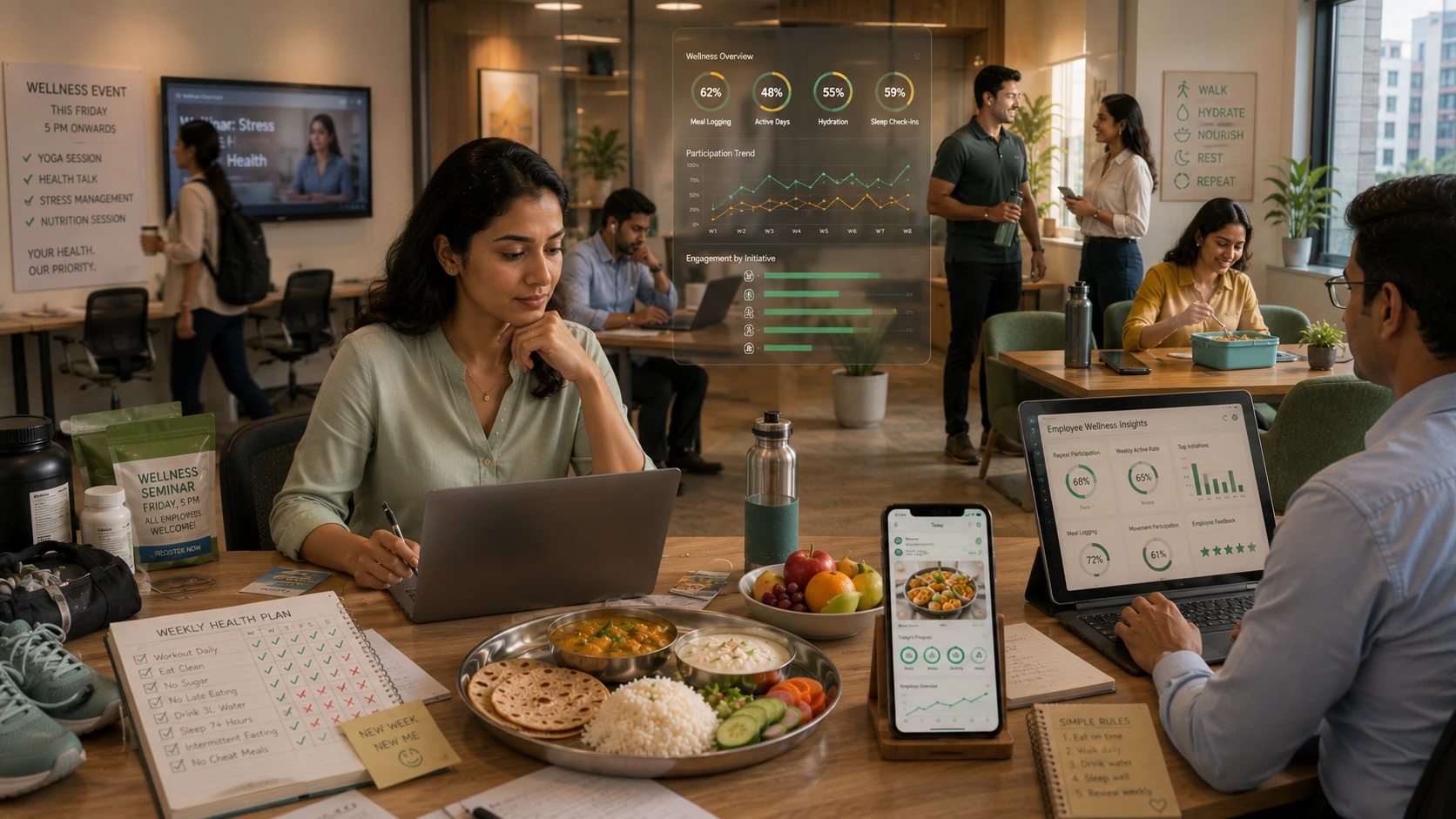
Many Indian organizations invest in health camps, webinars, fitness challenges, and annual screenings, yet participation often declines after the initial launch.
The problem is rarely a lack of good intentions. A successful employee wellness program India strategy must fit into employees’ daily routines and make healthy behaviour easier to repeat. The right corporate wellness tools India approach should support ongoing employee engagement, practical health awareness, and measurable improvement instead of adding another corporate initiative employees are expected to remember.
For HR managers, CHROs, founders, and people managers, the strategic question is simple: how do you build a workplace wellness program that employees actually use?
Why Employees Ignore Most Wellness Programs
Employees rarely ignore wellness because they do not care about their health.
They ignore programs when participation requires too much time, feels disconnected from everyday needs, or becomes another task added to an already demanding workday.
Consider common Indian workplace realities.
An IT employee managing deadlines may not attend a scheduled wellness webinar.
A manufacturing worker may have limited access to programs designed primarily for desk-based employees.
A startup employee working unpredictable hours may struggle with fixed fitness challenges.
A corporate employee managing work, commuting, children, and ageing parents may want better health but have little capacity for another complicated system.
The central problem is friction.
Successful corporate wellness initiatives reduce the effort required to participate. They connect health awareness with existing routines rather than expecting employees to create entirely new ones.
Low participation can also occur when programs feel generic. The same advice is sent to every employee regardless of lifestyle, work environment, health priorities, or readiness to change.
Effective workplace wellness engagement tools should help organizations understand participation patterns and support employees without creating unnecessary pressure.
The goal is not maximum registrations.
The goal is sustained participation that gradually supports behavior change.
The Difference Between Wellness Activities and Wellness Systems
Wellness activities can create awareness, but awareness alone rarely creates lasting habits.
A webinar may teach employees about nutrition. A health camp may identify potential risks. A fitness challenge may encourage temporary activity.
A wellness system connects these activities into an ongoing process.
| Activities | Wellness Systems |
| Annual health camp | Continuous health monitoring |
| One-time webinar | Weekly employee engagement |
| Generic emails | Personalized support |
| Participation | Behavior change |
A practical corporate wellness strategy should not eliminate activities. It should connect them to ongoing support.
For example, an Indian IT company may organize an annual health screening. Instead of ending the initiative after employees receive reports, the organization can follow with simple nutrition awareness, movement challenges, sleep education, and voluntary habit tracking.
Similarly, a manufacturing organization may combine health risk assessments with shift-friendly wellness communication and realistic activity goals.
The difference is continuity.
Activities create moments of attention.
Systems create repeated opportunities for healthier decisions.
Organizations evaluating a digital wellness platform India solution should therefore ask whether it supports ongoing participation, practical health awareness, and useful health analytics, rather than simply offering more features.
The 6 Pillars of an Effective Employee Wellness Program
Leadership Support
Employees notice whether leaders genuinely participate in wellness initiatives.
If managers regularly schedule meetings during wellness activities, celebrate overwork, or discourage breaks, employees receive a clear message that health is secondary to productivity.
Leadership support does not require executives to become fitness influencers.
It requires policies and behaviour that make participation realistic.
Managers can protect reasonable lunch breaks, encourage movement, support flexible participation, and communicate that employee health is part of long-term organizational performance.
This creates a stronger wellness culture.
Simplicity
Complex programs create low participation.
Employees should quickly understand what they need to do, why it matters, and how much time participation requires.
A practical employee wellbeing program might begin with three behaviours:
Move regularly.
Improve meal awareness.
Build a consistent sleep routine.
Starting small reduces resistance and allows organizations to learn what employees actually use.
Daily Engagement
Annual events cannot compete with daily habits.
The strongest programs create lightweight, recurring opportunities for participation.
Examples include short walking challenges, hydration reminders, simple nutrition education, weekly habit reviews, and voluntary health check-ins.
The objective is not constant messaging. Excessive notifications can create disengagement.
The objective is useful, consistent workplace wellness engagement.
Nutrition Awareness
Food choices influence employee energy, concentration, and long-term health, yet workplace wellness programs often reduce nutrition education to generic diet charts.
Indian workplaces need culturally relevant guidance.
Employees may eat home-cooked dal and rice, office canteen meals, tiffins, street food, restaurant lunches, regional dishes, or packaged snacks during late shifts.
Practical employee nutrition initiatives should help people understand their normal eating patterns rather than forcing unrealistic food rules.
Simple nutrition tracking can improve awareness of meal timing, food variety, hydration, and recurring habits without making employees obsess over every calorie.
Health Tracking
Organizations cannot improve what they do not understand.
However, employee health tracking should be voluntary, privacy-conscious, clearly communicated, and focused on supportive insights rather than surveillance.
Appropriate employee health tracking solutions can help organizations understand participation trends, recurring health behaviours, and opportunities for better support.
After continuous engagement has been established, platforms such as Nutrimate can provide an example of how simple meal awareness, habit visibility, and Indian-first health tracking can fit into everyday routines.
Its positioning around India’s #1 whatsapp meal logging feature and Unique Caregiver feature reflects the broader principle that health tools should reduce friction for individuals and families rather than make wellness management more complicated.
For fitness businesses working within the broader wellness ecosystem, FitVia complements Nutrimate’s consumer platform by supporting gym owners, fitness trainers, influencers, and dietitians with branded member experiences, coaching visibility, nutrition tracking, engagement tools, and progress reporting.
Measurement
Participation alone is not success.
An organization can register 2,000 employees for a wellness challenge and still create little meaningful change.
HR teams should measure outcomes such as:
Participation over time.
Repeat engagement.
Completion of wellness activities.
Adoption of healthier routines.
Employee feedback.
Changes in relevant aggregate health indicators where ethically and legally appropriate.
Utilization of preventive health resources.
A clear measurement process helps organizations understand wellness ROI and improve their corporate health strategy.
How to Launch a Wellness Program Employees Will Actually Join
A successful launch should follow a simple framework:
Understand Employees → Set Goals → Start Small → Track Participation → Improve
Understand Employees
Begin with listening.
Use surveys, focus groups, manager feedback, and existing workplace data to identify real barriers.
IT employees may struggle with sitting and irregular meals.
Manufacturing employees may face shift-related sleep challenges.
Startup teams may report stress and unpredictable schedules.
Corporate offices may see low participation because employees feel existing programs are repetitive or irrelevant.
Set Goals
Define what the program should improve.
Avoid broad objectives such as “make employees healthier.”
Choose measurable priorities such as increasing repeat participation, improving health awareness, supporting regular movement, encouraging preventive screening, or improving engagement with wellness resources.
Start Small
Do not launch ten initiatives simultaneously.
Begin with one or two high-priority behaviours.
For example, a 30-day program might focus on daily movement and meal awareness.
This makes communication clearer and reduces participation fatigue.
Track Participation
Measure more than registrations.
Use appropriate health tracking tools and participation metrics to understand whether employees return, complete activities, and continue engaging over time.
An employee health dashboard can help decision-makers view aggregate trends while maintaining clear privacy boundaries.
Improve
Review the results.
Which employee groups participated?
Where did engagement decline?
Which activities generated repeat participation?
What feedback did employees provide?
Continuous improvement turns isolated wellness initiatives into a sustainable organizational system.
Mistakes HR Teams Should Avoid
The first mistake is launching programs without understanding employees.
A generic initiative designed for office workers may not work for manufacturing teams, shift employees, or geographically distributed organizations.
The second mistake is measuring registrations instead of sustained participation.
High launch numbers can create a false sense of success.
The third mistake is making participation complicated.
If employees need to download several applications, complete long assessments, or follow confusing processes, engagement will decline.
The fourth mistake is relying only on motivation.
Employees have demanding jobs and personal responsibilities. Effective programs build healthier actions into normal routines.
The fifth mistake is ignoring privacy.
Employees should understand what information is collected, why it is collected, who can access it, and how it will be used.
The sixth mistake is failing to improve the program.
A successful workplace wellness program should evolve based on participation trends, employee feedback, and organizational priorities.
Employee Wellness Planning Checklist
☐ Understand the real health and participation barriers employees face.
☐ Define specific objectives for the employee wellness program India strategy.
☐ Gain visible leadership and manager support.
☐ Start with a small number of relevant health behaviours.
☐ Make participation simple across different employee groups.
☐ Provide culturally relevant nutrition and health education.
☐ Build continuous employee engagement instead of relying only on annual events.
☐ Use suitable corporate wellness tools India solutions only after defining program goals.
☐ Protect employee privacy and communicate data practices clearly.
☐ Measure repeat participation, not only registrations.
☐ Use appropriate preventive health monitoring tools when relevant to program objectives.
☐ Review employee feedback and participation trends regularly.
☐ Improve the program based on evidence.
☐ Build a long-term wellbeing culture rather than a calendar of disconnected activities.
FAQs
Companies build successful programs by understanding employee needs, setting measurable goals, starting with simple health behaviours, creating continuous engagement, protecting privacy, tracking participation, and improving initiatives based on feedback. The best corporate wellness strategy focuses on sustainable behaviour change rather than one-time events.
Employees often avoid wellness programs because initiatives feel generic, inconvenient, time-consuming, irrelevant, or disconnected from everyday work realities. Improving simplicity, accessibility, communication, and personal relevance can strengthen wellness participation.
An effective program combines leadership support, simplicity, continuous engagement, practical health awareness, appropriate measurement, and ongoing improvement. A strong employee wellbeing program should fit naturally into employees’ routines and help them build healthier behaviours over time.
HR should first understand employee needs, define specific objectives, choose one or two priority behaviours, launch a manageable pilot, measure participation, collect feedback, and improve the program before expanding. Selecting corporate wellness tools India should come after the organization has defined the problems the technology needs to solve.
Reference:
- The World Health Organization’s Healthy Workplace Framework provides a structured model for creating sustainable workplace health programs based on continuous improvement and worker participation.
- The CDC Workplace Health Model outlines a coordinated approach to workplace health promotion built around assessment, planning, implementation, and evaluation.
CDC Workplace Health Model