 Pradnya Ganorkar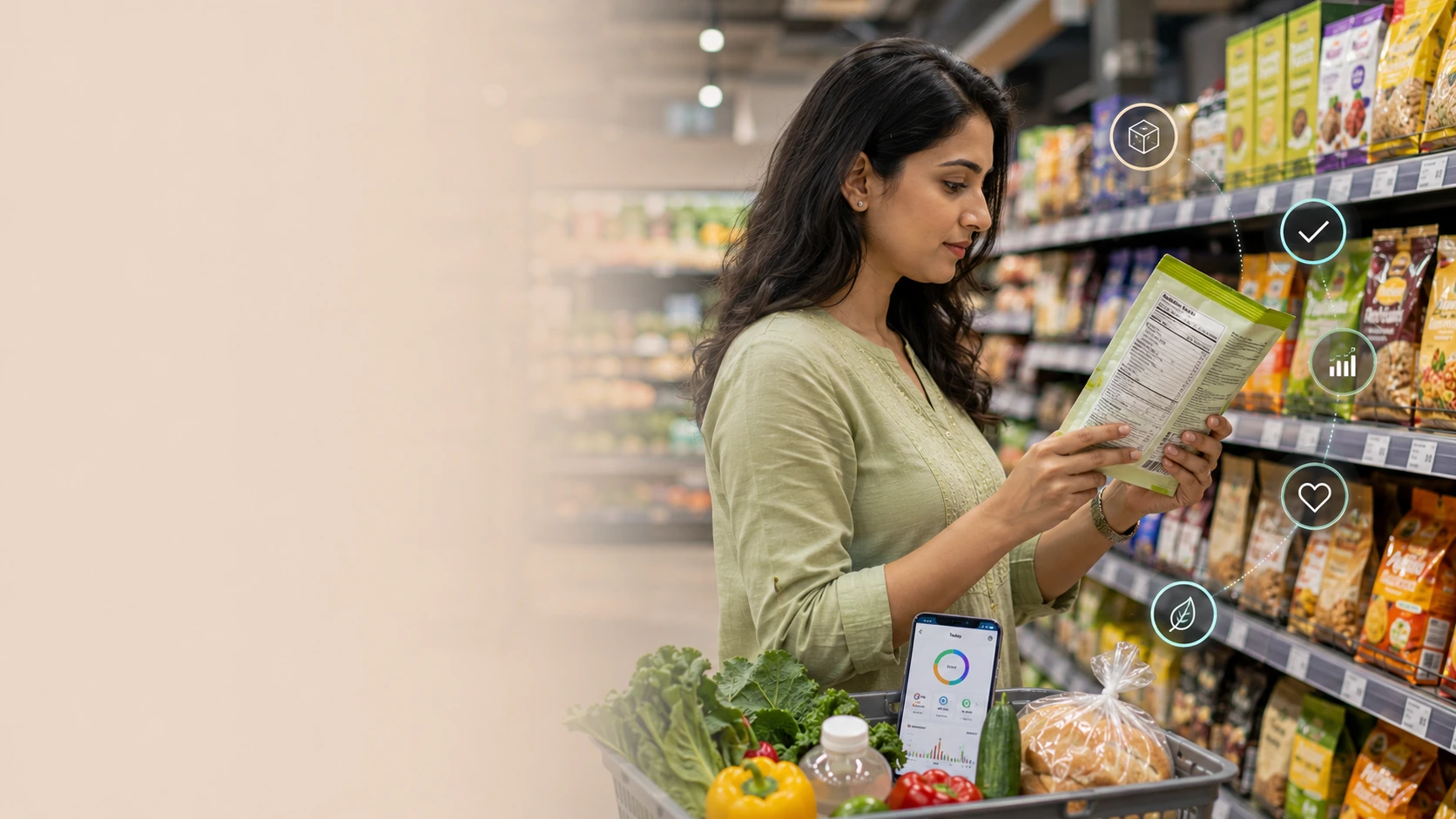
Walk through any supermarket in India and you will see hundreds of products claiming to be healthy.
“High Protein.”
“Low Fat.”
“No Added Sugar.”
“Multigrain.”
“Healthy Choice.”
For many consumers, these labels create confidence. Unfortunately, they can also create confusion.
A product may look healthy on the front of the package but tell a very different story on the back.
This is why understanding how to read nutrition labels in india has become an essential skill for anyone interested in better nutrition, weight management, fitness, or long-term wellness.
Many people trying to build healthy Indian eating habits focus on calories alone. Others only look at protein. Some never read labels at all.
The reality is that nutrition labels provide valuable information, but only when you know what to look for.
Learning how to interpret food labels India correctly can help you make smarter choices, avoid misleading marketing claims, and improve awareness around what you actually eat.
Whether your goal is weight loss, muscle gain, better energy, or simply maintaining a healthy lifestyle, understanding labels is one of the simplest skills you can develop.
Why Most Indians Misread Nutrition Labels
Most people do not intentionally ignore nutrition information.
The problem is that labels can appear complicated.
Numbers, percentages, ingredients, serving sizes, and nutrient values often create information overload.
The Front of the Pack Problem
Food companies know that consumers make quick decisions.
That is why marketing messages are placed prominently on the front.
Examples include:
- High protein
- Baked not fried
- Low sugar
- Multigrain
- Source of fibre
These statements may be technically correct but rarely tell the full story.
A snack can be high in protein while also being high in sodium.
A multigrain product can still contain refined flour as its primary ingredient.
A low-fat snack may contain added sugars.
The Health Halo Effect
One common mistake is assuming a product is healthy because it contains a positive claim.
For example:
- Granola
- Protein bars
- Flavoured yogurt
- Breakfast cereals
- Diet snacks
Many of these products contain significant amounts of sugar, sodium, or calories despite healthy branding.
This is one reason why diets fail long term.
People believe they are making healthy choices while unknowingly consuming more calories than expected.
Understanding Context Matters
Nutrition labels should support awareness, not fear.
A single food does not determine health outcomes.
Consistent patterns matter more.
That is why understanding Indian food and health requires looking at the entire diet rather than individual products.
Serving Size vs Actual Consumption
One of the biggest causes of confusion is serving size.
What Is Serving Size?
Serving size is the quantity used by manufacturers to calculate nutrient values.
The problem is that consumers rarely eat exactly one serving.
Example: Potato Chips
Imagine a packet states:
- Serving size: 30g
- Calories: 160
Many people assume the entire packet contains 160 calories.
However, if the packet contains 90g, the actual calorie intake becomes approximately 480 calories.
Example: Namkeen
This issue is especially common with namkeen.
Consumers searching for calories in namkeen often discover a major difference between label values and actual consumption.
| Item | Label Serving Size | Calories Per Serving | Calories If Entire Pack Consumed |
| Bhujia | 30g | 170 | 510 |
| Sev | 30g | 180 | 540 |
| Mixture | 30g | 165 | 495 |
| Chivda | 30g | 140 | 420 |
This explains why 100 gm namkeen calories can appear surprisingly high compared to expected intake.
Why Portion Awareness Matters
Many people underestimate:
- 1 katori namkeen calories
- 100 gram namkeen calories
- calories in 100 gm namkeen
The issue is often portion size rather than the food itself.
Understanding serving sizes creates more awareness without requiring restrictive dieting.
Sugar, Fat and Sodium Explained
Many consumers focus only on calories.
This approach misses important nutritional information.
Sugar
Sugar contributes sweetness but can also increase total calorie intake.
Look for:
- Total sugars
- Added sugars (if listed)
Common hidden sugar names include:
- Sucrose
- Glucose syrup
- Fructose
- Maltose
- Corn syrup
Fat
Fat is not inherently unhealthy.
The type of fat matters.
Look for:
- Total fat
- Saturated fat
- Trans fat
Trans fats should ideally be avoided.
Sodium
Excess sodium intake may contribute to elevated blood pressure in susceptible individuals.
Many packaged foods contain surprisingly high sodium levels.
Examples include:
- Instant noodles
- Namkeen
- Packaged soups
- Ready-to-eat snacks
Quick Comparison
| Nutrient | Why It Matters |
| Protein | Supports muscle maintenance and recovery |
| Fat | Supports hormones and satiety |
| Carbohydrates | Primary energy source |
| Sugar | Excess intake may increase calorie consumption |
| Sodium | High intake may impact blood pressure |
| Fibre | Supports digestion and fullness |
For people focused on protein for indian vegetarians, protein values should be reviewed alongside total calories and serving size.
Ingredients That Matter Most
The ingredient list often reveals more than the nutrition table.
Ingredients Are Listed By Weight
The first ingredients generally make up the largest portion of the product.
For example:
If sugar appears among the first ingredients, the product likely contains a significant amount.
Look for Simple Ingredient Lists
Generally, fewer ingredients indicate less processing.
Examples:
Good:
- Oats
- Roasted chana
- Peanut butter (peanuts, salt)
More processed:
- Multiple syrups
- Artificial flavour enhancers
- Several preservatives
Protein Sources Matter
Consumers evaluating packaged food nutrition often focus on total protein.
However, protein quality also matters.
Examples of useful protein sources include:
- Milk solids
- Whey protein
- Soy protein
- Peanuts
- Chickpeas
These may support individuals trying to increase protein in average indian meal intake.
Common Marketing Tricks on Food Packaging
Marketing claims are not necessarily false.
However, they can be misleading when viewed without context.
“Multigrain”
Many products contain multiple grains but still rely heavily on refined flour.
Always verify the ingredient list.
“Low Fat”
Removing fat sometimes increases sugar content.
Always review both values.
“High Protein”
A product may be high in protein but also extremely high in calories.
“No Added Sugar”
This does not necessarily mean sugar-free.
Natural sugars may still be present.
“Baked”
Baked products can still be calorie dense.
Always verify total calories.
Real Example
A baked snack may contain:
- Similar calories
- Similar sodium
- Slightly lower fat
compared with a fried version.
The label provides the real answer.
The marketing message does not.
Nutrition Label Reading Checklist
If nutrition labels feel overwhelming, use this simple framework.
Step 1: Check Serving Size
Always start here.
Everything else depends on serving size.
Step 2: Look at Calories
Assess calorie density relative to the portion you will actually consume.
Step 3: Review Protein
Protein supports satiety and muscle maintenance.
This is particularly useful for those following an Indian diet or seeking better protein balance.
Step 4: Review Sugar
Check whether sugar levels align with your goals.
Step 5: Review Sodium
High sodium foods can add up quickly throughout the day.
Step 6: Read Ingredients
Ingredients often reveal more than marketing claims.
Step 7: Consider Context
Ask:
- Does this fit my daily intake?
- Will this help my goals?
- Is it something I consume frequently?
Making Nutrition Awareness Easier
Many people know what they should eat but struggle with consistency.
Modern tools can simplify awareness without requiring manual calorie counting.
For example, Nutrimate combines AI-powered nutrition support with Indian food intelligence, helping users understand meals in a practical way. Through India’s #1 whatsapp meal logging feature and Unique Caregiver feature, users can build awareness around eating habits without turning nutrition into a full-time task.
This supports food tracking without calorie counting, making nutrition more approachable for people managing busy lifestyles in india.
Whether you use a meal tracker app, best food tracking app, nutrition app india, or an indian calorie counter app, the goal is not perfection.
The goal is awareness.
Because once you understand what is on the label, healthier decisions become significantly easier.
Reference
- Food Safety and Standards Authority of India (FSSAI)
https://www.fssai.gov.in/ - National Institute of Nutrition (ICMR-NIN)
https://www.nin.res.in/
FAQs
Start by checking serving size, calories, protein, sugar, fat, sodium, and ingredient lists. Always compare these values to the amount you actually consume rather than relying only on the listed serving size.
The serving size should always be checked first because all nutrition values are based on that quantity. Misunderstanding serving size is one of the most common causes of nutrition label confusion.
Food labels in India must follow FSSAI regulations and are generally reliable. However, values may vary slightly due to manufacturing processes. Labels should be used as a practical guide rather than an exact measurement.