 Pradnya Ganorkar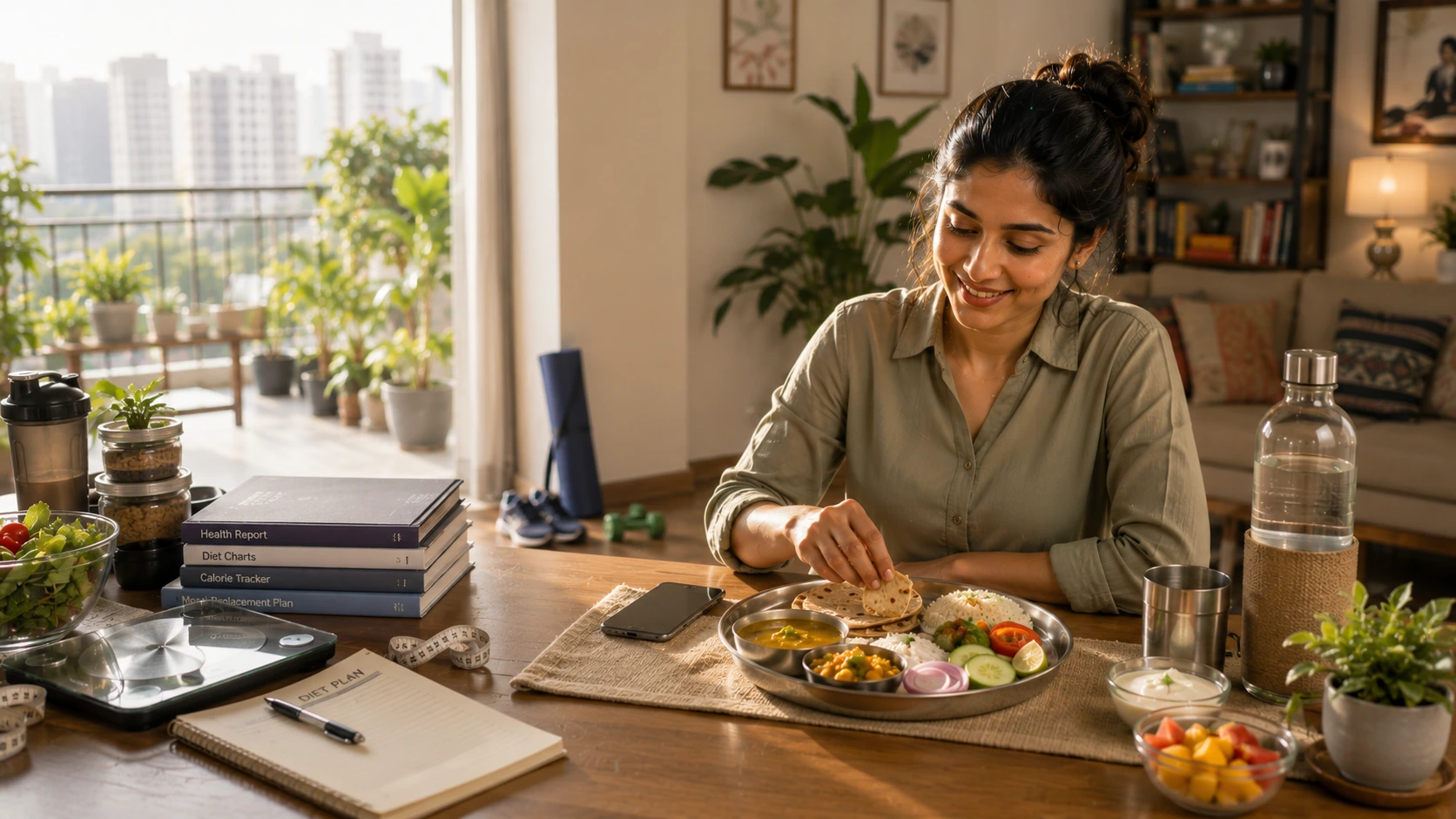
If eating healthy feels like constantly avoiding rice, skipping family meals, counting every calorie, or starting a new diet every Monday, the problem may not be your food. The problem may be the approach.
Learning how to stay healthy without dieting means building a healthy lifestyle around realistic routines, everyday Indian food, and habits you can continue for years. Instead of chasing temporary restrictions, the goal is to develop sustainable health habits that improve your meals, movement, sleep, and overall wellbeing.
For Indian families, busy professionals, parents, and students, this approach is often more practical than following complicated diet rules that do not fit everyday life.
Why Dieting Feels Unsustainable
Most diets begin with motivation.
You remove sweets, stop eating rice, avoid restaurant meals, download a nutrition tracking app, and promise to follow the plan perfectly.
For a few weeks, everything feels manageable.
Then work becomes stressful. You attend a wedding. Travel disrupts your routine. Your family prepares your favourite meal. Eventually, the diet becomes difficult to maintain.
This is one reason why diets fail long term. Many plans depend on continuous restriction rather than realistic behavior change.
A restrictive diet often creates a predictable cycle:
Restriction → Cravings → Overeating → Guilt → Restarting the diet
This cycle makes food stressful.
A more practical approach focuses on healthy eating habits that remain possible during office deadlines, family celebrations, travel, festivals, and weekends.
The objective is not perfect eating. It is creating a sustainable healthy routine that can survive real life.
Indian Food Isn’t the Problem
Rice is not automatically unhealthy.
Roti is not automatically responsible for weight gain.
Eating dosa does not mean you have ruined your diet.
The health impact of Indian food depends on portions, preparation methods, meal composition, frequency, activity levels, and overall eating patterns.
Traditional meals can provide a strong foundation for a balanced diet India approach.
Consider a typical meal containing:
Dal + rice + sabzi + curd.
This combination can provide carbohydrates, protein, fibre, micronutrients, and fermented foods.
The same principle applies to:
Idli with sambar.
Poha with vegetables, peanuts, and curd.
Roti with dal and seasonal sabzi.
Dosa with sambar and a moderate portion of chutney.
Khichdi with vegetables and curd.
These meals can support healthy Indian eating habits when portions and overall meal balance are considered.
Problems often emerge when everyday meals become dominated by oversized portions, frequent fried snacks, sugary drinks, low protein intake, limited vegetables, and continuous mindless eating.
The better question is not simply, is Indian food healthy?
Ask instead:
What does my complete eating pattern look like?
Understanding Indian food and health requires looking beyond individual foods and paying attention to frequency, quantity, preparation, and meal balance.
Five Everyday Habits That Improve Health
You do not need to redesign your entire lifestyle overnight.
A few repeatable health habits can create meaningful improvements over time.
Eat balanced meals
Try to include different food groups rather than depending heavily on one type of food.
A practical Indian plate may include:
- Vegetables or salad.
- Dal, curd, paneer, eggs, fish, chicken, soy, or another protein source.
- Rice, roti, millet, or another carbohydrate source.
- A moderate amount of healthy fats.
This approach supports healthy eating without requiring complicated food rules.
Include protein
Many people focus heavily on calories while overlooking meal composition.
Protein supports muscle maintenance, satiety, recovery, and several important body functions.
Vegetarian Indian households can include dal, beans, chana, rajma, curd, paneer, soy products, milk, and other protein for Indian vegetarians based on individual needs and preferences.
Instead of eliminating carbohydrates, focus on improving overall meal balance.
Stay hydrated
Long meetings, commuting, air-conditioned offices, and busy schedules can make people forget basic hydration.
Keep water accessible and connect drinking water with routines you already follow.
For example:
Drink water after waking up.
Keep a bottle near your workstation.
Drink water with meals.
Rehydrate after physical activity.
Simple environmental cues can make hydration easier to maintain.
Sleep well
A sustainable healthy lifestyle is not built through food alone.
Poor sleep can influence energy, appetite, mood, recovery, and your ability to make consistent decisions.
Try to maintain regular sleeping and waking times, reduce unnecessary screen exposure before bed, and avoid relying on late-night meals as a daily routine.
Stay active
You do not need to spend two hours in the gym every day to support better health.
Walking, strength training, cycling, sports, household activity, and movement breaks can all contribute to an active lifestyle.
For people managing busy lifestyles in India, even short periods of movement throughout the day can make activity more realistic.
Walk during phone calls.
Use stairs when practical.
Take movement breaks between long work sessions.
Schedule workouts like appointments.
Consistency matters more than occasional extreme effort.
A Realistic Day of Healthy Eating
Healthy eating should fit Indian routines, budgets, and food preferences.
Here is one practical example.
Breakfast
Vegetable poha with peanuts and curd.
Or:
Two idlis with sambar and eggs or another suitable protein source.
The objective is to create a satisfying breakfast that provides energy and supports meal balance.
Lunch
Two rotis or an appropriate portion of rice.
Dal or another protein source.
Seasonal sabzi.
Curd and salad when available.
This is a familiar Indian meal that can support an Indian diet without dieting.
Evening Snack
Fruit with curd.
Roasted chana.
Buttermilk with a suitable snack.
Eggs.
A moderate portion of nuts.
Planning simple options can reduce dependence on biscuits, sugary drinks, and frequent fried snacks.
Dinner
Rice or roti in an appropriate portion.
Paneer, dal, fish, chicken, soy, or another protein source.
Cooked vegetables or salad.
Dinner does not need to consist only of soup or salad to be considered healthy.
For an Indian diet for busy professionals, the most sustainable approach is usually improving familiar meals rather than repeatedly trying to follow completely different eating patterns.
Why Awareness Is Better Than Restriction
Restriction tells you what you cannot eat.
Awareness helps you understand what you repeatedly do.
This difference is important for sustainable weight management.
Someone may believe their meals are healthy but overlook:
Frequent evening snacking.
Low protein intake.
Sugary beverages.
Large weekend portions.
Skipping meals followed by overeating.
Poor hydration.
Late-night eating.
Awareness helps identify patterns without labelling foods as good or bad.
This is where simple meal tracking can be useful.
The purpose of tracking does not have to be obsessive calorie counting. Practical food tracking can help you notice meal timing, food variety, portions, hydration, and repeated habits.
For people looking for an easy way to track meals, reducing the effort required to record food can improve consistency.
Nutrimate applies this principle through AI-powered Indian food intelligence and simple health tracking designed around everyday Indian meals and routines. India’s #1 whatsapp meal logging feature and Unique Caregiver feature are intended to reduce friction around daily awareness and make consistent health visibility easier for individuals and families.
The objective is not to make people dependent on tracking forever.
It is to use awareness to support better decisions.
Building Healthy Habits One Step at a Time
Trying to improve everything simultaneously often creates another unsustainable plan.
A better approach is gradual lifestyle change.
Start with one behaviour.
For example:
Week 1: Add a protein source to breakfast.
Week 2: Walk for 20 minutes after dinner.
Week 3: Carry water to work.
Week 4: Track meals consistently enough to identify patterns.
Week 5: Improve one meal that regularly becomes unbalanced.
This approach supports sustainable eating because each improvement becomes part of everyday life before another change is introduced.
If your goal is learning how to stay consistent with health, create routines that still work when motivation is low.
The most effective healthy lifestyle change is rarely the most dramatic one.
It is the one you can repeat.
FAQs
Yes. Learning how to stay healthy without dieting means focusing on balanced meals, regular movement, adequate sleep, hydration, stress management, and sustainable routines instead of repeatedly following restrictive diets.
Yes, Indian food can support a healthy lifestyle. Meals containing vegetables, pulses, whole grains, dairy, eggs, fish, meat, or other nutrient-rich foods can provide balanced nutrition. Portion sizes, cooking methods, meal composition, and overall eating patterns matter.
Rice can be included in a balanced eating pattern based on individual health needs, portion sizes, activity levels, and overall meal composition. Combining rice with vegetables and suitable protein sources can create a more balanced meal.
Start with simple healthy eating habits. Improve meal balance, include protein and vegetables, drink enough water, stay active, sleep consistently, and pay attention to your everyday food patterns. Small habits that can be maintained are usually more useful than temporary extreme changes.