 Pradnya Ganorkar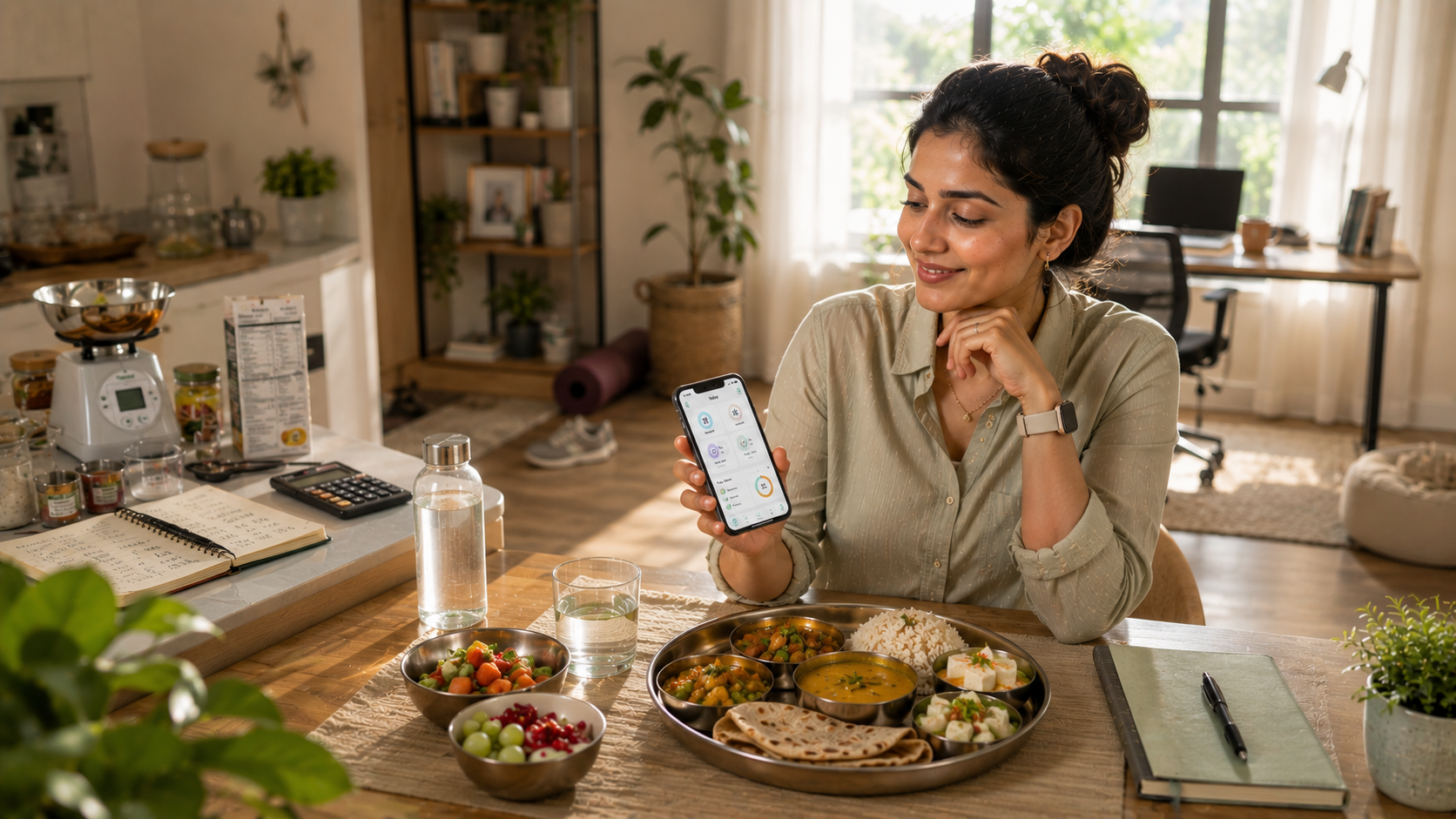
For many women, starting a healthier lifestyle often begins with one question: should you track your meals or count every calorie? While both methods aim to improve health, they take very different approaches. For most women balancing careers, family responsibilities, and busy lifestyles in india, sustainability matters far more than perfection.
Meal tracking for women focuses on understanding eating patterns, building healthy habits, and creating long-term awareness. Calorie counting, on the other hand, is centred on numerical intake. While numbers can sometimes be useful, they are not the only measure of progress. Improving women’s nutrition, making better food choices, and developing a healthy lifestyle often depend more on consistency than strict calculations.
Understanding the difference can help you choose an approach that supports your health goals without adding unnecessary stress.
Why Many Women Stop Tracking Their Food
Many women begin their wellness journey with enthusiasm.
They download a food diary, log every meal, calculate portions, and search for values such as calories in namkeen, 100 gm namkeen calories, or 1 katori namkeen calories. For a few days, everything feels manageable.
Then everyday life takes over.
Office meetings, commuting, family responsibilities, social gatherings, and homemade meals make detailed tracking difficult to maintain. Measuring every ingredient in dal, sabzi, or regional recipes is rarely practical.
This is one reason why diets fail long term.
The challenge is usually not motivation. It is the amount of effort required to maintain perfect records every single day.
For many women, the goal is not to create a spreadsheet of calories. The goal is to improve healthy eating for women, develop healthy habits for women, and understand how food affects energy levels, mood, and overall hormonal health.
Simple awareness is often easier to maintain than detailed calculations.
Instead of asking:
“How many calories did I eat today?”
It is often more helpful to ask:
- Did I eat balanced meals?
- Did I include enough vegetables and protein for indian vegetarians?
- Did I skip meals because of work?
- Was I eating because I was hungry or stressed?
These questions encourage nutrition awareness, support mindful eating, and promote healthy lifestyle for women without creating unnecessary pressure.
Meal Tracking vs Calorie Counting
Both approaches can support healthier choices, but they are designed for different purposes.
| Meal Tracking | Calorie Counting |
| Focuses on eating patterns | Focuses on numbers |
| Simple | Time-consuming |
| Habit-building | Restrictive for some users |
| Long-term | Often difficult to sustain |
For most women, especially those eating homemade Indian diet meals, food tracking without obsessing over calories is easier to continue over the long term.
Rather than encouraging perfection, meal tracking for women helps build awareness around eating habits, meal timing, and food quality. This creates lasting behavior change and supports better women’s health tracking over time.
Many women also prefer platforms that reduce manual effort while encouraging healthier routines. Nutrimate follows this approach by helping users focus on meal awareness instead of obsessive calorie calculations through AI-powered, Indian-first tracking with India’s #1 whatsapp meal logging feature and Unique Caregiver feature, making everyday health tracking simple and practical for Indian lifestyles.
Benefits of Meal Tracking for Women’s Health
One of the greatest strengths of meal tracking for women is that it promotes awareness rather than perfection. Instead of focusing only on numbers, it helps women understand how daily food choices influence women’s health, hormonal wellness, energy, and long-term wellbeing.
Some of the key benefits include:
- Encourages healthy eating without making meals feel restrictive.
- Builds healthy habits for women that are easier to maintain.
- Improves nutrition awareness by identifying eating patterns instead of chasing calorie targets.
- Supports healthy lifestyle for women, whether the goal is weight management, better energy, or overall wellness.
- Works naturally with homemade Indian food, where exact calorie values are often difficult to calculate.
For women managing work, family, and personal responsibilities, this approach makes food tracking more realistic and less stressful. Many also find that simple tracking encourages gradual improvements instead of all-or-nothing thinking.
Platforms that reduce manual work can make this process even easier. Nutrimate supports this philosophy through AI-powered, Indian-first health tracking and India’s #1 whatsapp meal logging feature and Unique Caregiver feature, helping women build consistent routines around meals and daily habits without relying on detailed calorie calculations.
When Calorie Counting May Be Useful
Although calorie counting is not essential for everyone, it can be beneficial in certain situations.
For example, it may help when:
- Following a structured fitness diet under professional guidance.
- Working toward a specific Weight loss, muscle gain, or fat loss goal.
- Learning about portion sizes and overall calorie awareness.
- Understanding how energy intake compares with activity levels.
However, calorie counting also has limitations.
Estimating calories for homemade recipes, festive foods, or regional dishes can be difficult. Constantly searching for values such as calories in 100 gm namkeen or calculating mixed recipes often becomes time-consuming and may reduce long-term consistency.
For many women, building sustainable weight management through everyday habits is more practical than trying to measure every bite.
Choosing the Right Method for Your Lifestyle
The best approach depends on your personal goals and daily routine.
If you enjoy structured tracking and have a short-term fitness objective, calorie counting may provide useful insights.
However, if your goal is improving women’s nutrition, creating healthy habits, supporting hormonal health, and maintaining consistency despite a busy schedule, meal tracking for women is usually the more sustainable choice.
A simple routine that fits naturally into everyday life is more likely to support long-term health than a complicated system that becomes difficult to follow after a few weeks.
Healthy Tracking Checklist
Use this checklist to make your health tracking simple and sustainable:
✔ Log your meals consistently instead of aiming for perfection.
✔ Include vegetables and adequate protein for indian vegetarians in daily meals.
✔ Drink enough water throughout the day.
✔ Pay attention to sleep, stress, and energy levels.
✔ Notice eating patterns instead of focusing only on calories.
✔ Review your weekly habits rather than worrying about daily fluctuations.
✔ Build small improvements that support lasting healthy lifestyle changes.
This practical approach encourages women’s wellbeing, supports preventive women’s health, and makes healthy living easier to sustain over time.
References
- World Health Organization (WHO). Healthy diet.
https://www.who.int/news-room/fact-sheets/detail/healthy-diet - Office on Women’s Health, U.S. Department of Health & Human Services. Healthy Living by Age.
FAQs
For most women, meal tracking for women is easier to maintain because it focuses on eating habits, meal timing, and food quality rather than only numbers. While calorie counting can be useful for specific fitness goals, food tracking that encourages awareness is often more sustainable for long-term women’s health.
Not necessarily. Many women can improve their health without counting calories every day. Focusing on balanced meals, mindful eating, regular healthy eating habits, and consistent meal tracking for women is often enough to support long-term wellbeing and healthier lifestyle choices.
Yes. Building healthy habits, eating balanced Indian diet meals, staying active, managing stress, and developing better nutrition awareness can all improve overall health without detailed calorie tracking. Consistency is generally more important than perfection.
The easiest approach is to choose a simple method that fits naturally into your daily routine. Logging meals regularly, paying attention to portion balance, and practising mindful eating help build awareness without making health tracking feel overwhelming.