 Pradnya Ganorkar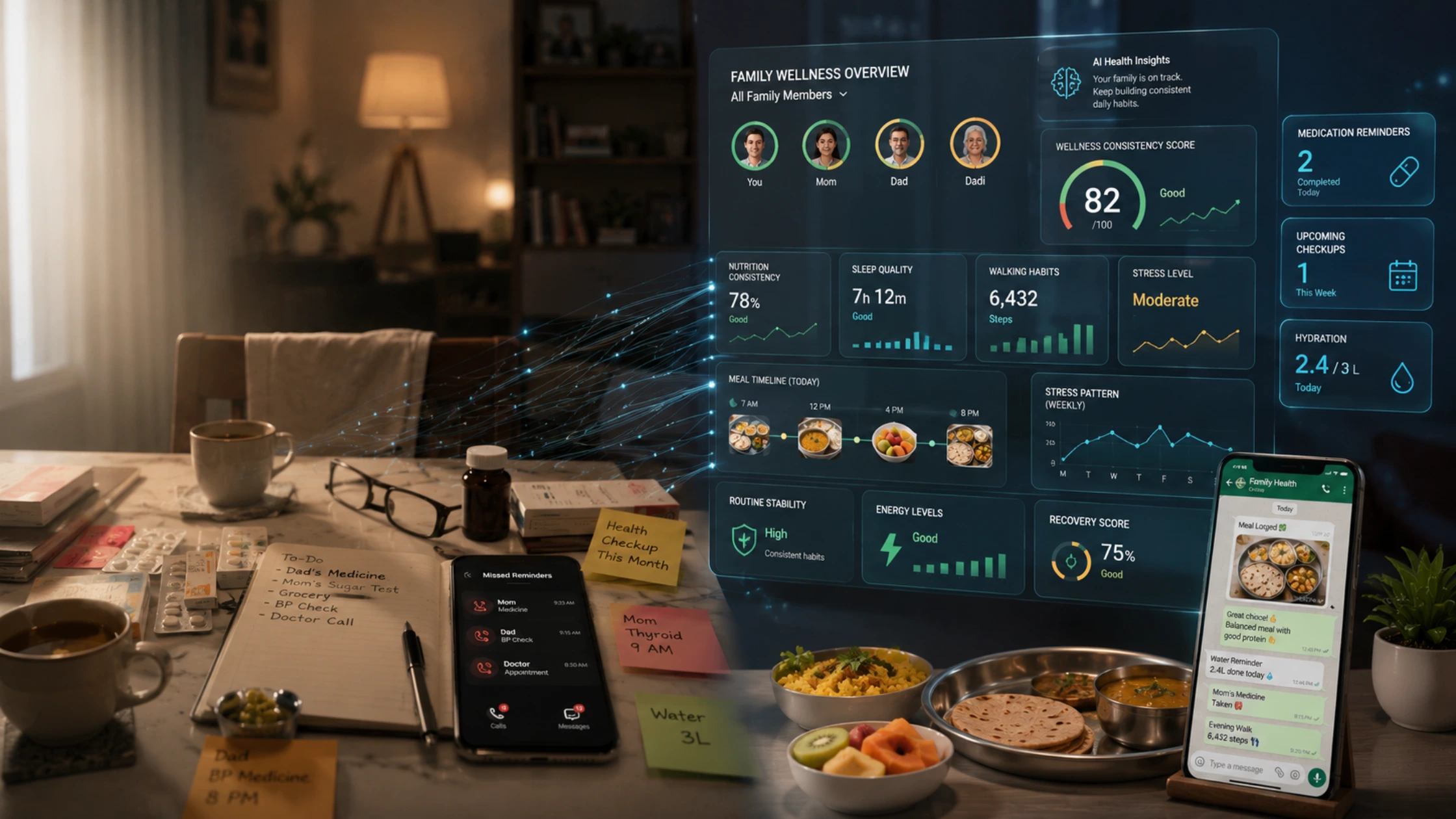
Balancing work, personal responsibilities, and aging parents’ health has quietly become one of the biggest modern challenges in urban India.
Many working adults constantly worry about:
- Whether parents are eating properly
- Skipping medicines
- Ignoring sleep problems
- Managing diabetes incorrectly
- Avoiding exercise
- Delaying check-ups
- Hiding health issues to “avoid troubling the family”
At the same time, most people do not want to sound controlling.
That creates emotional tension.
You care deeply.
But repeated reminders about food, sugar, exercise, sleep, or medication can slowly start feeling like criticism instead of support.
This is why modern parents health tracking is evolving beyond rigid monitoring systems.
Today, the focus is shifting toward:
- Simpler visibility
- Shared awareness
- Low-friction routines
- Family collaboration
- Sustainable daily habits
Especially in Indian households, health management is emotional, cultural, and deeply relationship-driven.
A parent may reject “health advice” from children simply because it feels like authority reversal.
This is where thoughtful systems matter.
Not aggressive monitoring.
The goal is not surveillance.
The goal is reducing uncertainty.
Modern family health management India approaches increasingly focus on:
- Passive habit visibility
- Simplified nutrition awareness
- Daily consistency
- Shared responsibility
- Lower caregiver stress
This becomes especially important as India faces rising lifestyle disease risks among older adults.
According to the World Health Organization, noncommunicable diseases such as diabetes, hypertension, and cardiovascular disorders account for a major share of health burden in India, with lifestyle patterns playing a critical role.
The National Family Health Survey (NFHS) also highlights growing concerns around obesity, blood sugar imbalance, nutrition quality, and preventive health awareness across Indian households.
The challenge is no longer only medical.
It is behavioral.
And family systems play a major role.
The Fine Line Between Care and Control
One of the biggest emotional struggles in caregiving is learning how to help without constantly correcting.
This is especially true in Indian families.
Parents who once managed the household independently may feel uncomfortable when children suddenly start discussing:
- Blood sugar
- Salt intake
- Walking routines
- Weight gain
- Sleep quality
- Meal timing
Even well-intentioned advice can sound like:
- Policing
- Judgement
- Criticism
- Distrust
This creates emotional resistance.
Many working adults unknowingly fall into a “daily reminder cycle”:
- Did you take medicines?
- Don’t eat sweets
- Why are you skipping breakfast?
- Please walk daily
- Stop eating fried food
Over time, both sides become frustrated.
This is why effective health tracking for parents India requires emotional sensitivity, not just information.
The best systems reduce confrontation.
They create quiet visibility instead of constant verbal correction.
That matters because sustainable family preventive health India depends more on cooperation than pressure.
Why Parents Resist Health Monitoring
Parents rarely resist health support because they do not care.
They resist because they fear:
- Losing independence
- Feeling old
- Becoming dependent
- Being treated like children
- Burdening family members
In many Indian households, older adults normalize symptoms like:
- Fatigue
- Joint pain
- Poor sleep
- Sugar fluctuations
- Digestive problems
- Weight gain
They often say:
- “This is normal with age”
- “I’m fine”
- “Don’t worry about me”
- “I’ve managed all my life”
This emotional mindset is important to understand.
Direct control-based approaches usually fail.
What works better:
- Shared routines
- Gentle participation
- Collaborative tracking
- Family-based health habits
For example:
Instead of saying:
“You should stop eating sweets.”
A better approach may be:
“Let’s all try improving evening snacks together.”
This reduces defensiveness.
It also supports healthier household health habits India naturally.
Common Communication Mistakes
Many families unintentionally create conflict while trying to help.
Common mistakes include:
1. Only Talking During Health Problems
If conversations happen only after:
- Sugar spikes
- Weight gain
- BP issues
- Fatigue
Parents may associate health discussions with criticism.
2. Using Fear Constantly
Statements like:
- “You’ll become diabetic”
- “Your BP will increase”
- “Doctor warned you”
can create stress instead of motivation.
3. Expecting Perfection
Many working adults expect parents to suddenly:
- Change decades-old eating habits
- Follow strict routines
- Track everything manually
That is unrealistic.
Sustainable change requires simplicity.
4. Overcomplicated Health Apps
Most older adults will not consistently use:
- Complex calorie counters
- Multi-screen dashboards
- English-heavy interfaces
- Manual tracking systems
This is where low-friction systems become important.
Especially WhatsApp-first approaches.
5. Treating Health Like an Individual Task
In India, food and routines are deeply social.
Health improves faster when families participate together.
Not when one person is isolated.
Building Trust Through Visibility
One of the smartest ways to reduce friction is replacing reminders with visibility.
When families can quietly observe patterns:
- Meal timing
- Sleep consistency
- Water intake
- Walking routines
- Nutrition habits
health conversations become less emotional.
Instead of arguments, discussions become data-based.
For example:
- “Looks like dinner timing became late this week.”
- “You skipped breakfast multiple times.”
- “Water intake reduced recently.”
This feels more supportive than:
“You never take care of yourself.”
Modern family health tracking app systems increasingly focus on:
- Habit awareness
- Simplicity
- Passive engagement
- Shared accountability
Nutrimate approaches this through AI-powered Indian meal intelligence and WhatsApp-first tracking designed around real Indian family behavior.
Its India’s #1 whatsapp meal logging feature and Unique Caregiver feature help families improve visibility without forcing complicated health routines on older adults.
This is especially valuable for:
- Working professionals living away from parents
- Sandwich-generation caregivers
- Families managing diabetes
- Elderly nutrition monitoring
- Shared wellness routines
The biggest advantage is lower friction.
People are more likely to stay consistent when systems fit naturally into daily behavior.
Passive Tracking Systems
Most families fail because they rely entirely on memory.
Memory-based caregiving creates:
- Mental overload
- Repeated reminders
- Frustration
- Missed patterns
Passive systems reduce this burden.
Examples include:
- WhatsApp meal logging
- Simple photo-based food tracking
- Shared grocery planning
- Daily habit check-ins
- Walking reminders
- Family hydration goals
These systems are especially useful for:
- Busy professionals
- Elderly parents
- Diabetes management
- Long-distance caregiving
Instead of forcing detailed calorie counting, passive visibility focuses on:
- Consistency
- Awareness
- Patterns
This is far more sustainable for Indian households.
Especially when managing:
- Diabetes
- Hypertension
- Weight management
- PCOS
- Sedentary lifestyle risks
Low-friction food tracking without calorie counting improves adherence because people do not feel overwhelmed.
This also supports healthier family nutrition planning India naturally over time.
Real-Life Scenarios
Scenario 1: Working Professional in Bangalore
A 32-year-old software engineer lives away from parents in Nagpur.
His father has diabetes.
Daily calls about food slowly became stressful.
Instead of repeated reminders, the family started:
- Sharing breakfast photos
- Logging meals casually
- Tracking walking consistency weekly
Conversations became calmer because health discussions were no longer based on assumptions.
Scenario 2: Homemaker Managing Entire Household
An Indian mother handled:
- Groceries
- Meals
- Medicines
- Doctor appointments
- Nutrition planning
Over time, she experienced severe caregiver burnout India patterns.
The family introduced:
- Shared meal planning
- Weekly grocery systems
- Joint evening walks
- Collaborative food tracking
Responsibility became distributed instead of emotionally exhausting.
Scenario 3: Elderly Couple Managing Health Alone
Children living abroad struggled with anxiety around:
- Missed medications
- Irregular eating
- Lack of activity
A passive WhatsApp-based tracking routine created visibility without making parents feel monitored.
This improved trust significantly.
Content Direction
Pain:
“You care, but don’t want to nag”
Most working adults struggle because traditional caregiving often feels emotionally exhausting for both sides.
Families need systems that:
- Reduce friction
- Lower emotional tension
- Improve awareness
- Encourage shared responsibility
- Support consistency gently
The future of sustainable caregiving in India will depend less on constant reminders and more on low-friction visibility systems that fit naturally into everyday family life.
Product Integration
“Low-friction tracking often feels more supportive than constant reminders…”
Nutrimate simplifies family wellness through AI-powered, Indian-first, WhatsApp-based health tracking designed for real Indian households.
Instead of forcing rigid calorie counting or complicated apps, the platform focuses on:
- Indian meal intelligence
- Shared family visibility
- Consistency-driven tracking
- Simpler daily awareness
- Caregiver-friendly systems
This supports healthier routines while reducing the emotional stress often associated with traditional caregiving conversations.
References
FAQs
Focus on shared routines, gentle visibility, and collaborative habits instead of constant reminders. Low-friction tracking systems and family participation often work better than repeated verbal advice.
Many parents resist health advice because they fear losing independence, feeling controlled, or becoming a burden. Supportive communication and shared wellness habits are usually more effective than strict monitoring.