 Pradnya Ganorkar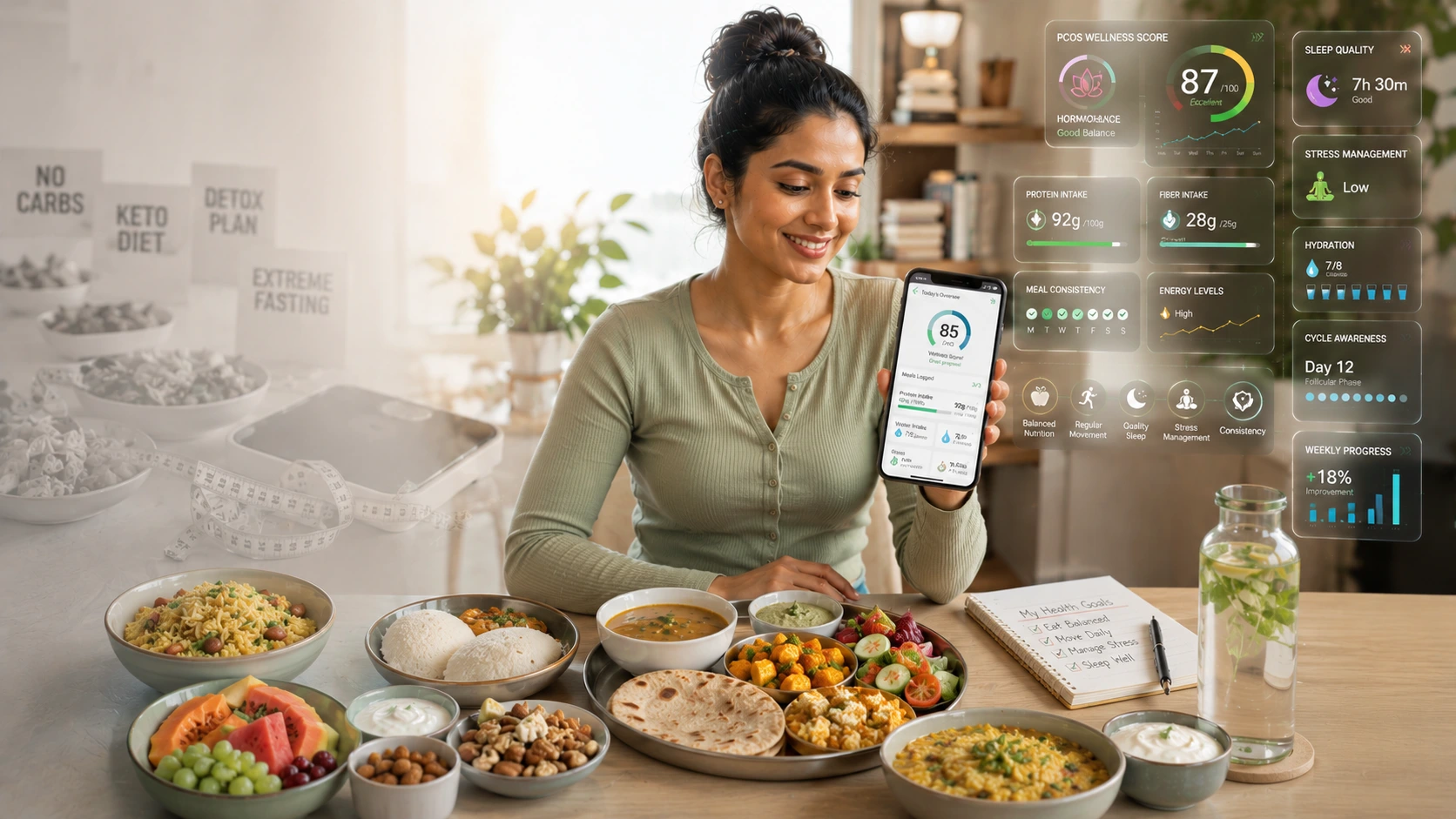
If you’ve ever searched for a PCOS diet India plan online, you’ve probably encountered conflicting advice.
One expert tells you to eliminate rice.
Another says avoid dairy.
Someone else recommends cutting carbohydrates entirely.
For many women, this creates confusion, frustration, and inconsistency.
The reality is that managing PCOS is rarely about finding the perfect diet. It is about creating a sustainable eating pattern that works with your lifestyle, cultural food preferences, and daily routine.
Many women abandon plans because they feel impossible to maintain alongside work, family responsibilities, travel, social events, and the realities of busy lifestyles in india.
The good news is that a practical Indian diet for PCOS can include familiar foods like poha, dal, roti, paneer, vegetables, curd, and even rice in appropriate portions.
The goal is not restriction.
The goal is consistency, awareness, and long-term health.
Why PCOS Diet Advice Feels Confusing
PCOS affects women differently.
Some women struggle with weight gain.
Others experience irregular periods, acne, fatigue, insulin resistance, or difficulty managing cravings.
Because symptoms vary, generic diet plans often fail.
The Internet Creates Information Overload
Social media is filled with:
- Keto diets
- Detox plans
- Juice cleanses
- Extreme fasting protocols
- Imported diet trends
Many of these approaches ignore Indian food culture and daily realities.
A woman living in Pune, Mumbai, Chennai, or Delhi cannot always follow a meal plan designed around foods commonly consumed elsewhere.
The Restriction Problem
Many women assume managing PCOS means eliminating:
- Rice
- Roti
- Fruit
- Dairy
- Traditional Indian meals
This belief often leads to unsustainable habits.
Research consistently shows that extreme restrictions contribute to the same challenges behind why diets fail long term.
PCOS Is About Patterns
Successful PCOS lifestyle changes focus on:
- Better food quality
- Consistent eating schedules
- Improved sleep
- Stress management
- Physical activity
Not food fear.
Principles of a PCOS-Friendly Indian Diet
Before discussing meal examples, it is important to understand what makes a good PCOS meal plan India approach.
Focus on Protein
One of the biggest nutritional gaps in Indian diets is protein intake.
Many women are surprised by how little protein in average indian meal is actually consumed.
Adequate protein supports:
- Satiety
- Muscle maintenance
- Blood sugar regulation
- Hormonal balance
This becomes especially important for women looking to improve hormonal health for women.
Prioritize Fiber
Fiber slows digestion and supports blood sugar control.
Good Indian sources include:
- Vegetables
- Lentils
- Beans
- Fruits
- Millets
- Whole grains
Build Balanced Plates
A practical plate typically contains:
- Protein source
- Vegetables
- Complex carbohydrates
- Healthy fats
This approach is often more sustainable than strict calorie counting.
Keep Traditional Foods
Contrary to popular myths, many traditional Indian foods can fit into a healthy PCOS routine.
This is why understanding Indian food and health matters more than following imported diet trends.
Breakfast, Lunch and Dinner Examples
A realistic Indian diet for PCOS should fit everyday life.
Breakfast Options
Option 1: Vegetable Poha + Protein
- Vegetable poha
- Boiled eggs or paneer
- Unsweetened tea
Option 2: Moong Chilla
- Two moong chillas
- Mint chutney
- Curd
Option 3: South Indian Breakfast
- Idli with sambar
- Extra bowl of sambar for protein and fiber
Many women mistakenly think poha or idli must be eliminated.
The key is balancing them with protein.
This becomes especially important for protein for indian vegetarians who rely on plant-based protein sources.
Lunch Options
Option 1
- 2 rotis
- Dal
- Mixed vegetables
- Salad
Option 2
- Brown rice or regular rice
- Rajma
- Vegetable sabzi
Option 3
- Bajra roti
- Paneer bhurji
- Salad
These meals support healthy Indian eating habits while remaining practical.
Dinner Options
Option 1
- Paneer stir fry
- Mixed vegetables
- One roti
Option 2
- Grilled fish
- Vegetable sabzi
- Rice
Option 3
- Dal khichdi
- Curd
- Salad
The objective is balance rather than perfection.
This helps support sustainable health habits for Indians over the long term.
Smart Snacking Options
Snacking is often where nutrition challenges emerge.
Packaged foods may appear harmless but can contribute significant calories.
For example:
- calories in namkeen
- 100 gm namkeen calories
- 100 gram namkeen calories
- calories in 100 gm namkeen
- 1 katori namkeen calories
are often much higher than people expect.
Awareness matters.
Better Snack Options
- Roasted chana
- Makhana
- Greek yogurt
- Fruit with nuts
- Sprouts chaat
- Boiled eggs
- Peanut chaat
These options provide better nutrition while supporting satiety.
The Goal Is Awareness
Many women benefit from food tracking without calorie counting.
Simply becoming aware of eating patterns often leads to better choices.
Common Mistakes Women Make
Constantly Switching Diets
One month keto.
Next month detox.
Then intermittent fasting.
This cycle often creates inconsistency.
Ignoring Sleep
Sleep directly influences hunger hormones and insulin sensitivity.
Many women focus entirely on food while overlooking recovery.
Underestimating Stress
Stress can significantly impact cravings, energy levels, and hormonal function.
Building lifestyle habits for women requires addressing stress alongside nutrition.
Chasing Quick Results
Sustainable improvements happen gradually.
This is one reason healthy habits for PCOS outperform extreme interventions.
Focusing Only on Weight
Weight is only one indicator.
Energy levels, menstrual regularity, strength, and consistency also matter.
Building a Sustainable Routine
The most successful women managing PCOS do not necessarily follow perfect diets.
They follow repeatable systems.
Step 1: Simplify
Choose meals you can realistically repeat.
Avoid creating complicated meal plans.
Step 2: Create Awareness
Understanding eating patterns is often more valuable than strict dieting.
Tools like Nutrimate help women build awareness through Indian-first meal intelligence and simple tracking designed around Indian eating habits.
Rather than manually entering every ingredient, users can use India’s #1 whatsapp meal logging feature and Unique Caregiver feature to make health tracking less time-consuming.
Step 3: Focus on Consistency
Consistency beats intensity.
A realistic routine followed for 12 months produces better outcomes than a perfect routine followed for 12 days.
Step 4: Track Patterns
Many women notice important connections between:
- Food choices
- Energy levels
- Sleep quality
- Cravings
- Menstrual cycles
This is where women’s nutrition tracking and period health tracking become useful tools for awareness.
Step 5: Think Long-Term
The best PCOS diet India strategy is the one you can maintain.
This aligns with:
- healthy lifestyle for busy Indians
- how to stay healthy without dieting
- how to stay consistent with health
- sustainable health habits
PCOS management is not about perfection.
It is about building a system that fits your life.
When women understand their habits, rather than constantly chasing restrictive diets, they often achieve better outcomes and greater confidence in their health decisions.
FAQs
Women with PCOS should focus on balanced meals containing protein, vegetables, fiber-rich carbohydrates, and healthy fats. Traditional Indian foods such as dal, paneer, roti, vegetables, curd, and rice can all be part of a healthy routine when consumed in balanced portions.
Yes. Rice does not need to be eliminated. Portion control, meal balance, and pairing rice with protein and fiber-rich foods are often more important than completely avoiding it.
Absolutely. A well-balanced Indian diet for PCOS can provide adequate nutrition, support hormonal health, and promote sustainable eating habits. Traditional Indian foods often contain valuable sources of fiber, protein, and micronutrients when prepared thoughtfully.
References
- PCOS Evidence-Based Nutrition Guidelines
https://www.monash.edu/medicine/sphpm/mchri/pcos/guideline - International Evidence-Based Guideline for the Assessment and Management of PCOS