 Pradnya Ganorkar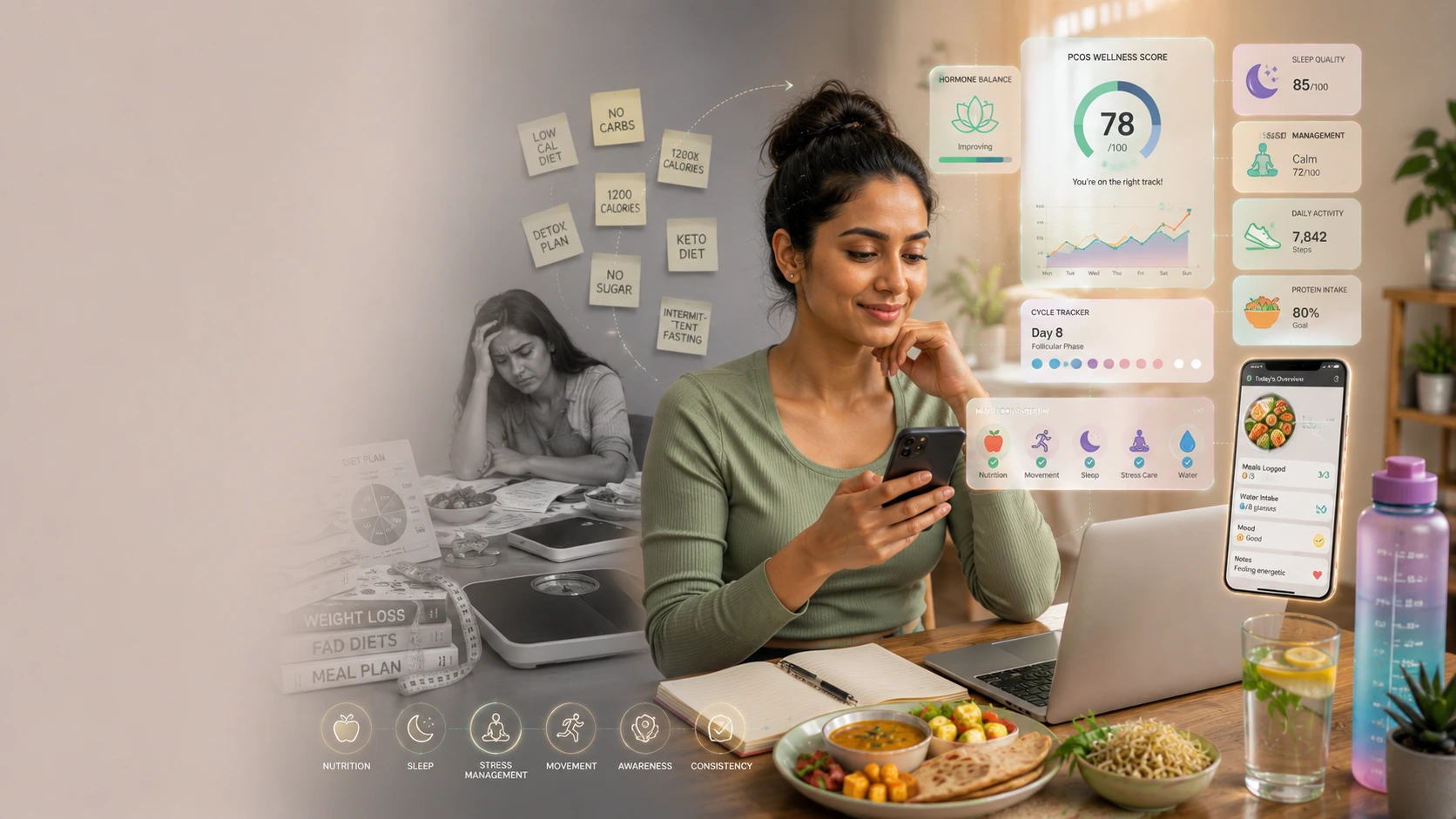
If you’ve been diagnosed with PCOS, chances are one of the first things you received was a diet chart.
Maybe you were told to avoid sugar, cut carbs, lose weight, or follow a strict eating plan.
While nutrition is important, focusing only on food often leaves women frustrated and confused.
The reality is that successful PCOS lifestyle changes involve much more than a diet plan.
PCOS affects hormones, metabolism, sleep quality, stress levels, energy, mood, menstrual cycles, and long-term health outcomes. This is why many women following a PCOS diet India plan still struggle to see sustainable results.
For many Indian women balancing careers, studies, family responsibilities, and increasingly busy lifestyles in india, the challenge isn’t knowing what to do.
The challenge is staying consistent.
Understanding patterns, building sustainable routines, and creating realistic habits often matter more than following the “perfect” plan.
This is where awareness, tracking, and consistency become powerful tools for long-term success.
Why PCOS Feels Overwhelming
PCOS is not a single symptom condition.
Different women experience different combinations of:
- Irregular periods
- Weight gain
- Acne
- Hair fall
- Fatigue
- Cravings
- Mood changes
- Difficulty losing weight
- Fertility concerns
This complexity often creates confusion.
Many women spend years searching for one solution.
One month it is keto.
The next month it is intermittent fasting.
Then comes detox plans, supplements, or restrictive meal programs.
The problem is that PCOS rarely responds to short-term fixes.
The Information Overload Problem
Social media has made PCOS advice accessible.
Unfortunately, it has also made misinformation widespread.
Women frequently encounter conflicting advice:
- Avoid all carbs
- Eat only low GI foods
- Eliminate dairy
- Follow extreme fasting
- Eat every two hours
When advice constantly changes, consistency becomes difficult.
This is one reason why many women struggle despite genuine effort.
Common PCOS Myths
Many popular beliefs about PCOS are either oversimplified or completely inaccurate.
Myth 1: Weight Loss Alone Will Fix Everything
Weight management may improve symptoms for some women.
However, PCOS management is not only about body weight.
Sleep, stress, nutrition quality, activity levels, and hormonal regulation all matter.
Myth 2: Carbohydrates Are the Enemy
Many women fear eating rice, roti, fruits, or traditional Indian meals.
In reality, a balanced Indian diet for PCOS can include carbohydrates.
The focus should be on quality, portions, protein balance, and overall eating patterns.
Myth 3: You Need a Perfect Diet
Perfection is one of the biggest barriers to progress.
A sustainable routine followed consistently usually outperforms a strict plan followed for two weeks.
Myth 4: PCOS Is Only a Food Problem
Nutrition is important.
However, PCOS is influenced by:
- Sleep quality
- Stress levels
- Physical activity
- Hormonal health
- Mental wellbeing
This is why focusing exclusively on food often produces disappointing results.
The Role of Food, Sleep and Stress
When discussing hormonal health for women, three pillars consistently stand out:
Nutrition
Food influences:
- Blood sugar regulation
- Energy levels
- Cravings
- Satiety
- Hormonal responses
Many women underestimate how little protein they consume.
Research and dietary surveys frequently show low protein in average indian meal patterns, especially among vegetarian households.
This makes understanding protein for indian vegetarians particularly important.
Good protein sources include:
- Dal
- Paneer
- Greek yogurt
- Tofu
- Soy products
- Sprouts
- Eggs
Improving protein intake often supports satiety and energy management.
Sleep
Sleep affects:
- Hunger hormones
- Stress hormones
- Recovery
- Decision making
Many working women sleep less than seven hours.
Poor sleep often increases cravings and makes healthy choices harder.
Stress
Stress is often ignored in PCOS management.
Chronic stress can influence:
- Cortisol levels
- Food choices
- Sleep quality
- Energy levels
- Habit consistency
Simple stress-management strategies often deliver meaningful benefits.
Examples include:
- Walking
- Meditation
- Breathing exercises
- Time outdoors
- Reduced screen time before bed
Why Short-Term Diets Often Fail
Many women search for rapid solutions.
This is understandable.
When symptoms are frustrating, quick results feel appealing.
However, why diets fail long term is often linked to sustainability.
The Restriction Problem
Most restrictive plans create:
- Social challenges
- Family conflicts
- Cravings
- Low adherence
- Emotional fatigue
For example, avoiding every favorite food indefinitely is rarely realistic.
Real Life Doesn’t Follow Diet Rules
Indian lifestyles involve:
- Family gatherings
- Festivals
- Office lunches
- Travel
- Busy work schedules
Rigid plans often collapse when real life intervenes.
Sustainable Beats Extreme
The most effective sustainable health habits are often surprisingly simple:
- Eating more protein
- Sleeping better
- Walking daily
- Reducing processed snacks
- Improving hydration
- Tracking patterns
Small improvements repeated consistently create meaningful outcomes.
Building Sustainable PCOS Habits
The goal is not perfection.
The goal is repeatability.
Habit Framework 1: Start With Awareness
Most people underestimate what they actually eat.
For example:
Many women don’t realize:
- How often they snack
- How little protein they consume
- How many liquid calories they drink
Tracking creates awareness.
Habit Framework 2: Focus on One Change at a Time
Trying to change everything usually leads to failure.
Instead:
Week 1:
Improve breakfast protein.
Week 2:
Add a daily walk.
Week 3:
Improve sleep timing.
Small wins build momentum.
Habit Framework 3: Build Around Existing Routines
The easiest habit is the one attached to something you already do.
Examples:
- Walk after dinner.
- Drink water after brushing teeth.
- Track meals after eating.
Habit Framework 4: Reduce Friction
The harder a habit feels, the less likely it survives.
This is why many women abandon manual food logs.
A simpler approach often produces better consistency.
For example, Nutrimate combines AI-powered meal awareness with WhatsApp-based logging designed around Indian eating habits.
Its India’s #1 whatsapp meal logging feature and Unique Caregiver feature help users focus on consistency rather than perfection.
What Long-Term Management Looks Like
Successful PCOS management India is usually not dramatic.
It looks surprisingly ordinary.
Consistent Nutrition
Not perfect eating.
Consistent eating.
Most meals include:
- Protein
- Vegetables
- Fiber
- Balanced portions
Sustainable Activity
Not extreme workouts.
Regular movement.
Examples:
- Walking
- Strength training
- Cycling
- Yoga
Better Sleep
Predictable sleep schedules support recovery and hormone regulation.
Stress Management
Not eliminating stress.
Managing stress better.
Pattern Awareness
Many women benefit from women’s nutrition tracking and period health tracking because symptoms often follow patterns that are difficult to notice without visibility.
For example:
- Increased cravings before periods
- Energy changes during specific cycle phases
- Sleep disruptions
- Emotional eating triggers
Recognizing these patterns often improves decision-making.
Understanding Indian Food Better
Questions like:
- Is Indian food and health compatible?
- Is Indian food healthy?
- Does the roti rice weight gain myth have any truth?
Often emerge during PCOS management.
The answer is that traditional Indian foods can absolutely fit into a healthy lifestyle.
The focus should be on:
- Portion awareness
- Protein balance
- Food quality
- Consistency
Not fear.
PCOS Habit Checklist
Use this simple weekly checklist.
Nutrition
✓ Include protein at most meals
✓ Improve awareness of eating habits
✓ Build a practical PCOS meal plan India approach
✓ Follow healthy Indian eating habits
Lifestyle
✓ Walk regularly
✓ Strength train when possible
✓ Maintain consistent sleep
✓ Manage stress proactively
Awareness
✓ Monitor symptoms
✓ Observe menstrual patterns
✓ Track energy changes
✓ Review progress monthly
Consistency
✓ Focus on sustainable health habits for Indians
✓ Avoid extreme restriction
✓ Build routines gradually
✓ Prioritize long-term adherence
Remember:
The goal is not temporary compliance.
The goal is a lifestyle that feels realistic for years.
For many women, that means moving beyond strict diets and focusing on awareness, habits, and sustainable routines that support overall wellbeing.
Reference
- International Evidence-Based Guideline for the Assessment and Management of Polycystic Ovary Syndrome
https://www.monash.edu/medicine/sphpm/mchri/pcos - World Health Organization – Healthy Diet
https://www.who.int/news-room/fact-sheets/detail/healthy-diet
FAQs
Many women can improve symptoms through sustainable lifestyle approaches including balanced nutrition, physical activity, stress management, sleep optimization, and consistent habit building. Medical guidance should always be followed where appropriate.
Helpful habits include improving protein intake, maintaining regular physical activity, prioritizing sleep, reducing stress, tracking symptoms, and following realistic routines that support long-term consistency.
Many PCOS diets fail because they are overly restrictive, difficult to maintain, and disconnected from real-life routines. Sustainable lifestyle changes generally produce better long-term outcomes than short-term diet plans.