 Pradnya Ganorkar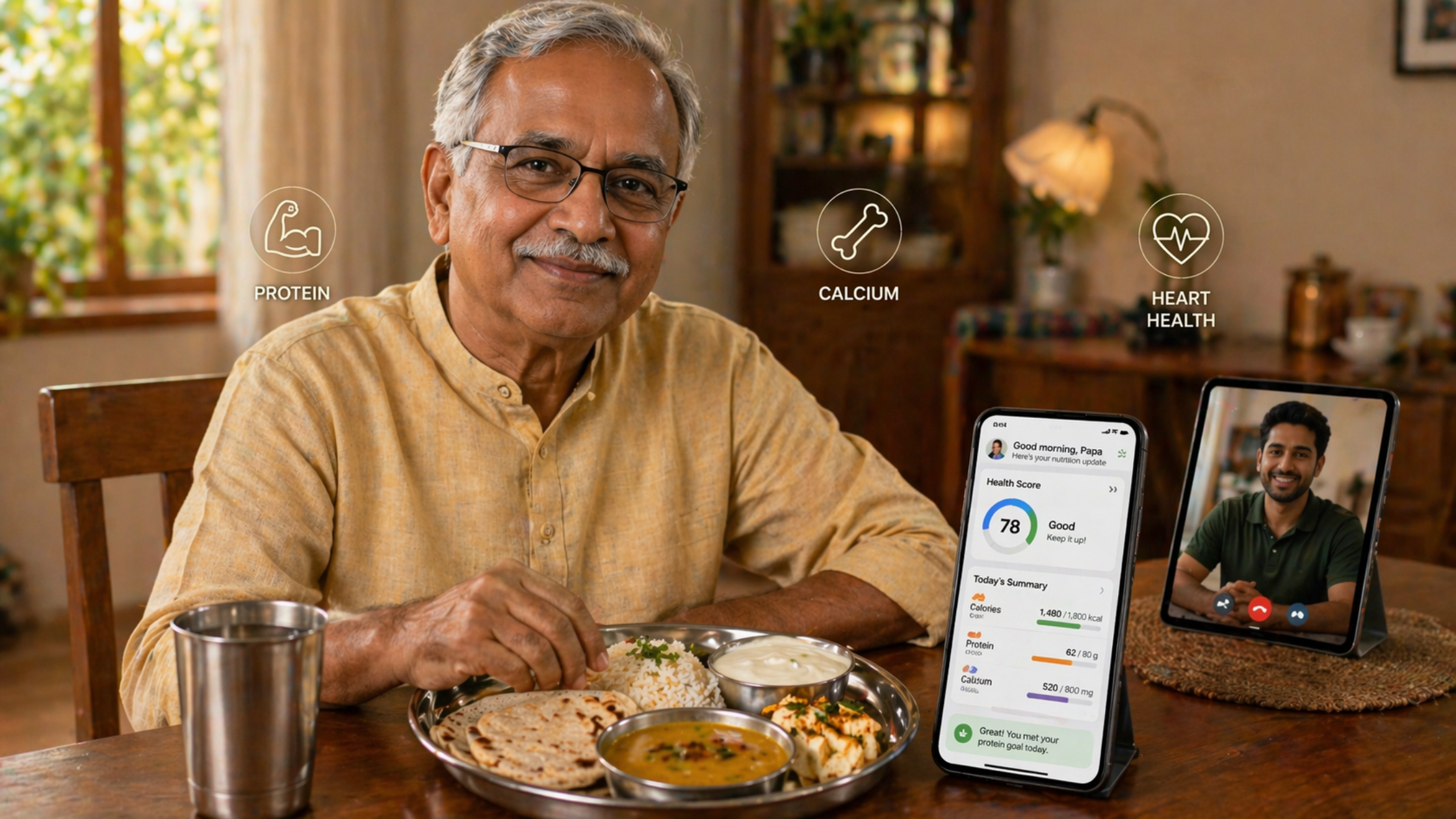
Adults over 55 in India have distinct nutritional needs that differ significantly from younger adults. Caloric requirements decrease by 10 to 15% compared to middle age, while protein requirements increase to 1.0 to 1.2 grams per kilogram of body weight daily to prevent sarcopenia — the age-related loss of muscle mass that affects mobility and metabolism. Calcium requirements rise to 1,000 to 1,200mg daily to maintain bone density and prevent osteoporosis. Vitamin D deficiency is prevalent among Indian seniors — estimates suggest 70 to 80% of Indians over 60 are deficient. Key foods to prioritise: ragi, sesame seeds, curd, paneer, green leafy vegetables, and small portions of fish or eggs. Nutrimate’s Caregiver Connection feature allows adult children to monitor a senior parent’s daily nutrition remotely, ensuring targets are consistently met.
Why Nutrition Needs Change After 55 — The Biology
Between the ages of 25 and 70, the average person loses 25 to 30 percent of their muscle mass if no deliberate effort is made to preserve it. This loss — called sarcopenia — is the primary reason why older adults gain fat weight, lose mobility, and become more vulnerable to illness even without any change in diet.
The calorie requirement decreases because metabolic rate drops with muscle loss. A 60-year-old Indian woman who needed 1,800 calories at 35 may only need 1,500 to 1,600 calories now. But the protein requirement increases because the body becomes less efficient at using dietary protein to maintain muscle tissue. Eating the same amount of protein that maintained muscle at 40 is no longer sufficient at 60.
Additionally, stomach acid production decreases with age, impairing the absorption of vitamin B12, calcium, and iron from food. This means seniors may need to eat more of these nutrients than younger adults just to absorb equivalent amounts.
Protein — The Most Critical Nutrient for Indian Seniors
The most important nutritional change Indian adults over 55 should make is increasing daily protein intake to at least 1.0 gram per kilogram of body weight, and ideally 1.2 grams per kilogram. For a 60-kilogram senior, that is 60 to 72 grams of protein per day — significantly more than the typical Indian senior diet provides.
Traditional Indian senior diets, based largely on rice or roti, dal, and sabzi, typically provide 35 to 50 grams of protein per day. The gap between typical intake and optimal intake contributes directly to muscle loss, fatigue, and reduced immunity.
Best protein sources for Indian seniors: paneer, which provides 18 grams per 100 grams and is soft and easy to digest. Moong dal, which is the most easily digested dal and provides 7 grams per cooked katori. Eggs, which provide 6 grams each and are highly bioavailable. Curd, which provides 11 grams per 200 grams and also supports gut health. Ragi — the only grain with a meaningful calcium and protein content.
Calcium and Bone Health — The Indian Dietary Challenge
Osteoporosis affects an estimated 60 million Indians, with post-menopausal women and men over 70 at highest risk. The standard recommendation is 1,000 to 1,200mg of calcium per day. The average Indian diet provides approximately 400 to 600mg.
The dairy gap: many Indian seniors reduce or eliminate dairy after 55 due to digestive issues, lactose sensitivity, or cultural food transitions. This dramatically reduces calcium intake. For those who can tolerate dairy, two to three servings of curd, milk, or paneer per day provides adequate calcium. For those who cannot, ragi (finger millet), sesame seeds (til), and dark green leafy vegetables are the best non-dairy calcium sources in Indian cooking.
Vitamin D is required for calcium absorption. Without adequate Vitamin D, even high calcium intake does not translate to bone health. Indian seniors — who are often indoors more than younger adults — should spend 20 to 30 minutes in morning sunlight and consult a doctor about Vitamin D supplementation.
What to Reduce — Common Indian Senior Diet Mistakes
Salt and sodium: Indian seniors are at higher risk for hypertension, and excessive salt directly raises blood pressure. The traditional Indian diet — high in pickles, papads, salted buttermilk, and packaged snacks — frequently exceeds the 2,300mg daily sodium limit. Reducing these specific foods has the highest impact on cardiovascular health for this age group.
Refined carbohydrates: White rice and maida-based foods cause rapid blood sugar spikes that are harder for older metabolisms to manage. Replacing half the white rice with millets like jowar, bajra, or ragi, and reducing maida based breads, biscuits, and sweets, reduces blood sugar volatility and caloric density simultaneously.
Excessive ghee and saturated fat: While ghee has nutritional value in moderate amounts, traditional Indian cooking often uses significantly more than is appropriate for seniors with cardiovascular concerns. Two teaspoons per day is a reasonable upper limit.
How Caregiver Connection Helps Families Track Senior Nutrition
One of the most common challenges for Indian families is ensuring that an elderly parent living alone or semi independently is eating adequately and appropriately. Standard check-in calls are not enough — ‘I ate fine’ tells you nothing about protein, calcium, or sodium intake.
Nutrimate’s Caregiver Connection feature allows an adult child to see their parent’s daily nutrition dashboard in real time. If an 80-year-old father logged only 900 calories by 7 PM, the daughter in another city can send a gentle reminder to eat dinner. If the Health Score shows three consecutive low-protein days, a proactive meal plan adjustment can prevent the muscle loss that results from sustained protein deficiency.
Track your senior family member’s nutrition from anywhere with Caregiver Connection. Free on Android and iOS — nutrimate.in