 Pradnya Ganorkar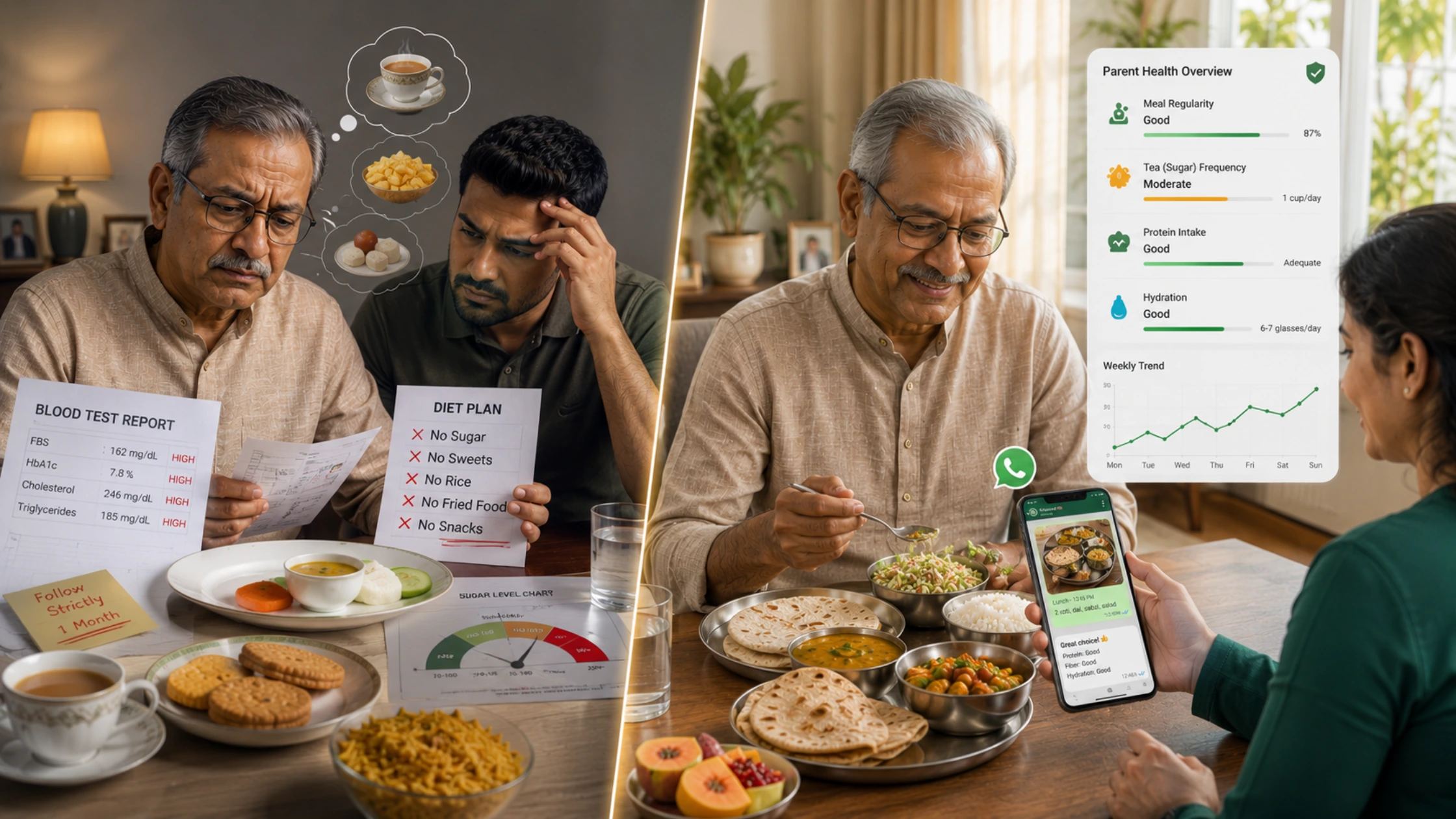
For many Indian families, concern about aging parents often begins the same way:
A blood test looks slightly off.
Sugar rises.
Energy drops.
Doctor suggests dietary changes.
Family reacts quickly.
For a few days:
Less sugar.
More vegetables.
Controlled portions.
Strict reminders.
Then real life returns.
Tea habits come back.
Meal routines slip.
Snacking resumes.
Tracking disappears.
This cycle is one of the biggest reasons families struggle to effectively track parents diet in a sustainable way.
The issue is rarely a lack of care.
More often, the problem is that occasional diet plans are treated like solutions, while daily eating patterns are ignored.
This matters because for most parents, especially in Indian households, health is shaped less by two weeks of strict eating and more by years of everyday habits.
That includes:
- Breakfast consistency
- Tea and sugar frequency
- Portion size
- Protein intake
- Fried snack habits
- Meal timing
- Physical movement
This is why health tracking for parents increasingly depends on practical daily visibility, not temporary restriction.
For families navigating Indian diet for seniors, the goal should not be perfection.
It should be awareness.
A practical daily nutrition tracking system can help families notice:
- Missed meals
- Excess sweets
- Low protein
- Irregular eating
- Hydration gaps
Without turning food into pressure.
This is especially relevant in India, where parents often eat:
- Home-cooked food
- Shared family meals
- Traditional snacks
- Seasonal sweets
- Region-specific foods
This is why many caregivers are moving toward simple systems like India’s #1 whatsapp meal logging feature and Unique Caregiver feature, where daily food awareness becomes easier without creating confrontation.
Because in most families, sustainable family wellness India starts not with strict diets, but with consistent habits.
Why Occasional Diet Changes Don’t Work: track parents diet, health tracking for parents, and family health tracking app
When parents face a health concern, families often respond with urgency.
Common Pattern:
Doctor visit → New diet → Strict family monitoring → Temporary compliance → Old habits return
This happens because reactive diet plans often focus on short-term control instead of realistic lifestyle change.
Why This Fails:
1. Restriction Feels Temporary
Parents may feel:
“This is only until reports improve.”
2. Habits Stay Unchanged
Tea sugar, fried snacks, meal timing, and portion habits often continue.
3. Emotional Resistance
Strict correction can feel controlling.
4. Complexity
Detailed diet charts often feel unrealistic.
Indian Family Reality:
In many households:
- Food = tradition
- Food = comfort
- Food = care
So aggressive dietary shifts often feel unnatural.
Myth vs Reality
Myth: Strict diets improve senior health best
Reality: Sustainable daily food habits usually matter more
This is why family health tracking app systems work better when they focus on awareness instead of temporary extremes.
Daily Eating Patterns Matter More: daily nutrition tracking, Indian diet for seniors, and family nutrition habits India
For most seniors, long-term health is shaped by repeated patterns.
What Often Matters Most:
- Regular meals
- Balanced portions
- Protein adequacy
- Sugar moderation
- Hydration
- Digestive consistency
Example:
One festive dessert is rarely the issue.
But:
- Daily sugary tea
- Frequent biscuits
- Low-protein breakfasts
- Repeated overeating
These patterns often matter more.
Why Daily Nutrition Tracking Matters:
Tracking daily trends helps families identify:
- Under-eating
- Over-snacking
- Medication-food inconsistency
- Low diversity
- Habit drift
Indian-Specific Context:
A typical parent diet may include:
- Tea + biscuits
- Poha/upma
- Roti sabzi
- Rice
- Namkeen
- Mithai
None of these are automatically “bad.”
The issue is often frequency and balance.
Strategic Insight:
Indian diet for seniors should usually focus less on elimination and more on sustainable structure.
Because consistency often supports better family health than extreme dietary shifts.
Common Mistakes in Indian Families: Indian family health habits, family wellness India, and track parents diet
Many families care deeply.
But practical mistakes are common.
Mistake 1: Acting Only During Crisis
Health becomes urgent only after reports worsen.
Mistake 2: Over-Restricting Suddenly
No sugar
No rice
No snacks
This often creates resistance.
Mistake 3: Assuming Home Food = Automatically Healthy
Even homemade meals can become imbalanced through:
- Excess carbs
- Low protein
- High oil
- Repeated sweets
Mistake 4: Nagging Instead of Tracking
Repeated correction often creates emotional pushback.
Mistake 5: Ignoring Patterns
Families often notice:
“Today was unhealthy”
But miss:
“Every evening includes sugar-heavy snacks”
Better Family Framework:
From:
Control
To:
Awareness
Important:
Parents usually respond better to support than surveillance.
This is why caregiver health tools increasingly matter for reducing stress while improving visibility.
How to Track Without Interfering: family health tracking app, health tracking for parents, and caregiver health tools
One of the biggest caregiver fears is:
“How do I help without policing?”
This is a valid concern.
Better Tracking Principles:
1. Observe Patterns, Not Perfection
Focus on:
- Meal timing
- Consistency
- Repetition
2. Keep It Collaborative
Use calm conversations:
“How was lunch today?”
Instead of:
“Did you follow the diet?”
3. Simplify Input
Tracking should not feel technical.
4. Prioritize Sustainability
A system that lasts matters more than a perfect week.
Example:
Instead of building strict calorie charts, many families use simple systems for meal awareness.
This is where Nutrimate’s India’s #1 whatsapp meal logging feature and Unique Caregiver feature reflects a larger shift:
Make health tracking for parents easier without making it emotionally heavy.
Strategic Goal:
Reduce caregiver stress while improving visibility.
Example Routine: track parents diet, daily nutrition tracking, and family nutrition habits India
Scenario:
Working daughter in Bengaluru
Parents in Nagpur
Common Concern:
“Did they eat properly today?”
Traditional Approach:
Daily calls
Repeated reminders
Low visibility
High stress
Better Pattern-Based System:
Track:
- Breakfast
- Main meals
- Tea/snack frequency
- Water
- Energy
Weekly Trend:
- Missed breakfast 3x
- Tea sugar high
- Low protein lunch
Action:
Small improvements:
- Add sprouts
- Reduce biscuit frequency
- Improve meal regularity
Result:
Less stress
More clarity
Better family wellness India
Key Lesson:
Small visibility often creates better long-term outcomes than occasional panic.
Do vs Don’t: Better track parents diet, health tracking for parents, and daily nutrition tracking
DO:
- Focus on patterns
- Encourage balance
- Support realistic changes
- Respect food culture
- Track gently
- Prioritize sustainability
DON’T:
- Force extreme diets
- Overreact to isolated meals
- Nag constantly
- Assume reports tell the full story
- Ignore emotional comfort
- Create guilt
Common Family Error:
Treating food like a crisis response.
Better:
Treat food like daily care.
Bigger Shift: Daily Awareness Over Diet Cycles
For many families, the real goal is not creating perfect senior diets.
It is building consistent, manageable awareness.
Because health decline often happens quietly.
Not through one bad meal.
But through:
- Habit drift
- Routine inconsistency
- Low awareness
This is why track parents diet should focus on:
- Simplicity
- Repeatability
- Respect
- Visibility
The best systems support:
- Independence
- Caregiver confidence
- Better family health
- Lower stress
Because parents usually do not need constant restriction.
They need sustainable daily support.
Frequently Asked Questions
The best way to ensure parents eat healthy is by focusing on daily meal consistency, balanced Indian food habits, portion awareness, and sustainable tracking instead of relying only on occasional strict diet plans.
Not usually. Most seniors benefit more from balanced, realistic, and sustainable eating habits than highly restrictive diets. Daily awareness and consistency are often more effective than short-term strict control.