 Pradnya Ganorkar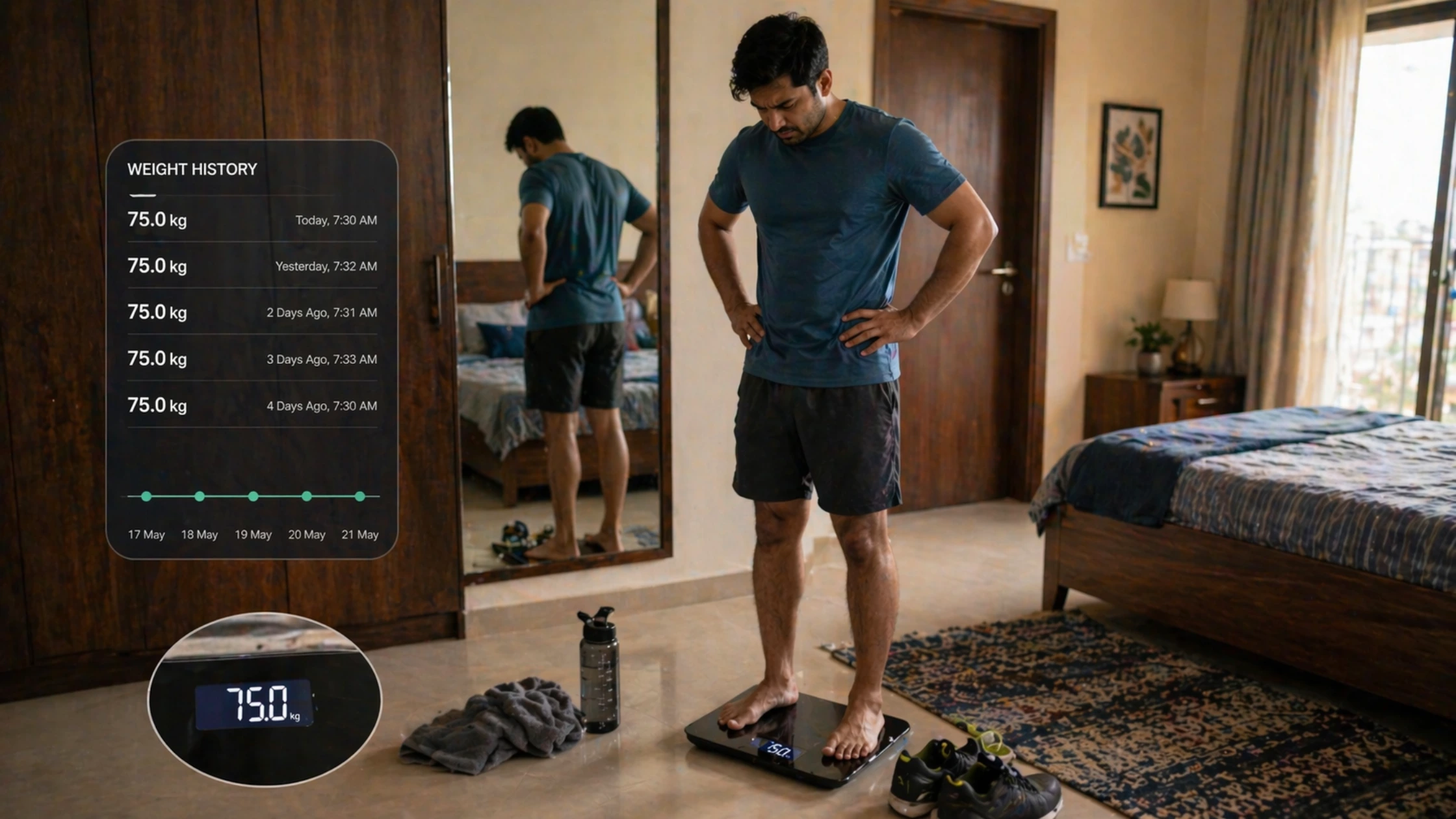
A weight loss plateau occurs when the body adapts to a reduced calorie intake and lower body weight by decreasing its total daily energy expenditure, making the same deficit that previously produced weight loss insufficient to continue losing weight. Research shows that metabolic adaptation can reduce caloric expenditure by 200 to 500 calories per day below what the reduced bodyweight would predict, meaning a person who calculated a 1,500 calorie target based
on their starting weight may actually need to eat 1,200 to 1,300 calories to continue losing at the same rate. For Indian dieters, the most common causes of plateau are: calorie calculation not adjusted after initial weight loss, hidden calorie increases in cooking oil and condiments, and a reduction in unconscious physical activity (NEAT) as the body compensates. Nutrimate’s daily Health Score and calorie tracking helps identify exactly which variable has changed when a plateau occurs.
What a Weight Loss Plateau Actually Is — And Why It Is Not Your Fault
A weight loss plateau is one of the most demoralising experiences in any health journey. You have been disciplined— eating less, moving more — and the results were visible. Then, without any apparent change in your behaviour, the scale stops moving. A week passes. Then two. Then three. You are doing the same things that worked before, but nothing is happening.
The frustrating truth is that this is completely normal and is a predictable consequence of how human metabolism works. When you lose weight, your body becomes lighter. A lighter body burns fewer calories doing the same activities than a heavier body did. A 75-kilogram person who walks 8,000 steps burns fewer calories than they did when they weighed 85 kilograms walking the same 8,000 steps. The calorie deficit that created weight loss at 85 kilograms is no longer a deficit at 75 kilograms.
Additionally, the body actively adapts to prolonged calorie restriction by reducing metabolic rate beyond what weight loss alone would explain. This is called adaptive thermogenesis — the body becomes more fuel-efficient as a survival response to reduced food intake.
The Four Most Common Causes of Plateau for Indian Dieters
First cause: the calorie target has not been recalculated after significant weight loss. If you set a 1,500-calorie target at 85 kilograms and you are now 75 kilograms, your caloric requirements have dropped by approximately 150 to 200 calories per day. The same target is no longer a deficit.
Second cause: cooking oil creep. Indian home cooking uses variable amounts of oil depending on the cook’s habits and the dish. A period of slightly more liberal oil use in cooking — one extra teaspoon per meal — adds 120 to 180 calories per day and is almost impossible to detect without weighing ingredients.
Third cause: reduced NEAT (Non-Exercise Activity Thermogenesis). NEAT is all the physical activity that is not deliberate exercise — walking around the house, standing while talking, fidgeting. Research shows that as people diet, NEAT decreases unconsciously by 200 to 300 calories per day. You are sitting slightly more, moving slightly less, without being aware of it.
Fourth cause: muscle loss from inadequate protein. If weight loss has included significant muscle loss — which happens when protein intake is too low — resting metabolic rate decreases. Muscle tissue burns approximately 13 calories per kilogram per day at rest. Losing 2 kilograms of muscle reduces resting metabolism by 26 calories per day.
How to Break a Weight Loss Plateau — Practical Indian Strategies
Recalculate your calorie target. Use your current weight — not your starting weight — to recalculate your Total Daily Energy Expenditure and set a new deficit of 300 to 500 calories below it. If you have been losing weight for several months, your current target may need to be 200 to 300 calories lower than your original calculation.
Measure cooking oil for 2 weeks. Use a teaspoon or tablespoon to measure every drop of oil that goes into cooking. This single habit frequently reveals that actual oil consumption is 50 to 100% higher than estimated, which translates to 200 to 400 hidden calories per day.
Increase protein to the upper end of your target range. Higher protein intake preserves muscle during weight loss and slightly increases metabolic rate through the thermic effect of food. Protein requires 20 to 30% of its own calories to be digested, compared to 5 to 10% for carbohydrates and 0 to 3% for fat.
The Refeed Strategy — When a Temporary Calorie Increase Helps
A refeed is a deliberate temporary increase in calories — typically to maintenance level — for one to two days. Refeeds help break plateaus by temporarily increasing levels of leptin, a hormone that regulates metabolism and hunger. When you diet for extended periods, leptin levels fall, slowing metabolism and increasing hunger. A brief refeed restores leptin and can restart weight loss after a plateau.
For Indian dieters, a practical refeed means eating normally for a weekend — not bingeing, but not restricting — then returning to the calorie deficit on Monday. This psychological break also helps with adherence by removing the feeling of permanent deprivation.
Using Data to Identify What Changed When Your Plateau Started
The most powerful tool for breaking a weight loss plateau is data — specifically, comparing your nutritional and activity data from when you were losing weight against data from the plateau period. If you have been tracking consistently, this comparison reveals exactly what changed.
Common patterns visible in tracking data: calories gradually crept up by 100 to 200 per day over several weeks. Step count decreased by 1,000 to 2,000 per day without a deliberate change. Protein percentage of diet dropped as more carbohydrates were added. Water intake declined. Any of these patterns, visible in Nutrimate’s daily logs and Health Score trends, points directly to the intervention needed to restart progress.
Track your daily calories, steps, and macros and spot exactly what caused your plateau. Free on Android and iOS — nutrimate.in