 Pradnya Ganorkar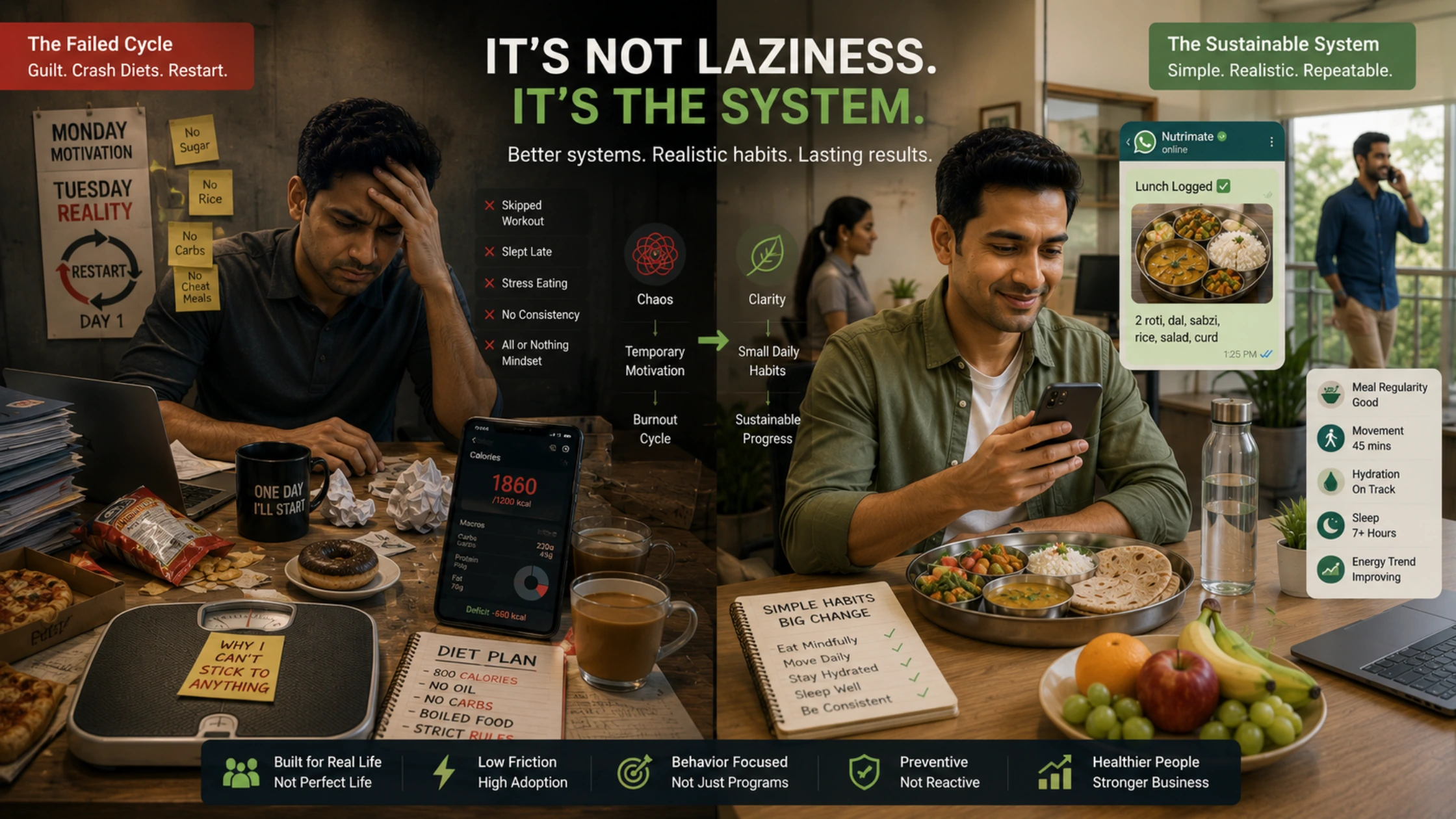
If you have ever started a diet on Monday, felt motivated for a few days, then slowly slipped back into old routines, you are far from alone.
This pattern repeats across India every day.
People promise:
“This time I’ll be disciplined.”
Then real life happens:
Office deadlines
Family dinners
Travel
Festivals
Stress eating
Skipped workouts
Eventually, many conclude:
“I’m just not consistent.”
But here is the truth:
For most people, health failure is not usually a laziness problem.
It is often a systems problem.
This is exactly why diets fail long term for so many Indians.
The issue is rarely a complete lack of desire. Most people genuinely want better health habits, better energy, improved body composition, and stronger long-term wellness.
The real struggle is that many health systems are built for perfection, not real life.
And perfection often collapses under Indian lifestyle realities:
- Busy work schedules
- Social eating
- Family food culture
- Inconsistent routines
- Complex calorie counting
- Restrictive food rules
This is why understanding how to stay consistent with health matters far more than extreme short-term motivation.
For people seeking a healthy lifestyle for busy Indians, sustainable progress usually comes from reducing friction, not increasing guilt.
Modern tools like meal tracking, simple routines, and systems such as India’s #1 whatsapp meal logging feature and Unique Caregiver feature reflect this shift by making awareness easier without demanding unrealistic perfection.
Because lasting health usually depends less on discipline alone and more on whether your system actually fits your life.
The Laziness Myth: why diets fail long term, why staying healthy is hard, health consistency problems, and healthy lifestyle for busy Indians
One of the most damaging beliefs in health culture is this:
“If you failed, you were lazy.”
This idea creates guilt.
And guilt often creates more inconsistency.
Reality:
Many people are not lazy.
They are overwhelmed.
Common Indian Reality:
A working professional may:
- Skip breakfast due to commute
- Eat office snacks during stress
- Attend social dinners
- Miss workouts after long hours
This is not always laziness.
It is often system mismatch.
Why This Matters:
When health plans assume:
- Unlimited time
- Full meal prep
- Zero social events
- Perfect motivation
They often fail.
Myth vs Reality
Myth: Healthy people are simply more disciplined
Reality: Sustainable people usually have systems that reduce friction
Emotional Truth:
Blaming yourself can feel personal.
But in many cases, health consistency problems are structural.
Strategic Shift:
Instead of asking:
“What’s wrong with me?”
Ask:
“What part of my system is unrealistic?”
This mindset shift alone can reduce guilt and improve lifestyle change.
Why Systems Fail, Not People: how to stay consistent with health, sustainable health habits for Indians, simple health habits for working professionals, and healthy lifestyle
Health plans often fail because they are too aggressive.
Common Pattern:
- Sudden diet restrictions
- Extreme workouts
- Removing favorite foods
- Daily calorie obsession
Result:
Short-term compliance
Long-term burnout
This explains why diets fail long term:
They often depend on intensity over sustainability.
Indian-Specific Example:
A person eating:
- Roti
- Rice
- Dal
- Sabzi
Suddenly shifts to:
- Salads
- Protein shakes
- No carbs
Problem:
This may feel disconnected from real family life.
Better Framework:
Real healthy Indian eating habits often work better when they adapt familiar meals instead of replacing them completely.
Sustainable System Principles:
- Smaller portions
- Better meal awareness
- More protein balance
- Smarter frequency
- Reduced extremes
Strategic Insight:
People usually fail less from lack of effort and more from unsustainable design.
The Problem with Overcomplication: food tracking without calorie counting, simple meal tracking for Indian food, easy way to track meals, and meal tracking
Many people quit because health becomes mentally exhausting.
Common Pain Points:
- Counting every calorie
- Logging every ingredient
- Measuring every portion
- Guilt from “bad” foods
Why This Breaks:
Health starts feeling like homework.
Especially in India:
How do you perfectly count:
- Homemade poha?
- Mixed sabzi?
- Family biryani?
- Festival sweets?
Complexity creates dropout.
Better Alternative:
Food tracking without calorie counting can often improve awareness without overload.
Practical Approach:
Track:
- Meal timing
- Frequency
- Portion awareness
- Snacking trends
- Eating consistency
This is why simple meal tracking for Indian food often works better than perfection-heavy systems.
Product Insight:
Some AI-powered, Indian-first tools like Nutrimate simplify this by aligning with WhatsApp-first convenience rather than forcing traditional app fatigue.
Core Lesson:
Awareness matters more than obsession.
What Actually Works Long-Term: how to stay healthy without dieting, Indian diet without dieting, sustainable health habits for Indians, and healthy eating
Long-term health is rarely built through punishment.
It is built through repeatable behaviors.
What Works Better:
1. Consistency Over Intensity
30 better days matter more than 3 perfect days.
2. Familiar Food
Indian food and health can absolutely coexist.
3. Flexible Tracking
Awareness without burnout
4. Small Wins
Examples:
- Fewer sugary drinks
- Better breakfast
- More protein
- Less mindless snacking
Important:
How to stay healthy without dieting does not mean ignoring nutrition.
It means avoiding unsustainable restriction.
Realistic Indian Example:
Instead of:
“No rice ever”
Try:
“Balanced rice portions + protein + vegetables”
Myth vs Reality
Myth: Restriction creates success
Reality: Sustainability creates success
Simple Habit Framework: simple health habits for working professionals, healthy lifestyle for busy Indians, meal tracking, and lifestyle change
A better framework focuses on fewer, more repeatable actions.
The 5-Part Habit System:
1. Visibility
Know what you are eating
2. Simplicity
Reduce mental burden
3. Familiarity
Keep Indian meals realistic
4. Consistency
Focus on repetition
5. Flexibility
Allow life to happen
Daily Example:
- Breakfast: Protein + fiber
- Lunch: Balanced Indian meal
- Evening: Planned snack
- Dinner: Portion awareness
- Weekend: Conscious flexibility
Key Benefit:
This creates sustainable health habits for Indians.
Strategic Insight:
Simple systems reduce friction and increase consistency.
Real Example: Indian diet for busy professionals, healthy lifestyle, how to stay consistent with health, and stress free living
Scenario:
32-year-old corporate employee in Bengaluru
Old Pattern:
- Crash diets
- Gym bursts
- Weekend overeating
- Inconsistent logging
Result:
Repeated failure
New Pattern:
- Normal home food
- Better portions
- Meal awareness
- WhatsApp-based logging
- Reduced guilt
Result:
- Better energy
- Sustainable weight control
- Lower stress
- More consistency
Key Lesson:
The problem was not laziness.
It was unsustainable complexity.
Emotional Truth:
People often need simpler systems, not harsher judgment.
Strategic Shift: Remove Guilt, Build Trust
Health becomes easier when people stop treating every setback like failure.
Instead of:
“I ruined my diet.”
Try:
“What pattern can I improve next?”
This matters because:
Behavior change improves when shame decreases.
Better Long-Term Health Often Comes From:
- Awareness
- Simplicity
- Realism
- Familiar food
- Sustainable systems
This is why platforms focused on Indian-first habits, practical meal tracking, and tools like India’s #1 whatsapp meal logging feature and Unique Caregiver feature are increasingly relevant.
Because long-term wellness often depends on fitting health into real life, not escaping it.
Frequently Asked Questions
Diets often fail long term because they rely on restriction, overcomplication, and unrealistic routines rather than sustainable systems that fit real life, Indian food habits, and long-term consistency.
Lasting habits are usually built through simplicity, realistic routines, meal awareness, flexibility, and repeatable systems that reduce friction instead of depending only on motivation.