 Pradnya Ganorkar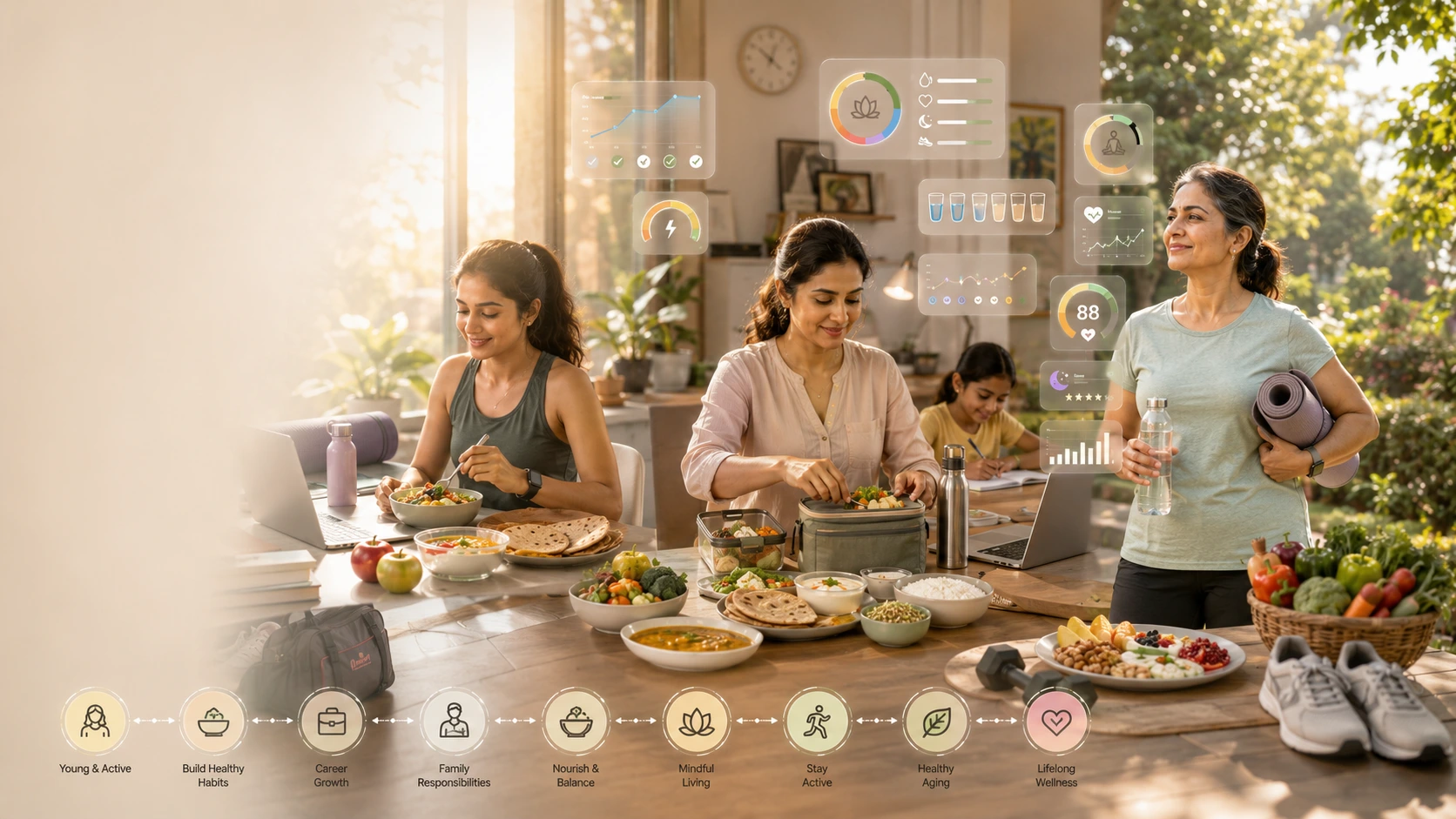
Good nutrition is not a one-time goal. A woman’s nutritional needs change throughout life because of age, hormones, lifestyle, work, pregnancy, and family responsibilities. Yet many continue following the same eating pattern for years without considering how their body is changing.
Understanding women’s wellness India means recognising that nutrition should evolve alongside different life stages. Whether you are managing studies, building a career, planning a family, or balancing work and caregiving, your body has different priorities at different times.
Rather than following restrictive diets, focusing on nutrition for women, balanced meals, and lifestyle habits for women creates a stronger foundation for long-term health.
Nutrition in Your 20s
Your twenties are often a period of rapid change.
College, first jobs, irregular work schedules, eating out, and busy lifestyles in india can make healthy eating difficult.
Many women rely on convenience foods, skip breakfast, or underestimate the importance of balanced nutrition because they generally feel healthy.
However, this is one of the best stages to build lifelong habits.
Build Strong Foundations
Instead of focusing only on appearance or weight loss, aim to develop habits that support long-term wellbeing.
These include:
- Eating regular meals.
- Including quality protein in every meal.
- Staying physically active.
- Sleeping consistently.
- Drinking enough water.
Many Indian diets contain less protein in average indian meal than recommended, making protein for indian vegetarians an important area of focus.
Good options include:
- Dal
- Chana
- Rajma
- Soy products
- Paneer
- Curd
- Eggs
These foods support a balanced Indian diet while helping meet daily protein requirements.
Support Hormonal Health Early
Hormonal balance is influenced by multiple factors including nutrition, sleep, stress, and physical activity.
Developing healthy routines during your twenties can support long-term hormonal health for women and reduce the tendency to rely on crash diets later in life.
Nutrition in Your 30s
For many women, their thirties bring additional responsibilities.
Career growth, parenting, pregnancy, caregiving, and managing households often reduce the time available for self-care.
This makes planning even more important.
Prioritise Consistency Over Perfection
Many women believe they need the perfect diet to stay healthy.
In reality, consistency produces better long-term outcomes.
Simple habits include:
- Preparing meals in advance.
- Carrying healthy snacks.
- Eating balanced lunches.
- Avoiding long gaps between meals.
- Maintaining regular sleep.
These routines support healthy lifestyle goals without requiring restrictive diets.
Pay Attention to Hormonal Changes
Women experiencing irregular menstrual cycles or symptoms associated with PCOS may benefit from discussing personalised nutrition with qualified healthcare professionals.
General lifestyle improvements such as following a balanced PCOS diet India, adopting gradual PCOS lifestyle changes, and building healthy habits for PCOS often support overall wellbeing more effectively than extreme dietary restrictions.
Instead of searching for quick fixes, focus on sustainable routines that fit naturally into everyday life.
Nutrition in Your 40s
During the forties, many women begin experiencing gradual hormonal changes that can influence energy levels, body composition, and nutritional priorities.
This stage is an opportunity to reassess daily habits rather than dramatically changing the way you eat.
Nutrient Quality Becomes Even More Important
As nutritional needs evolve, meal quality becomes increasingly important.
A balanced plate should regularly include:
- Whole grains
- Seasonal vegetables
- Fruits
- Protein-rich foods
- Healthy fats
- Calcium-rich foods
Instead of worrying about the roti rice weight gain myth, focus on portion balance, meal quality, and overall dietary patterns.
A balanced Indian food approach can continue supporting health throughout midlife.
Maintain Everyday Movement
Regular physical activity remains essential.
Walking, strength training, yoga, cycling, and other enjoyable activities contribute to a healthier lifestyle change while supporting long-term mobility and overall wellbeing.
Rather than following intense exercise programmes for a few weeks, build routines you can realistically maintain throughout the year.
Small, consistent actions usually produce more sustainable results than short periods of extreme discipline.
Common Nutrient Gaps
Many women meet their daily calorie needs but still fall short on important nutrients.
These nutritional gaps often develop gradually because of irregular meals, highly processed foods, restrictive dieting, or limited dietary variety.
Some of the most common areas requiring attention include:
- Protein
- Iron
- Calcium
- Vitamin D
- Fibre
- Vitamin B12, particularly for vegetarians
Rather than focusing only on calories, improving women’s health nutrition means paying attention to overall food quality.
Many women spend time searching for 100 gm namkeen calories, calories in namkeen, 100 gram namkeen calories, 1 katori namkeen calories, or calories in 100 gm namkeen. While understanding these values can be useful, long-term health depends more on consistent eating patterns than analysing individual foods.
Building nutrition awareness women helps identify recurring habits such as skipping breakfast, low protein intake, or insufficient fruit and vegetable consumption.
Lifestyle Challenges by Life Stage
Nutrition is only one part of lifelong health.
Daily routines, work schedules, family responsibilities, and stress all influence food choices and consistency.
Women in different stages of life often experience different challenges.
For example:
- Women in their 20s may struggle with irregular meal timings and eating out frequently.
- Women in their 30s often balance careers, parenting, and household responsibilities.
- Women in their 40s may experience hormonal changes while caring for both children and ageing parents.
These changing priorities explain why a single nutrition plan rarely works for every woman throughout life.
Instead of pursuing perfection, focus on sustainable health habits, realistic meal planning, and healthy Indian eating habits that fit your current lifestyle.
This approach also supports how to stay healthy without dieting, particularly during demanding phases of life.
Building Awareness Through Every Phase
One of the most valuable health skills is awareness.
Understanding your eating habits, activity levels, sleep, and daily routines helps you recognise changes before they become larger challenges.
Simple meal tracking can reveal patterns such as:
- Skipping breakfast
- Low protein intake
- Frequent processed snacks
- Irregular meal timings
- Weekend overeating
Many women find that food tracking without calorie counting feels far more practical than manually recording every ingredient.
For those searching for the best food tracking app, meal tracker app, or an easy way to track meals, simplicity usually leads to greater consistency.
This is where Nutrimate provides practical support through AI-powered, Indian-first nutrition intelligence. Its India’s #1 whatsapp meal logging feature and Unique Caregiver feature make simple meal tracking for Indian food easier while helping women build healthier routines without unnecessary complexity. The platform supports individuals, families, and caregivers by encouraging awareness instead of perfection.
Across every stage of life, the goal is not to follow the same routine forever.
The goal is to adapt your habits as your body’s needs change while maintaining consistency through realistic choices.
FAQs
Yes. Nutritional requirements change throughout life because of factors such as hormonal changes, physical activity, pregnancy, menopause, and overall health.
Supporting women’s wellness India involves adjusting food choices, meal quality, and daily routines to meet these changing needs rather than following the same eating pattern for decades.
Important nutrients include protein, iron, calcium, vitamin D, fibre, and vitamin B12, depending on individual dietary patterns and life stage.
A balanced nutrition for women approach should prioritise whole foods, adequate protein, fruits, vegetables, healthy fats, and a varied Indian diet. If specific deficiencies are suspected, women should consult a qualified healthcare professional for personalised advice.