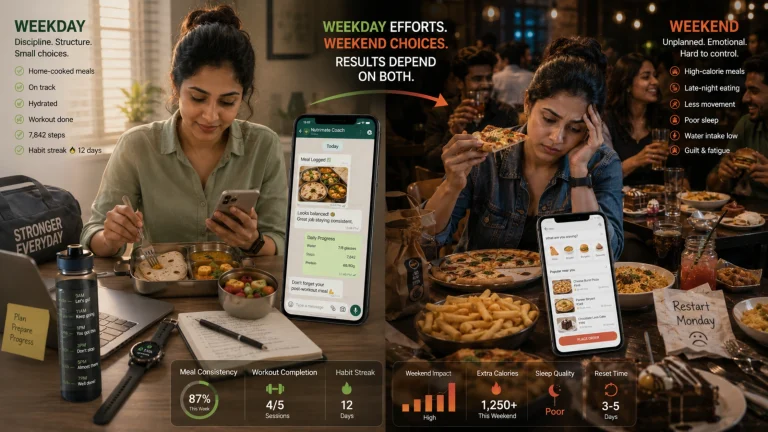
Why Weekend Eating Habits India Destroy Weekday Progress (And How to Fix It)
Many Indians spend Monday to Friday trying to stay disciplined. They wake up early, carry home food to work, avoid sugar in chai, reduce rice portions, track workouts, and try following a structured fitness diet. But by Saturday evening, routines often collapse completely. Restaurant

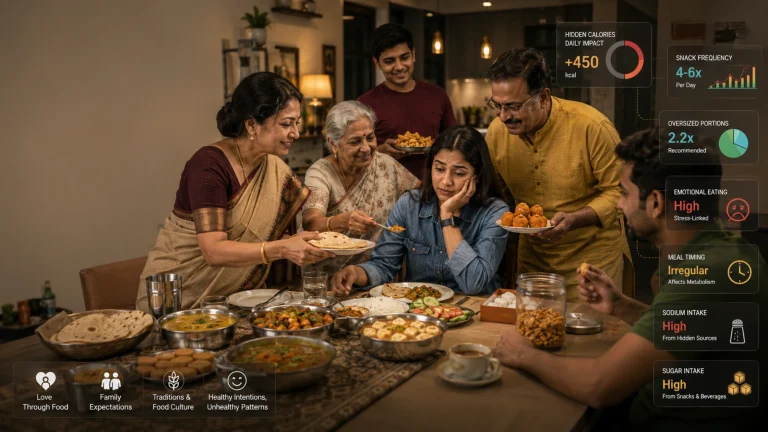
How Indian Families Accidentally Make Healthy Eating Harder
In many Indian homes, food is not just food. It is: This is one reason family eating habits India are deeply emotional and culturally powerful. A grandmother offering extra ghee.A mother insisting on another roti.A relative asking why you are “dieting.”Late-night chai with snacks
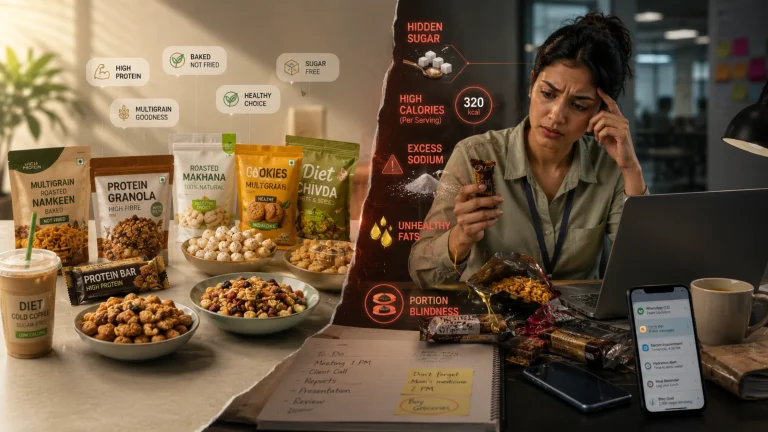
Why “Healthy” Indian Snacks Often Aren’t Healthy at All
The modern Indian health conversation has changed dramatically over the last few years. People today are more aware of: But despite growing awareness, many Indians still struggle with: This is where the healthy Indian snacks truth becomes important. Many foods marketed as “healthy” are
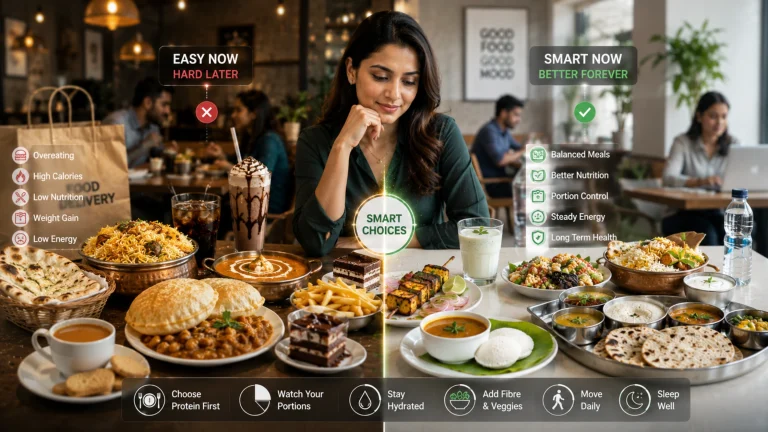
How to Eat Outside Regularly Without Gaining Weight in India
For millions of Indians today, eating outside is no longer occasional. It is routine. Office lunches.Client dinners.Weekend biryani.Late-night Swiggy.Zomato cravings.Tea with snacks.Family outings.Travel meals. For busy professionals, students, gym-goers, and families, healthy eating outside home India often feels nearly impossible. This is exactly where
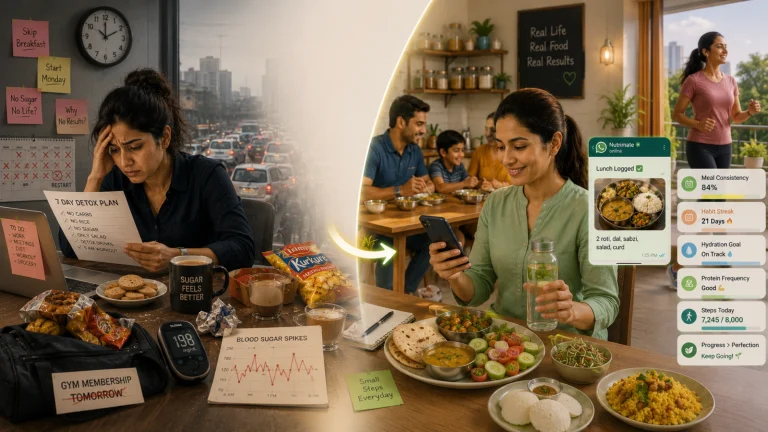
Sustainable Health Habits for Indians: How to Build a Healthy Lifestyle That Actually Lasts (Indian Reality)
For millions of Indians, health often begins with strong intention. A new diet on Monday.A gym membership in January.A sugar detox before summer.A “healthy lifestyle” promise after a health scare. But within weeks, many people return to old routines. This is not always because
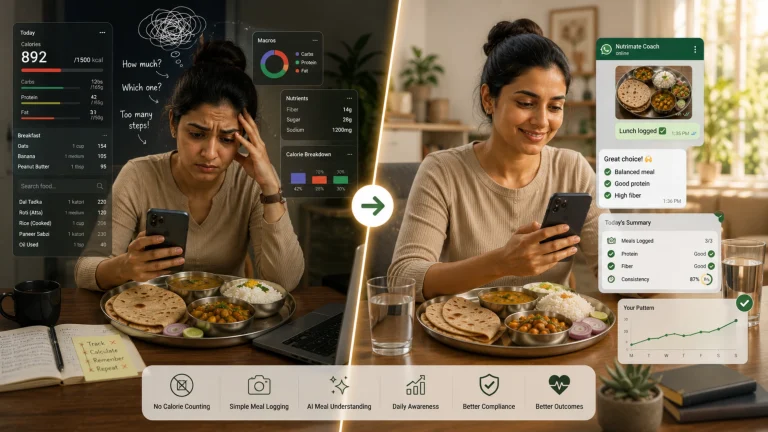
The Easiest Way to Track Your Meals Without Counting Calories
For many Indians trying to build a healthy lifestyle, one problem shows up quickly: You want to eat better.You want more awareness.You may even start strong. Then tracking begins to feel exhausting. Open app.Search food.Guess portion.Log ingredients.Repeat for roti, dal, sabzi, chai, snacks. By
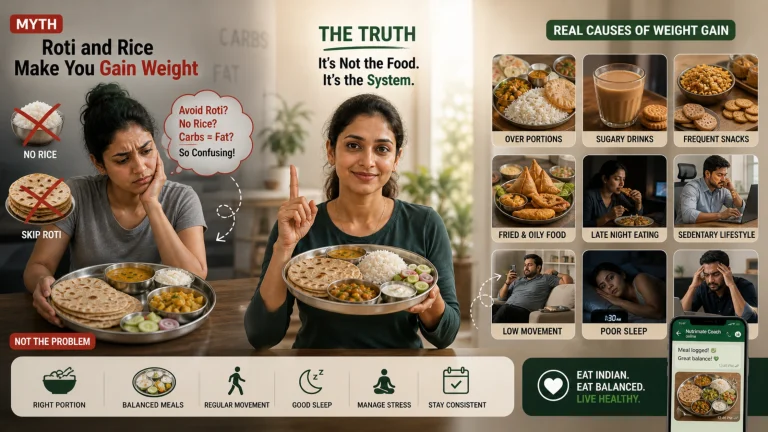
Roti and Rice Don’t Make You Gain Weight – Here’s What Does
For millions of Indians, the first step toward weight loss often looks familiar: Stop rice.Reduce roti.Avoid carbs.Switch to “diet food.” This belief has shaped countless meal choices across households, offices, gyms, and family conversations. But here is the reality: The roti rice weight gain
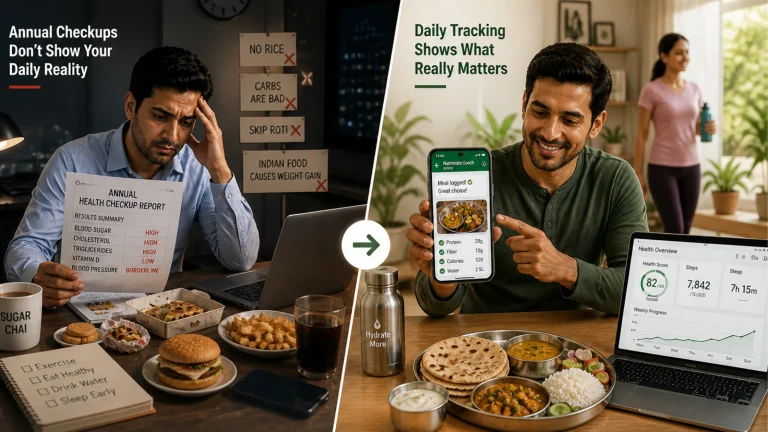
Why Preventive Health Fails Without Daily Tracking
For many people, preventive health monitoring tools sound like annual blood tests, health insurance checkups, or yearly wellness packages. Get tested.Review reports.Make small promises.Then move on. But this creates one of the biggest blind spots in modern preventive healthcare India. Because lifestyle diseases rarely